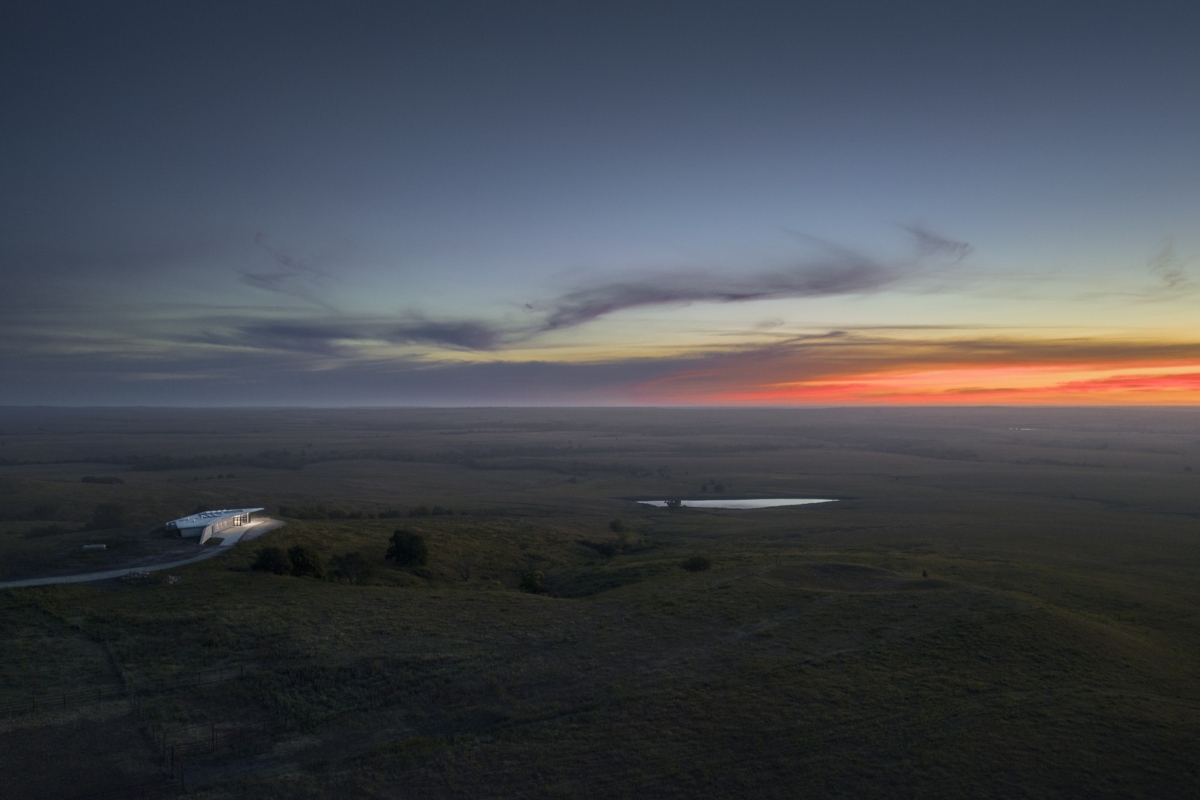
The Youngmeyer Ranch is a 1,902-hectare site located in northeast Elk County. Geologically, the site overlies primarily Permian age limestone and shale with layers of chert, and is at a higher elevation than surrounding areas due to uplifting and decreased erosion due to the resistant chert layers. The west side of the site is relatively flat plateau whereas the middle and east side features steep to moderate slopes and ravines that give way to rolling and sloped hillsides. The change in elevation over the site is 115 meters with at least one spring and several natural and artificial ponds.
Based on the GLO records, this site was predominately grassland with scattered black oaks (Quercus velutina) along creeks or a collection of trees in the creek bottoms. The grassland cover was described as varying from nearly absent on very gravelly soils to moderate productivity on more well-developed soils. Although information on site usage is limited, all indications are that the site has been under cattle grazing since the land was settled. For at least the last 20 years, the site has been double stocked for grazing 90-120 days during late spring and summer. For much of this period, the entire site has typically been burned every one to three years. Currently, the tree cover is approximately 99 hectares. There are more than 500 species on plants, 37 species of amphibians and reptiles, and more than 60 bird species known from the property.

Youngmeyer Ranch's natural landscape and ecology, with a new state-of-the-art facility, is the perfect location for students to get access to applied learning and fieldwork in biology.
The gift of access to the 4,600-acre Youngmeyer Ranch for use as a research station has been transformational for WSU students and faculty.
This site is owned by the Youngmeyer Trust, which gave access to WSU for research and teaching activities beginning in July 2014. Current studies include a helicopter survey for wildlife in the spring that has quantified the presence and identity of large mammals and greater prairie chicken, competition and survival techniques of sericea lespedeza, and a herpetofaunal survey.
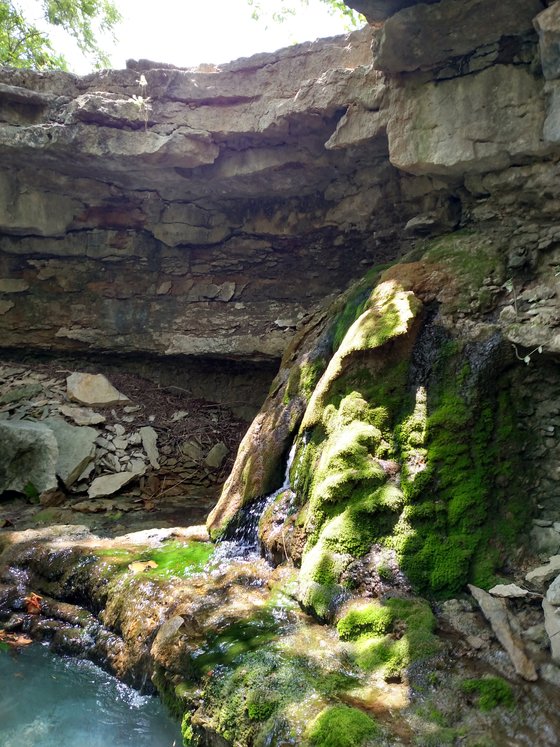
The site has many unique hydrological features associated with the geology and complex topography that influence erosion, drainages and springs. Additionally, the topography and native grassland offer the opportunity for a wide variety of plant and animal studies in a context of cattle grazing.
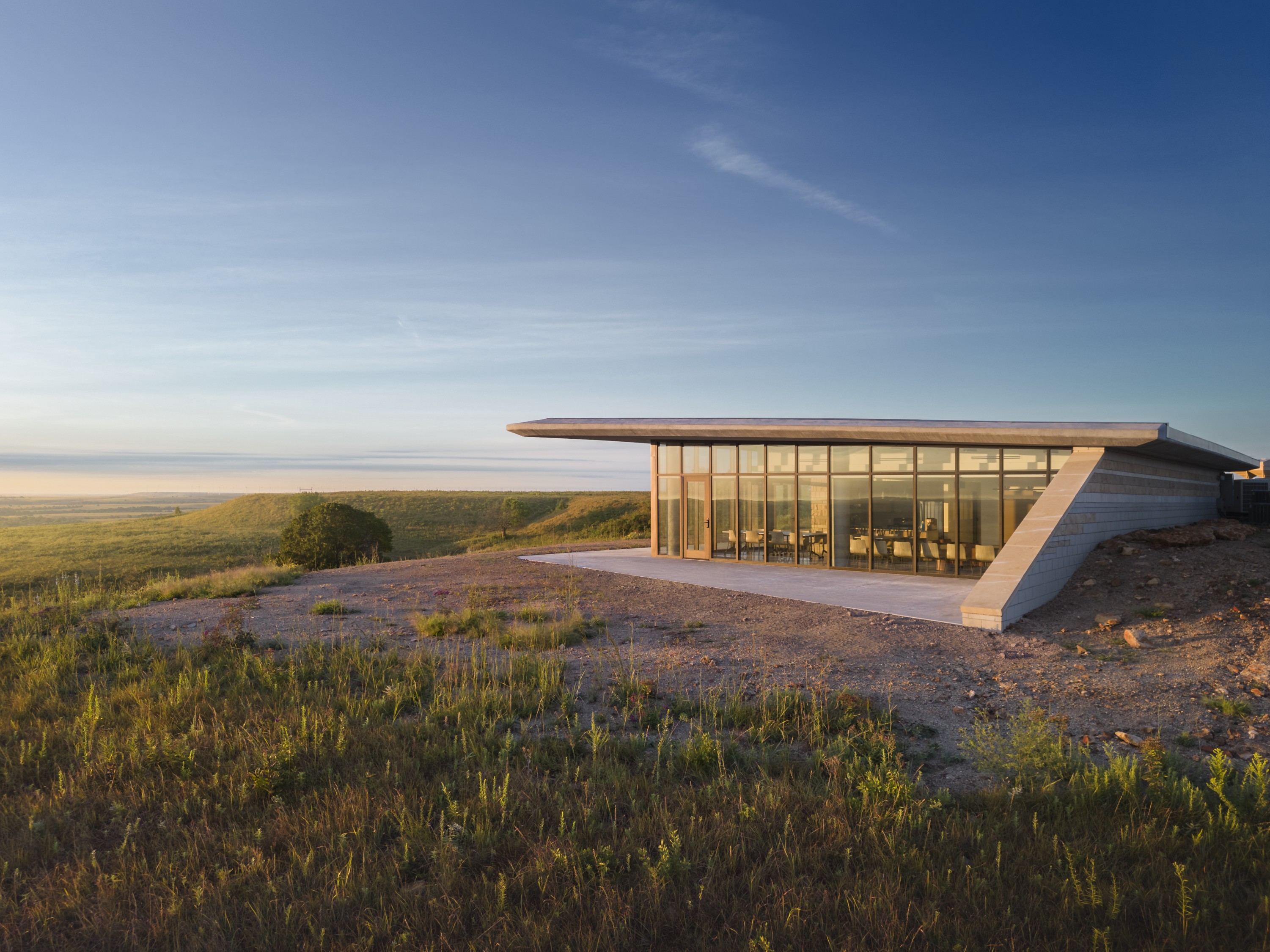
The 3,400-square-foot facility, built in 2022, includes many modern amenities for researchers, including restrooms and changing areas, a kitchen, lab spaces, a large garage for storing research equipment, and sleeping quarters for those working extended periods at the ranch.

Photo credit: Hutton Design+Build
Students and faculty get deeper access to the research and applied learning potential through the facility's research lab, which includes multiple workstations for researchers to utilize simultaneously. The lab amplifies the research conducted at the site by making it safer and more time and cost efficient.
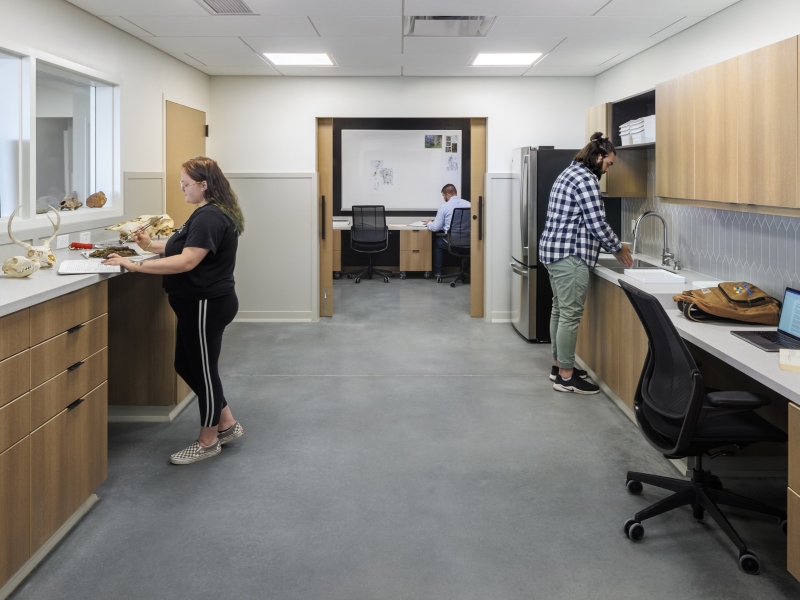
Photo credit: Hutton Design+Build
The research building is completely off the grid and self-sufficient, with power from solar panels as well as plumbing and other needs served by well water. Designed with the landscape in mind, the building blends in by reflecting the natural bumps of the Flint Hills, and any exposed walls mimic the rock strata common to the area.
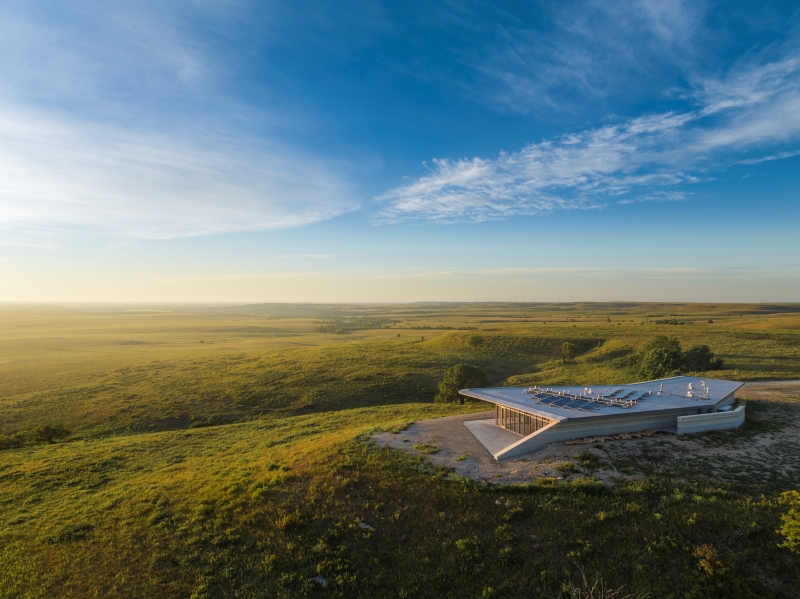
Photo credit: Hutton Design+Build
If you are interested in utilizing the Youngmeyer Ranch Reserve, or the Field Station Building, please contact the manager, Dexter Mardis, at (620) 584-6627.