Ongoing Research

  • Dr. Mary Liz Jameson's lab documented the first case of chytrid fungus in Kansas at the Gerber Reserve.

  • Long-term surveying of the amphibians and reptiles present at this field site.

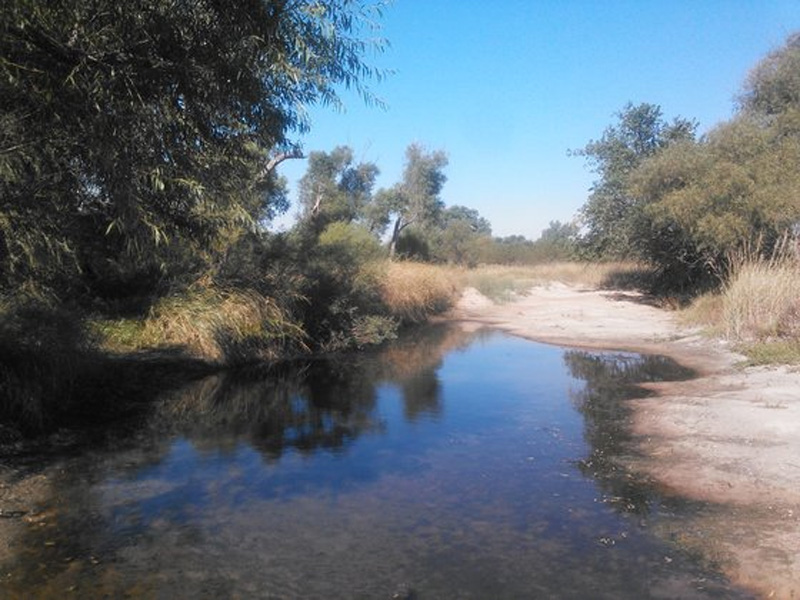
  • Gerber Reserve is well-suited to studies of remnant sand prairie whereas the upland-stream interface provides an excellent opportunity to study stream hydrology. For example, the tree removal designed to restore historical conditions found in such prairie streams could potentially be compared with upstream and downstream areas where tree removal was not undertaken.
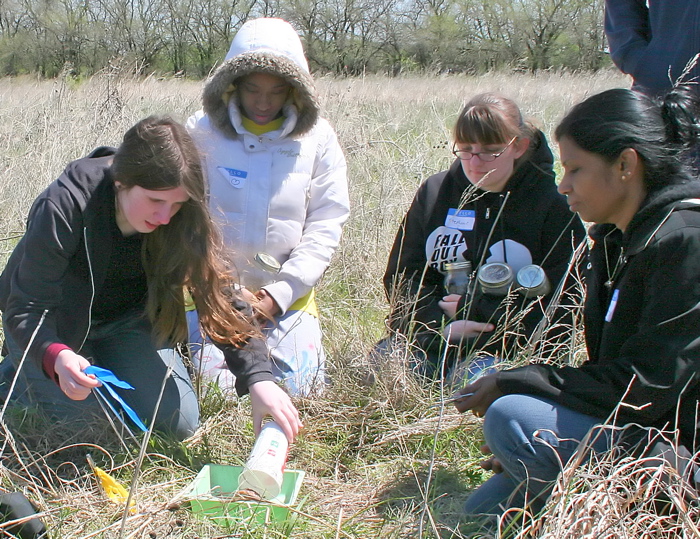
Students gathering around pitfall traps at the reserve.

History of Gerber Reserve

On Oct. 27, 2004, an 8-inch diameter pipeline, the Enid Lateral, owned by Magellan Midstream Partners, L.P. and operated by Enterprise Products Operating L.P., that is utilized to transport anhydrous ammonia, ruptured approximately two miles west of Waterloo, Kansas (approximate coordinates of 37.678634, -97.981739). Upon rupturing, a vapor cloud approximately 0.8 kilometer (0.5 mile) wide traveled down an unnamed riparian corridor. On the evening of the rupture, a 3.81-centimeter (1.5 inches) rainfall event caused ammonia to enter Smoots Creek by traveling through an unnamed tributary approximately two miles downstream from the western edge of the property. It was reported that at least some impact occurred to the aquatic communities for approximately 14 miles of Smoots Creek and an undetermined impact of at least a portion of the south fork of the Ninnescah River.

As part of a mitigation settlement with Magellan Midstream Partners, L.P. the above described property located in Section 23 was acquired by the Wichita State University Foundation in 2008 as part of a conservation easement with Joan A Gerber in collaboration with the KDHE.

The Conservation Easement makes reference to “significant natural, scientific, educational, habitat, wildlife, wetland, and aquatic ecological vales…” and of significant importance is critical habitat for the Arkansas darter (Etheostoma cragini), which is protected by the Kansas Nongame and Endangered Species Conservation Act.

Field Station Staff

If you are interested in utilizing the Gerber Reserve, please contact the manager, Dexter Mardis, at (620) 584-6627.

Field Station Director

Explore Biological Field Stations

©