


Wichita State University
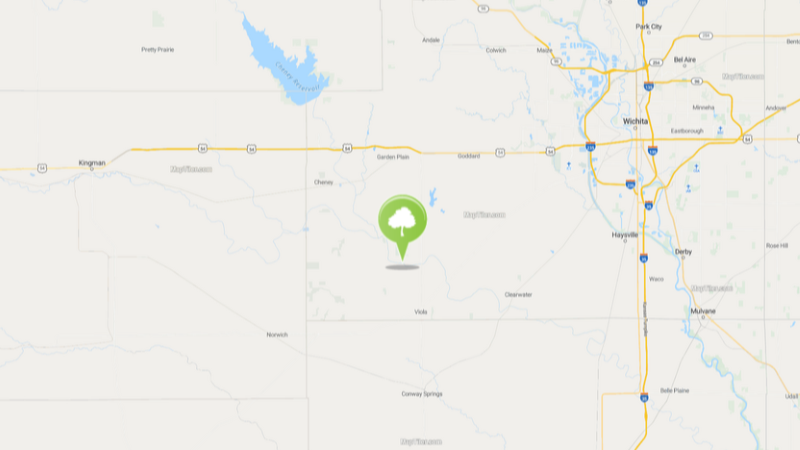
The Ninnescah Reserve came to Wichita State from Ms. Louise Powell as two separate gifts. The initial 69.6 hectares (171.9 +/ acres) were acquired in 1984, with the remaining 65.1 hectares (160.8 +/ acres) in 1985. The late Ms. Powell’s generous donation came with the request that the property be restored to a prairie ecosystem and utilized for research and education. The entire area is fenced, except along the river, and has been divided into 33 permanent 10-acre plots marked by steel poles. The geology, depth of ground water and archaeological sequence of the site have been determined.

Hydrogeology site
Our 10-acre hydrology site has nine monitoring wells for groundwater sampling. It allows accurate modeling and hands-on experiments, giving students practical experience in the critical field of hydrology. Hydrologists work to understand water resources, predict floods, manage water supply and address environmental issues related to water.

Prairie restoration
Through the tireless efforts of dedicated faculty and students, native mixed-grass prairie was restored on the reserve. The property now consists of nearly 75% (200 acres) restored and native prairie while about 25% (66 acres) of the property is comprised of riparian and woodland habitats.
Controlled burning, mowing and haying are the major management practices on the prairie segments.

Reptile & amphibian field work
At Wichita State, students gain hands-on experience in herpetology by studying reptiles and amphibians that inhabit the wood board shelters. Through this practice, the small-mouth salamander was rediscovered after more than 20 years of absence on the reserve.

Biological Field Station Building
The WSU Biological Field Station Building, located on the Ninnescah Reserve, was completed in June 2010. This climate-controlled facility provides an excellent setting for biological research, education and outreach programs. In addition to the Field Station manager's office, there is ample laboratory space and a seminar/classroom as well as a collection of plant and insect vouchers and a library in the building. The Field Station building's unique location at the Ninnescah Reserve offers a direct link to the diverse habitats which serve researchers, students and visitors from WSU. In addition to WSU activities, the Field Station has also attracted the research and teaching efforts of eleven universities and several local high schools.
