Wind Ensemble

Community Links

    Percussion Faculty


    Impulse Percussion Group


    Impulse Percussion Group

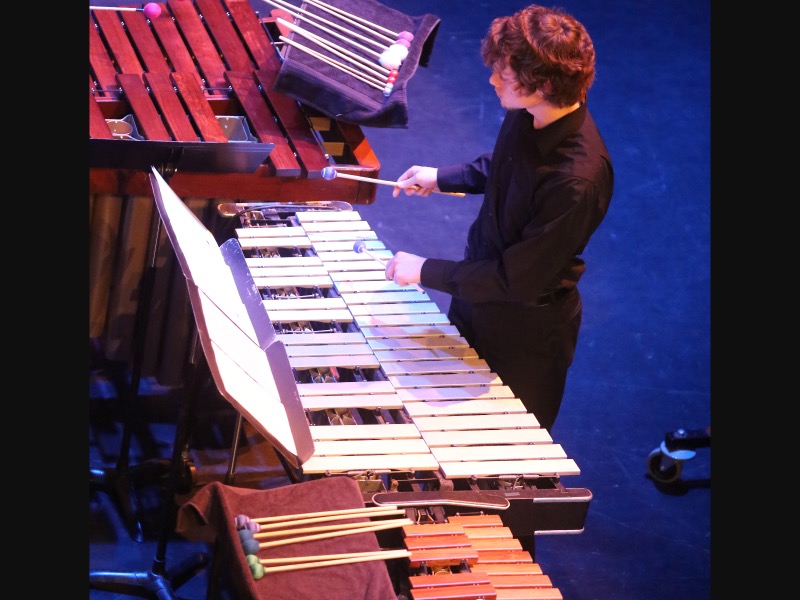
    The Impulse Percussion Group (IPG) functions as a large percussion ensemble as well as many smaller chamber ensembles. Membership is by audition, majors and non-majors alike are welcome!

    For more than 10 years Professor Jerry Scholl has led the IPG to new heights including: winning second Prize at the Wolff-Ilse Bing chamber music competition and premiering over ten works, including Paul Elwood’s New Jerusalem for percussion and choir, and Teppa and El Silencio two concertos for Marracas and Percussion featuring maraca virtuoso – Ed Harrison.

    The IPG prides itself in the performance of theatrical, contemporary and telling works in the history and advancement of percussion music. An IPG concert is as much an all inclusive sensory experience as it is a musical production. Stemming from a strong partnership with the media and stage crews at WSU, the lights, sounds and flow of an Impulse Percussion Group program are top notch and not to miss!

    Undergraduate Studies

    The WSU School of Music offers a diverse program of over 15 different concentrations in three different degrees for undergraduates. Use the link below to find out more.

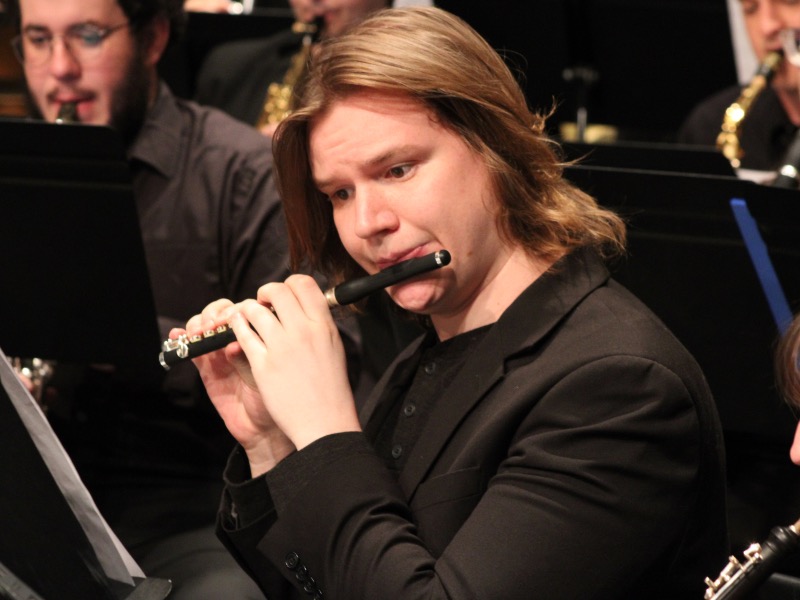
    Piccolo Player

    Undergraduate Audition Information

    Undergraduate students who intend to major in music must audition for the School of Music faculty. Regular audition dates for undergraduate students are scheduled throughout the year. Your audition is for consideration for certain School of Music scholarships as well as entrance into the music program.

    Graduate Studies

    Graduate studies in the School of Music at Wichita State University offer over 24 concentrations in four different degree and certificate programs. Use the link below to learn more.
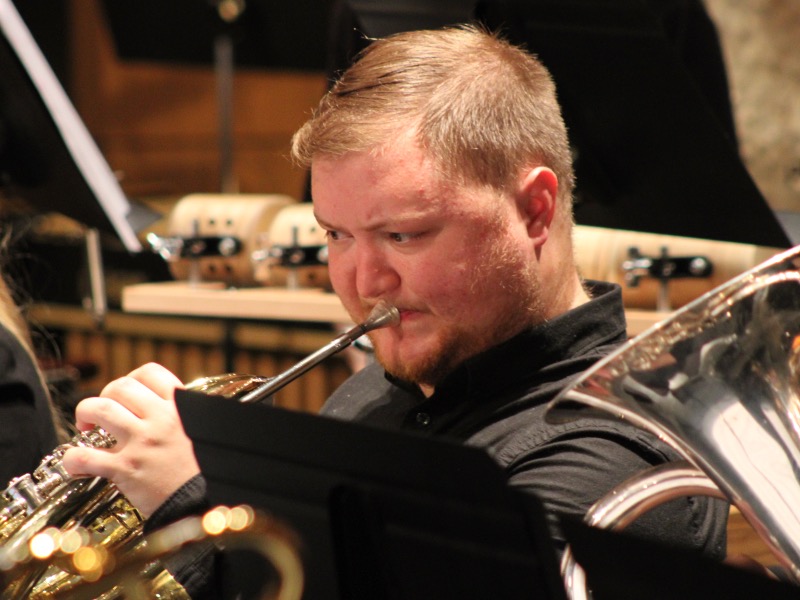
    Horn Player

    Graduate Audition Information

    Woodwinds

    Flute

    Interested persons are requested to prepare for an on-campus audition:

    • Three movements or pieces from the standard repertoire of your choice
    • Three to five orchestral excerpts of your choice

    Oboe

    Interested persons are requested to submit a recent CD recording or mp3 or other up-loadable sound files of their playing to Dr. Webber by Dec. 1. You are encouraged to send repertoire you are comfortable with, and that represents your playing accurately. All recordings should include a variety of solo literature and orchestral excerpts of candidate's choice. Acceptable materials include but are not limited to:

    • Barret Grand Studies
    • Ferling 48 Studies
    • Bozza 18 Etudes
    • Telemann Partitas
    • CPE Bach Sonata; any Bach Sonata or Concerto
    • Mozart Oboe Quartet or Concerto in C M
    • Hummel Adagio, Theme+Variations
    • Bozza Fantasie Italienne
    • Poulenc Sonata
    • Hindemith Sonata
    • Britten Six Metamorphoses
    • Telemann Sonatas
    • Vivaldi Concerti
    • J.S. Bach Sonatas, Concerti
    • Pasculli Concerto
    • Kalliwoda Concerto
    • Strauss Concerto
    • Goossens Concerto
    • Vaughan-Williams Concerto
    • Dutilleux Sonata

    Bassoon

    An on-campus audition is expected but can be substituted by submitting a high-quality recording (mailed CD or audio files shared via an online platform such as DropBox, YouTube or SoundCloud). The audition should include:

    • Two whole pieces of contrasting styles or different time periods
    • One technical etude (Milde scale or arpeggio study, Jancourt etude, Piard scale study, or others)
    • Four excerpts of your choice

    Clarinet

    An on-campus audition is expected, but can be substituted by submitting a high-quality recording (mailed CD or audio files shared via an online platform such as DropBox, YouTube or SoundCloud). If you are applying for the Clarinet Graduate Assistantship position (GSA), an on-campus visit is required. Live or recorded audition requirements:

    • At least one movement of a standard concerto (Mozart, Weber, Nielsen, Copland, Crusell, Francaix or other work of comparable level)
    • Two other contrasting works/movements of your choice, at least one of them composed during the 20th or 21st century
    • Three orchestral excerpts of your choic

    Saxophone

    To audition for the saxophone studio you must perform either a live, on-campus audition for Jim Pisano, or submit a professionally-recorded screening recording for consideration. If you are applying for the Saxophone Graduate Assistantship position, an on-campus visit is required.

    You should select repertoire that you feel best represents your strong suits as a performer, and music with which you feel comfortable. Although it's expected that most of your audition repertoire will be played on alto saxophone, applicants may also play works on soprano, tenor, or baritone saxophones to demonstrate versatility. Below is a suggestion of repertoire that is expected of incoming graduate students at Wichita State University.

    Etudes: two etudes of contrasting character (one lyrical, one technical). Selections from the 48 Etudes by Ferling, 18 Etudes after Berbiguier, Neuf Etudes Transcendantes by Samyn, or 28 Etudes after Messiaen by Lacour are acceptable

    Scales: any full-range major and minor scales can be asked at the time of the audition. Please include three scales of both major and minor (six total) on any audition recording. Chromatic Scale, full range

    Repertoire: a twenty to thirty minute program from the standard repertoire demonstrating both technical and lyrical abilities. Competitive applicants will want to include one contemporary work on their program. Acceptable works:

    • Concerto by Ingolf Dahl
    • Prelude, Cadence, et Finale by Alfred Desenclos
    • Concerto by Pierre-Max Dubois
    • Concerto by Alexander Glazunov
    • Brilliance by Ida Gotkovsky
    • Concerto by Karel Husa
    • Concertino da Camera by Jacques Ibert
    • Neuf Etudes by Christian Lauba
    • Mai by Ryo Noda
    • Concerto by Henri Tomasi
    • Fantasia by Heitor Villa-Lobos

    Any other works of comparable quality.

    Brass

    To organize an audition or arrange a campus tour, applicants should get in touch with the studio professor of their specific instrument. Awards are often determined via in-person auditions. You must appear in person for your audition if you want to be considered for a monetary award, except in unusual circumstances. Please send an email to one of the brass faculty members from the list above if you have more questions.

    Percussion

    Interested persons are requested to submit an application including a CV. A performance audition, an interview, and a short percussion clinic on the topic of your choice are required of all candidates. To make audition arrangements and to schedule a campus visit, contact Professor Gerald Scholl.

    Audition repertoire is to include:

      • Solo Repertoire
        • Snare Drum: Solo examples - Mitch Peters advanced or Hard Times/ Delecluse 12 Etudes
        • Timpani: Solo examples Elliot Carter 8 Pieces, Delecluse 30 Etudes
        • Two examples of four mallet playing on Marimba and/or Vibraphone
        • Optional: Multi-percussion solo
        • Optional: Drum Set – show varied styles
      • Orchestral Excerpts, to be chosen from the following standard excerpts
        • Snare Drum
          • Rimsky Korsakov - Scheherazade, Mvt 3, 4
          • Rimsky Korsakov - Capriccio Espagnol, Mvt 3, 4
          • Prokofiev - Lt Kije
          • Bartok - Concerto for Orchestra
          • Shostakovich - Symphony No. 10, Mvt 2
        • Xylophone
          • Gershwin - Porgy and Bess
          • Stravinsky - Firebird Ballet (not the suite)
          • Copland - Appalachian Spring
        • Glockenspiel
          • Mozart - Magic Flute
          • Dukas - Sorcerer's Apprentice
          • Respighi - Pines of Rome
        • Timpani
          • Mozart - Symphony No. 39
          • Beethoven - Symphony No. 7, Mvt 1
          • Brahms – Symphony No. 1, Mvt 1, 4
          • Bartok – Concerto for Orchestra, Mvt 4
          • Schuman - New England Triptych - Opening
          • Stravinsky - Rite of Spring 189-end
        • Tambourine
          • Dvorak - Carnival Overture
          • Bizet - Carmen: Dance Boheme
        • Cymbals
          • Rachmaninoff - Piano Concerto No. 2
          • Tchaikovsky - Romeo and Juliet Overture
        • Bass Drum
          • Tchaikovsky - Symphony No. 4, Finale
          • Mahler - Symphony No. 3

    Graduate Assistantships

    There are several Graduate Teaching and Graduate Staff Assistantships available in the Winds and Percussion Area. For more information, please contact the applied faculty member of your specific instrument. 

    Concert Bands

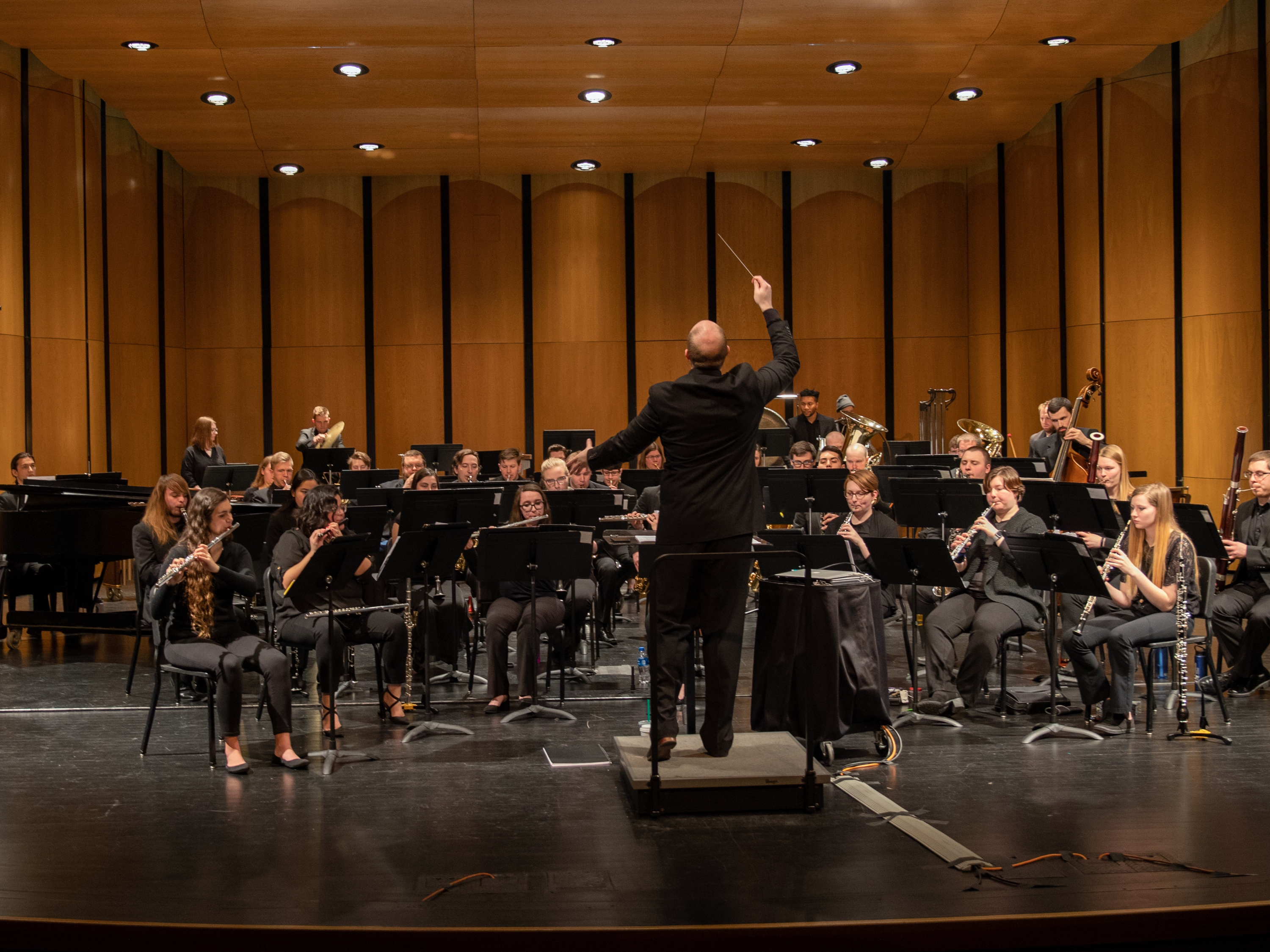
    WSU students may join the Wind Ensemble and Symphonic Band. Over 100 undergraduate and graduate music and non-music majors are in these groups. 
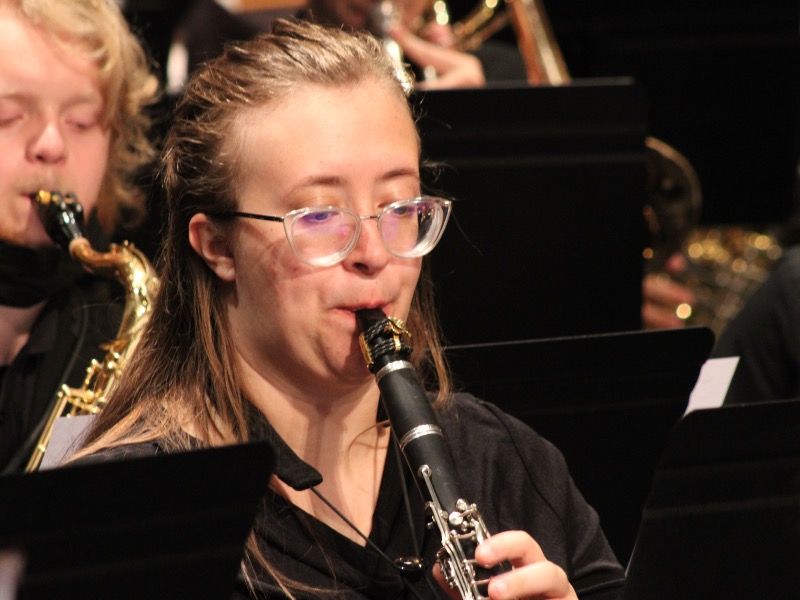
    Clarinet Player

    Athletic Bands

    The WSU Athletic Bands have a rich history. The award-winning Shocker Sound Basketball Band has been around for 50 years. They pack Koch Arena for Shocker Athletic activities. The Shocker Sound Machine enhanced the Athletic Band program in Fall 2018. Shocker Sound Machine is a high-energy, adrenaline-inducing marching band that plays at Shocker Basketball Games, regional and local events, and special occasions.
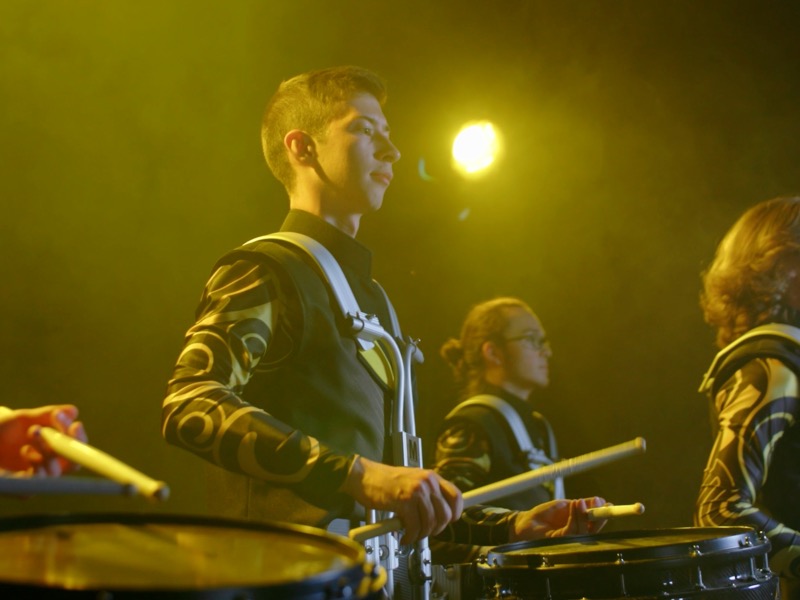
    Shocker Sound Machine

    Follow Us

    ©