


Wichita State University
Music Major Undergraduate Audition Information

Music Major Audition Days
Thank you for being interested in majoring in music at Wichita State University! We hold Audition Days throughout the year for those students wanting to pursue a degree in music. This year's Audition Day dates for entry into the School of Music are:
- Saturday, Jan. 30, 2027
- Saturday, Feb. 6, 2027
- Saturday, Mar. 13, 2027
These days serve a dual purpose. First, they function as your audition for entry into the School of Music. Second, they serve as your audition for School of Music scholarships. We typically begin sending scholarship notifications after the Audition Day in February.
Our Audition Days are held on Saturday mornings in the Duerksen Fine Arts Center. Throughout the morning, students and their adults will have several opportunities to visit with School of Music faculty and staff and meet current students.
Signing up to attend an Audition Day is the first step in becoming a music major at Wichita State. Finishing the form takes around 5 minutes, and it gets you into our system, which allows us to schedule you a time on your chosen Audition Day. It also helps our faculty members reach out to you to make your audition experience even more personal to you.
Feel free to contact the School of Music, with any questions.

Audition Requirements by Area
If you have any questions, please reach out to our faculty.
Woodwinds
Flute
- All major scales, up through four flats and four sharps. Memorization is encouraged but not required.
- Two pieces or movements of contrasting styles.
- District/All-State excerpts are acceptable.
Oboe
- All major scales, up through four flats and four sharps. Memorization is encouraged but not required.
- Chromatic scale, full instrument range, B-flat to high D at least.
- One Barret Progressive Etude or Rubank/Geckeler Advanced Etude.
- Ferling Etude may be substituted if the player is more advanced.
- Solo portion or movement of solo from one of the following:
- Marcello, Concerto in C Minor
- Any Handel sonata
- Mozart, Concerto in C Major
- Mozart, Quartet in F Major
- Haydn, Concerto in C Major
Bassoon
- All major scales, up through four flats and four sharps. Memorization is encouraged but not required.
- Two contrasting pieces from the standard repertoire. Pieces may be selected from movements of a larger work.
Clarinet
- One to two pieces or movements, or selected excerpts from clarinet solos/etudes, that
demonstrate both technical and lyrical playing. Examples include:
- District/All-State music, sections or excerpts
- Cavallini: Adagio and Tarantella
- Mozart: Concerto, K. 622
- Rabaud: Solo de Concours
- Rose: 32 Etudes
- Rubank Selected Studies
- Weber: Concertino, Op. 26
Saxophone
- Any two contrasting pieces, one slow and lyrical and the other fast and technical. Etudes are acceptable, such as 48 Etudes by Ferling and Selected Studies. Some pieces below are listed as samples to provide guidance in repertoire selection:
- Sonata by Henri Eccles
- Concerto by Alexander Glazunov. Excerpts are acceptable.
- Sonata by Paul Creston
- Aria by Eugene Bozza
- Chanson et Passepied by Rueff
- Two movements from sonatas or concertos are acceptable.
Brass
Horn and Trumpet
- Two contrasting works, one lyrical and one technical.
Trombone
- Two contrasting works, one lyrical and one technical.
- One two-octave scale of choice, demonstrating range.
Euphonium and Tuba
- One two-octave scale of choice.
- Chromatic scale demonstrating range.
- A solo and/or etudes of contrasting style.
Percussion
Snare Drum
- Roll various dynamics.
- Concert etude or contest solo.
Suggested composers:
- Délécluse
- Cirone
- Aleo
- Peters
Optional addition:
- Rudimental solo.
Suggested composers:
- Pratt
- Tompkins
- Wilcoxon
Mallets
Xylophone, marimba, vibraphone. Your choice.
Two-mallet solo: contest solo or suggested composers.
- Bach, preferably from Sonatas and Partitas for Unaccompanied Violin or Suites for Unaccompanied Cello
- Fritz Kreisler
- G. H. Green
- Musser
Optional but recommended:
- Four-mallet solo.
Note: For two-mallet and/or four-mallet solos, creative adaptations of any other composer’s works are welcome. In general, pieces with tempo fluctuations and a variety of rhythms and characters are preferred over perpetual motion pieces.
Timpani
Contest solo or suggested composers:
- Woud
- Hochrainer
- Firth
- Délécluse
- Lepak
- Carter
Note: Etudes that demonstrate standard orchestral timpani musicianship, such as Woud or Hochrainer etudes, are preferred over Carter solos.
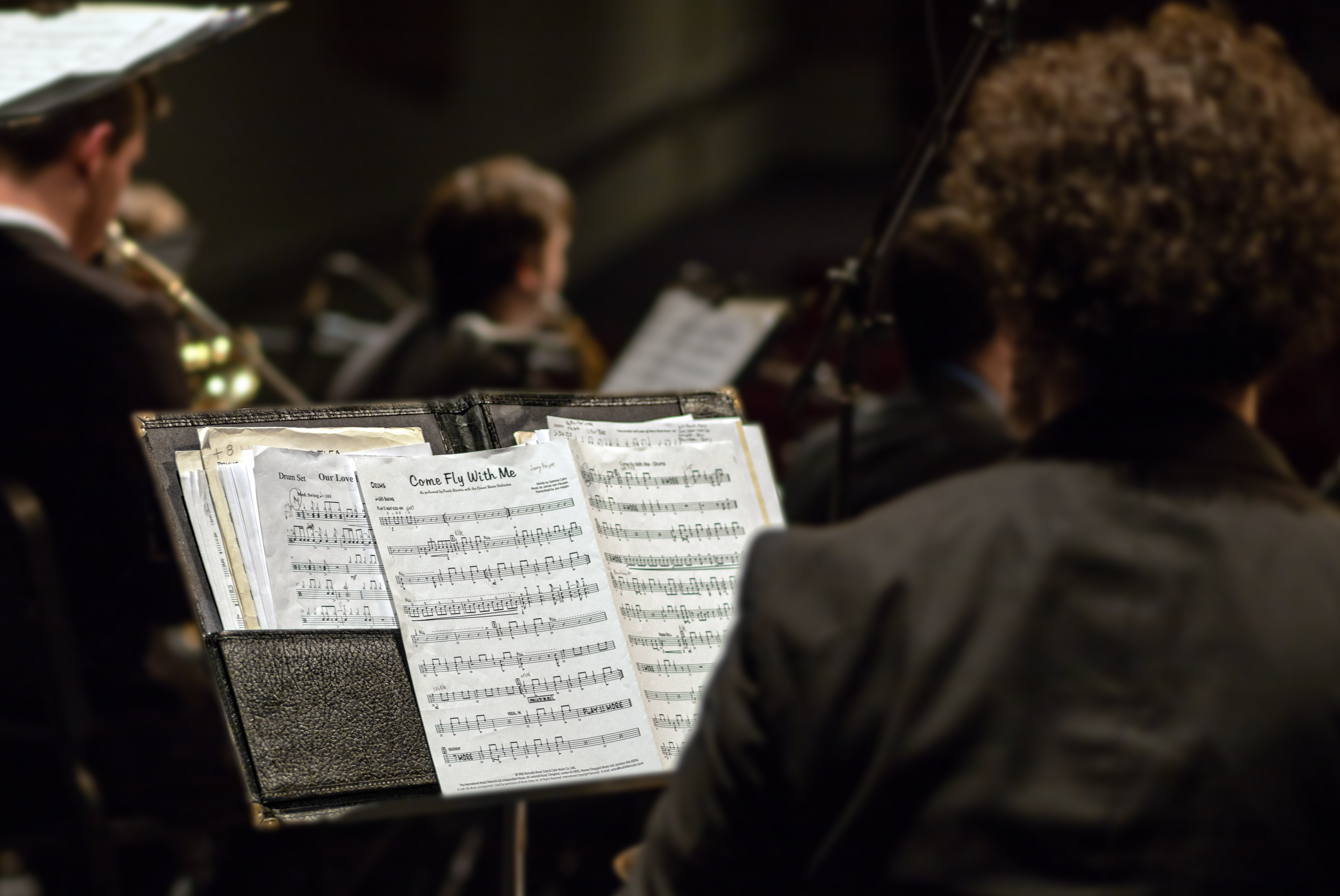
Drumset, optional
Contest solo or a variety of styles:
- Medium swing
- Swing in ¾
- Bossa nova
- Rock
- Funk
Piano
- Perform at least two solo compositions in contrasting styles. Students may choose from Baroque, Classic, Romantic and Modern repertoire. It is recommended that at least one of the pieces be memorized.
- Students may be asked to sight-read a short selection chosen from intermediate repertoire.
Voice
- Students need to prepare two art songs, no musical theatre, one in English and preferably another in a foreign language. An accompanist will be provided.
Strings
- One major and one minor scale, preferably three octaves.
- One scale should be played spiccato, and the other slurring four ascending and martelé descending.
- Two pieces or movements from contrasting historical periods and/or styles.
Jazz Studies
Students should be prepared to perform with a backing track three tunes of varying styles, such as swing, Latin, ballad or waltz. Students will be asked to play the melody and improvise over the chord changes. Memorization of materials is encouraged but not required. Tunes should be selected from the standard jazz repertoire, the likes of which can be found in leadsheet form in resources such as The Real Book, 6th edition, Hal Leonard, multiple volumes, and the Jamey Aebersold Play-A-Long series. The following list offers a handful of suggested tunes:
- Autumn Leaves
- Blue Bossa
- Blue Monk
- Take the A Train
- Doxy
- In a Sentimental Mood
- Impressions
- Mr. P.C.
Rhythm instruments should also be prepared to demonstrate comping skills for piano or guitar, or walking for bass. Those auditioning on drumset will be asked to demonstrate a variety of styles, including but not limited to swing, up-tempo, Latin styles, rock/funk, brushes, waltz and trading fours.