


Wichita State University
Removing Barriers To Access Your Road To Success!
Greetings from the Director of the Office of Student Accommodations and Testing
The Bonnie Marcus Office of Student Accommodations and Testing (OSAT) is committed to ensuring that students with disabilities have equitable access to their educational experience at Wichita State University. Our ability to fulfill this mission is made possible by the dedication, expertise, and collaborative efforts of the OSAT team.
Our staff includes Jennifer Nicholson, Assistant Director; Kimmie Duncan, Testing Coordinator; Kelly Rawlings, American Sign Language Lead Interpreter; Greg Gegan, Access Coach; Dr. Josh Roeder, Access Coach; Kayla Saens, Access Coach; Shasta Steinert, Access Coach; and Stacy Shanahan, Administrative Specialist.
The scope of OSAT’s work continues to grow. During the year, our team provided accommodations and support to more than 854 students with disabilities and proctored more than 7,000 examinations. Meeting this level of need requires a true team approach, with staff contributing across responsibilities to ensure students receive timely, consistent, and individualized support.
I am grateful for the commitment of our staff and the important role they play in reducing barriers, promoting access, and supporting student success. Their work reflects the mission and values of OSAT and strengthens Wichita State University’s commitment to creating an accessible learning environment for all students.
Isabel Medina Keiser
Director, Office of Student Accommodations and Testing
Mission Statement
The Office of Student Accommodations and Testing (OSAT) provide leadership, guidance, and facilitation of equal access for disabled students resulting in their full participation in curricular/co-curricular offerings and provides a professional testing environment for the campus and the community. We are committed to maintaining professional testing standards and practices. We adhere to the guidelines set forth by the National College Testing Association (NCTA).
Vision Statement
OSAT will be a global leader in higher education in developing environments that promotes full accessibility for all students in curricular/co-curricular offerings and will be part of an integrated testing service at Wichita State University.
Program Elements
OSAT offers a comprehensive and coordinated and student-centered approach to addressing the diverse access needs of the Wichita State University community. OSAT works collaboratively with students, faculty, staff, and campus partners to reduce barriers and ensure equitable access to academic experience. Key program elements include:
- Individualized Student Support: Conducting one-on-one meetings with students to identify academic and environmental barriers, determine reasonable accommodations, and develop individualized plans based on each student's documented needs and educational experience. Accessible Course Materials: Coordinating the provision of course materials in accessible alternative formats, including Braille and other formats, through collaboration with the Media Resources Center (MRC) and other campus partners.
- Faculty and Instructor Consultation: Consulting with faculty and instructors regarding the effective implementation of course-related accommodations while maintaining essential course requirements and avoiding fundamental alterations to academic programs or learning objectives.
- Student Recruitment and Outreach: Participating in university recruitment and outreach initiatives to provide prospective students and their families with information about disability-related accommodations, testing services, and available support. New Student and Family Orientation: Participating in university orientation programs to welcome incoming students and families and providing early information about accessing accommodations, requesting services, and successfully navigating the transition to Wichita State University.
- Campus Accessibility Leadership and Consultation: Partnering with the ADA Director and campus stakeholders to advance accessibility across university programs, services, facilities, and initiatives. OSAT provides consultation and representation on accessibility-related committees and initiatives to identify and reduce environmental and programmatic barriers to participation.
- Education and Campus Outreach: Providing presentations, training, and consultation for students, faculty, and staff on disability awareness, disability culture, accessible design, and the role and scope of OSAT. These efforts promote greater understanding of accessibility and encourage accessibility practices across the university.
- Housing and Dining Accommodations: Collaborating with University Housing and Dining/Catering to coordinate reasonable accommodations and address disability-related access needs within the residential and dining experience.
- Testing and Proctoring Services: Providing accommodated testing for students when faculty or academic departments are unable to provide approved testing conditions, as well as proctoring services for other institutions and external testing providers, including Kryterion, ETS, Meazure Learning, PROV, and Pearson.
Program Outcomes
The Office of Student Accommodations and Testing (OSAT) supports Wichita State University’s commitment to equitable access by working to identify and reduce disability-related barriers within curricular and co-curricular environments.
As a result of their engagement with OSAT, students will:
- Understand their rights and responsibilities related to disability access and reasonable accommodations.
- Effectively navigate the accommodation process and utilize approved accommodations and testing services.
- Strengthen self-advocacy skills and communicate disability-related access needs appropriately.
- Experience equitable opportunities to participate in curricular and co-curricular activities.
- Demonstrate academic progress and persistence comparable to the broader student population.
OSAT also collaborates with faculty, staff, and campus partners to advance accessibility and accessibility practices across the university.
Department Highlights
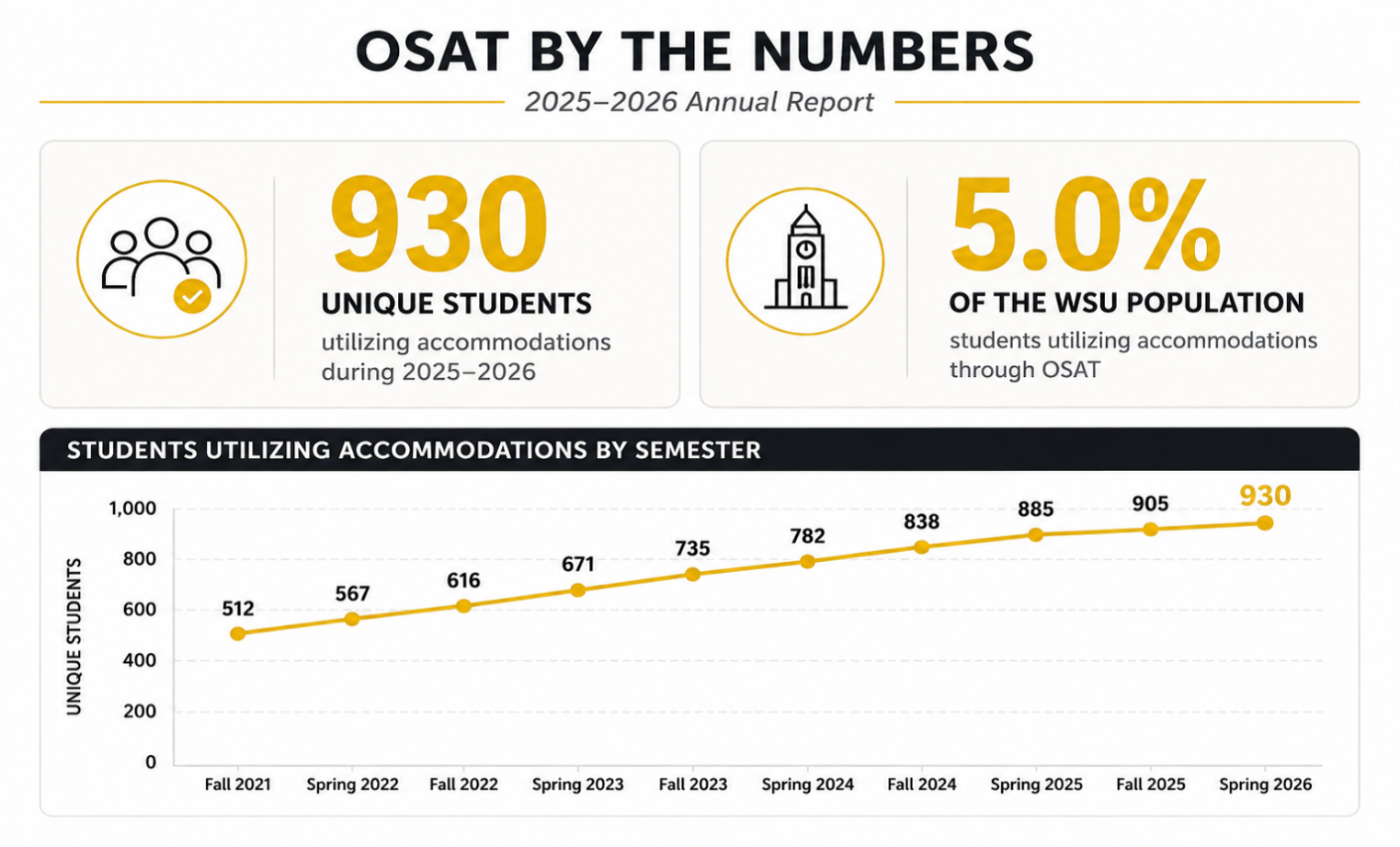
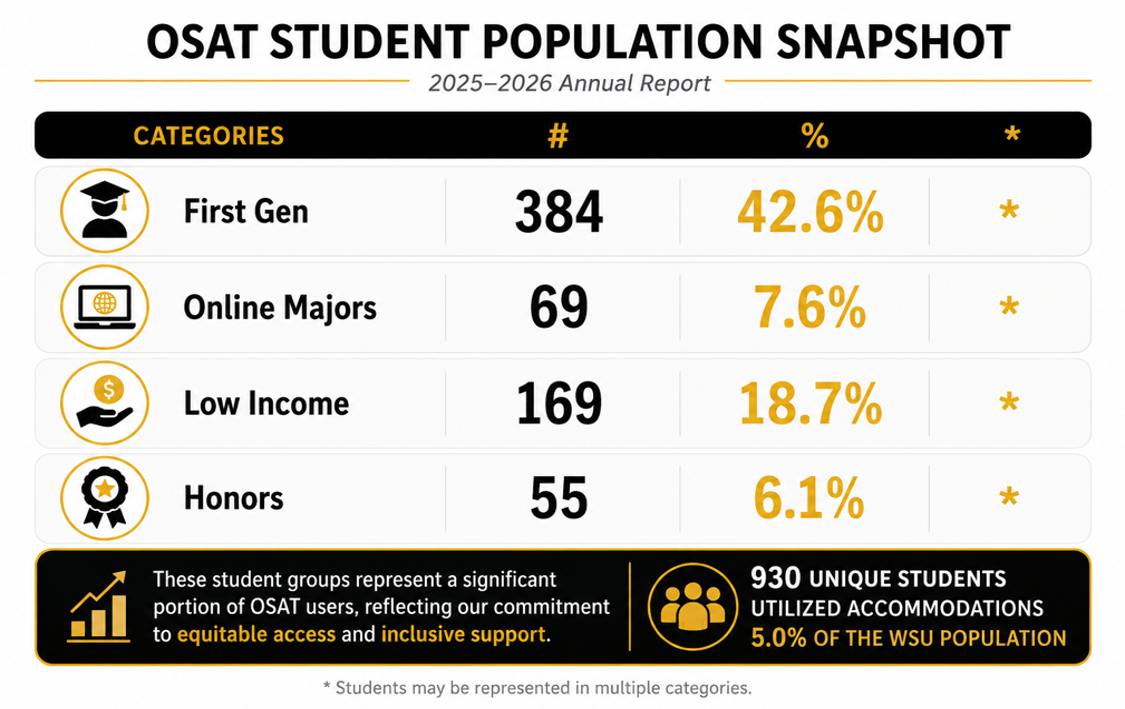
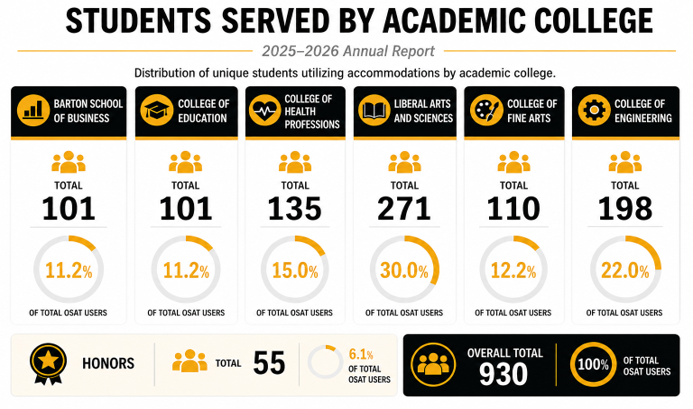
During the 2025–2026 academic year, 930 unique students utilized accommodations through OSAT, representing approximately 5.0% of Wichita State University’s student population.
Student utilization of accommodations continues to increase, reflecting growing demand for accessible services and support. This trend reinforces the importance of maintaining the capacity, resources, and infrastructure necessary to meet evolving student needs.
The average caseload per Access Coach is two hundred students.
Number of Hours of ASL Interpreting Service Provided
- The total number of ASL Interpreting Services hours for students was 1403.
- The total number of ASL Interpreting Services hours for events was 117.5.
Mobility Rides | Shocker Assist
In August 2025, OSAT partnered with Parking Services to launch Shocker Assist, expanding accessible transportation for students with disabilities across campus.
OSAT determines eligibility for mobility ride accommodations, while Parking Services
coordinates and provides transportation services.
Through Student Affairs, two new golf carts were purchased to support the program, including an ADA-accessible cart equipped with a wheelchair ramp, expanding WSU’s ability to serve students who use wheelchairs.
Shocker Assist operates Monday–Friday, 7:00 a.m.–11:00 p.m., providing reliable campus transportation throughout the academic year and across varying weather conditions.
During 2025-2026 academic year:
2,269 — Total Mobility Rides Provided
54 — Individual Students Served
Proctored Testing
OSAT provides secure, accessible proctored testing services for students receiving testing accommodations and other students utilizing the Testing Center. During the 2025–2026 academic year, OSAT administered 7,163 exams for 2,819 unique students, including 4,935 accommodated exams.
Testing at a Glance
7,163 — Exams Proctored
4,935 — Accommodated Exams
2,819 — Unique Students Served
1,134 — Unique Exams Administered
29 — Average Exams Completed per Day
2.5 — Average Exams per Student
2 — Average No-Shows per Day
204 hours — Average Registration Turnaround Time
100+ — Daily Testing Capacity During Midterms and Finals
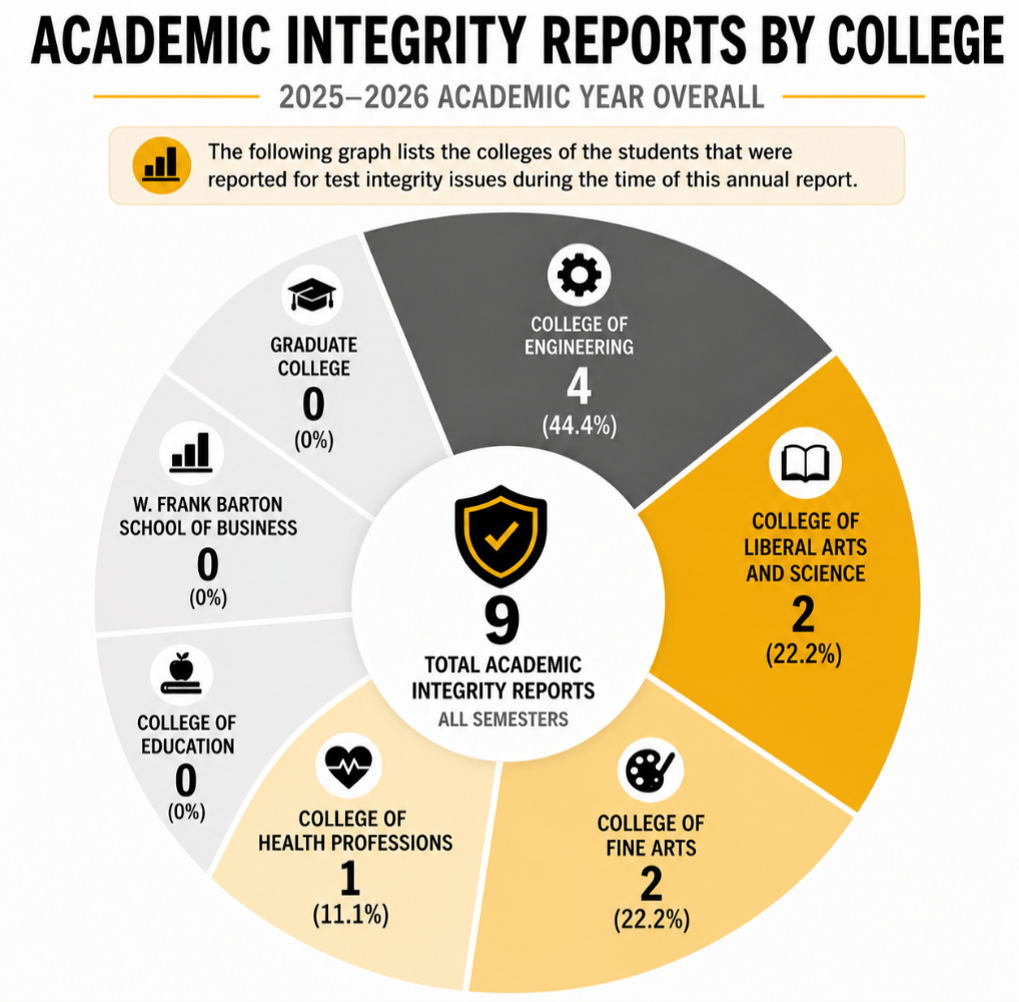
Testing Integrity
OSAT continued to strengthen testing security, procedures, and accountability throughout
the academic year. Nine testing integrity concerns referred to Student Conduct & Community Standards, compared with 16 the previous year, a 44% decrease.
The reduction coincides with strengthened testing integrity policies and procedures
designed to promote consistency, protect academic integrity, and maintain a secure
testing environment.
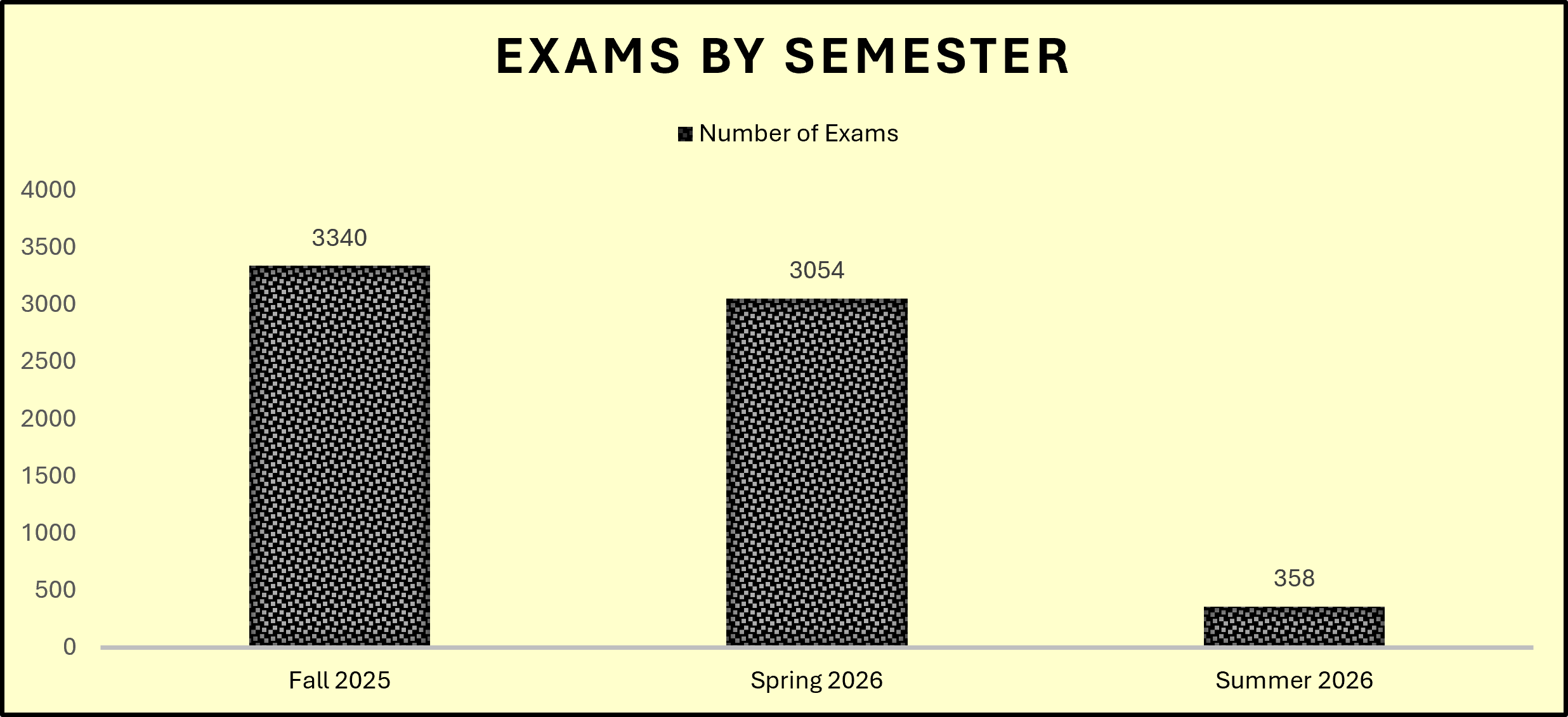
The following table shows the number of completed, scheduled, and no-show appointments made by testers from June 2025 – July 2026. These testers vary between all WSU students and community members.
| Types of Exams | Completed | Scheduled | No-Show |
|---|---|---|---|
| Accommodated Testing | 4935 | 5300 | 365 |
| Make-up Testing | 1294 | 1346 | 52 |
| Non-WSU testing | 113 | 115 | 2 |
| College Learning Assessment | 53 | 87 | 34 |
| Credit By Exam (CLEP, Departmental) | 53 | 56 | 3 |
| English Validation Exam | 16 | 21 | 5 |
| CPCE | 78 | 78 | 0 |
| Certification Exams | 6 | 6 | 0 |
| Kryterion | 68 | 73 | 5 |
| Meazure Learning | 273 | 314 | 41 |
| PROV | 215 | 231 | 16 |
| SmarterProctering | 8 | 8 | 0 |
| WSU-Student Athletes | 51 | 52 | 1 |
| Total Number of Exams | 7163 | 7687 | 524 |
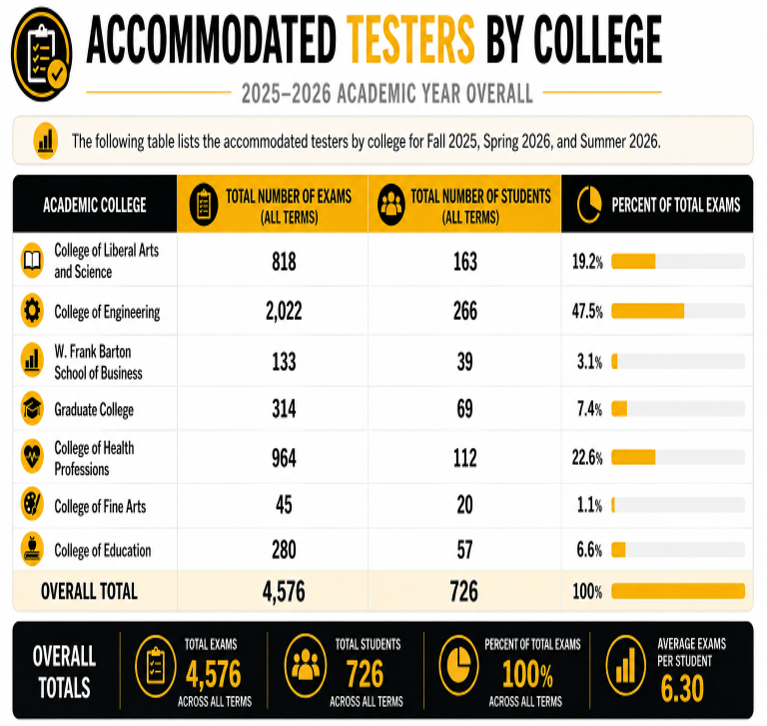
Emerging Trends Affecting Students with Disabilities
OSAT continues to identify emerging needs that influence how students with disabilities access and navigate the university environment. Key trends during the 2025–2026 academic year included:
Access to Diagnostic Resources
An increasing number of students are connecting with OSAT following a recent diagnosis
or without a comprehensive assessment needed to establish eligibility for accommodations.
This has increased the need for affordable diagnostic and assessment resources. OSAT
has collaborated with SGA and campus partners to help address this barrier.
Belonging and Campus Engagement
Students with disabilities may encounter accessibility barriers that affect their
sense of belonging, engagement, and overall campus experience. OSAT continues to collaborate
with Student Outreach & Support (SOS), Success Coaching, and other campus partners
to strengthen connections to resources and support.
Self-Advocacy and Accommodation Navigation
Some students need additional support understanding how to communicate with faculty
and effectively utilize their approved accommodations. OSAT continues to strengthen
student self-advocacy while working with faculty and academic leaders to promote consistent
and effective implementation of accommodations.
Campus Education & Collaboration
In response to these trends, OSAT expanded collaboration with ADA Compliance/CTAC,
the Office of Civil Rights/Title IX, the Media Resource Center, academic leadership,
and other campus partners.
During Summer 2026, training and outreach were provided to the academic colleges.
These partnerships support a shared institutional responsibility for reducing barriers, strengthening accessibility, and creating more accessible student experience.
Student Government Association Partnership
OSAT partnered with the Student Government Association (SGA) on two initiatives designed to reduce barriers for students.
Assistive Technology: With SGA funding, OSAT implemented Kurzweil 3000, an assistive learning platform available to all WSU students. During the reporting period, more than 303 students downloaded the software.
Diagnostic Assessment Support: SGA established the ADHD, Autism, or Learning Disability Testing Scholarship Support Fund to help reduce the financial barrier associated with diagnostic evaluations. During the reporting period, 10 students received funding for assessments through the WSU WISE Clinic.
SGA has recognized diagnostic assessment access as an ongoing student need and plans to continue discussions during Fall 2026.
Success Team Collaboration
OSAT, Student Outreach & Support (SOS), and Success Coaches continued their collaborative
Success Team approach to strengthen faculty connections and promote earlier student
support. Recognizing faculty as key partners in identifying students who may need
assistance, the offices focused on increasing awareness of resources and creating
clear pathways for referrals.
Key efforts included departmental liaisons (“Vessels”), faculty and graduate teaching
assistant meet-and-greets, classroom and orientation presentations, and cross-training
across the three offices.
These efforts strengthened faculty relationships, increased referrals, and supported
earlier intervention. Moving forward, OSAT will continue expanding faculty outreach,
developing faculty champions, and providing educational programming that strengthens
the university’s coordinated approach to student success.
Collaboration with Outside Agencies
Collaboration does not stop at the curb of the WSU campus. OSAT has a great collaboration
with Envision. The mission of Envision is to improve the quality of life and provide
inspiration and opportunity for people who are blind or visually impaired through
employment, outreach, rehabilitation, education, and research. The Director of OSAT
provides a workshop to young people about transitioning to college that are attending
the Level Up Program. The Level Up Program was developed in 2006 to address the learning
gap between students who are blind and visually impaired and their sighted peers,
the Level Up Program partners with teachers, families, assistive technology professionals,
community professionals, colleges and universities to guide students as they set goals
and achieve success. This comprehensive national program provides access to ongoing
support and resources for students who are blind or visually impaired at every stage
of their education.
Envision provides free training on a semester basis for staff and professors. The
focus of the training provided by Envision is on Interacting with People Who Are Impaired
and Sighted Guide Technique. Sighted guide technique refers to a method by which a
visually impaired person and a sighted person can walk together safely and comfortably.
Specific techniques and movements of the Sighted Guide Techniques allow the pair to
negotiate a variety of travel situations safely, comfortably, and efficiently.
One of the positive outcomes of the collaboration this year is that one of the attendees
of the Level Up Program decided to attend Wichita State University instead of their
hometown university in Illinois. The student stated that she felt that her disability
needs would be supported at WSU.
Staff Development
OSAT invested in professional development to strengthen accessibility services, student
support, and testing operations. For the first time, all OSAT Access Coaches attended
the AHEAD Conference, with training focused on disability law and compliance, accommodations, accessibility,
neurodiversity, Deaf and hard-of-hearing access, academic coaching, and accessibility
practices.
OSAT testing staff also attended the National College Testing Association (NCTA) Conference for the first time, gaining training in testing operations, technology, and best
practices as the Testing Center works toward NCTA certification.
Staff continue to apply these practices to enhance service delivery, accessibility,
and student experience.
Staff Recognition
OSAT staff received several university and divisional honors during the 2025–2026 academic year, recognizing their commitment to service, engagement, and student support. Honors included the Shocker PROUD Responsive Services Award, Pillar Award for Engage, Student Affairs Unsung Hero Award, and the Marcellino “Chelo” Huerta Award.
“Our Wins”
The 2025–2026 academic year marked OSAT’s second year in the Bonnie Marcus Office of Student Accommodations and Testing within the Shocker Success Center. Made possible through the generosity of David and Billy Marcus in memory of their sister, Bonnie, the space reflects a lasting commitment to ensuring students with disabilities have the resources and support needed to succeed.
OSAT’s location within the Shocker Success Center has strengthened collaboration with student support offices and allows staff to provide more seamless referrals and warm handoffs to services across campus.
OSAT also continues to benefit from the generosity of George and Nikki Hansson, whose ongoing support provides funding for assistive technology and includes a planned estate gift to further OSAT’s mission.
These investments and partnerships strengthen OSAT’s ability to reduce barriers, expand access, and support student success.
Challenges & Opportunities
OSAT continues to address barriers that may affect access, transition, and persistence for students with disabilities. During 2025–2026, key areas of focus included early connection and student retention.
Early Connection
OSAT continued its presence at Wichita State admissions events, providing prospective students and families with early information about disability documentation, accommodations, and available resources. Early engagement helps students better prepare for the transition to college and connect with OSAT before arriving on campus.
Retention & Technology Access
Students registered with OSAT achieved a 91.7% fall-to-spring persistence rate during the reporting period. OSAT also continued its partnership with Resource 2 Success (R2S) to address technology barriers that can affect academic progress.
Through this partnership, 26 OSAT students received laptops during the 2025–2026 academic year, providing access to technology needed to support their continued academic progress.
These efforts reflect OSAT’s continued focus on identifying barriers early, connecting students with resources, and supporting persistence toward degree completion.
Student Experience & Satisfaction
The following are the student responses and satisfaction rates from our OSAT spring 2026 satisfaction survey. The outcomes of the survey demonstrate the quality of service and student impact.
Question #1: Do you have any additional feedback about the services provided by OSAT?
- Great to work with and no further comments or suggestions.
- I really appreciated Joshua Roeder as my Access Coach. He pursued all of the accommodations that could help me be a successful adult student. He was compassionate as I had just received my diagnosis and did not make me feel ashamed for asking for help. Thank you Joshua!
- My experience was good and without any casualties whatsoever
- Joshua Roeder is amazing! He is always there to help and is passionate to see his students succeed and get the help they may need. I'm thankful for all his assistance he's given me the last 3 years!
- No. Excellent experience.
- Thankful for this program
- They are all amazing and a huge part of my WSU experience!
- This last semester I did not need to use the testing center. But knowing it is there for future use is helpful. My teacher was informed of my needs and did her best to make sure she had lecture notes posted in a timely manner.
Question #2: Do you have any additional feedback or recommendations to enhance accessibility and accommodation processes within our department or campus community? Please explain below.
- I am so grateful to have you as resource to success
- No. Like I say, excellent experience. My needs as someone with disabilities are not only met but exceeded.
- None. All my teachers were very accommodating. I truly appreciate each one of them.
Question #3: Do you have any additional feedback about your experience with the testing services at the Office of Student Accommodations and Testing?
- It was very helpful.
- No. Excellent service
- This office is among the most important offices around the campus. It makes sure students are successful in their academics by providing support and accommodations, especially to those students who need such services. The staff at OSAT are professional and awesome. Thank you!
Student Experience & Satisfaction
The following are the satisfaction rates from our spring 2026 survey. The outcomes of the survey demonstrate the quality of service and student impact.
Annual Satisfaction Survey: Service Quality
Agreement rate:
- The OSAT personnel were informed and helpful (satisfaction rate of 94.82).
- Level of satisfaction with the accommodations process: - initial appointment (satisfaction rate of 94.44).
- Level of satisfaction with the accommodations process: - registration process (satisfaction rate of 90.74).
- Level of satisfaction with the accommodations process: - OSAT communication with faculty about your accommodations
- Rate the overall services provided by OSAT (satisfaction rate of 96.3)
Student Success Outcomes
Agreement rate:
- I am more likely to continue at Wichita State University because of the services provided by OSAT (satisfaction rate of 93.1).
- The services provided by OSAT positively impacted my overall experience at WSU (satisfaction rate of 96.55).
- The services provided by OSAT positively impacted my mental health and well-being (satisfaction rate of 91.38).
- The services provided by OSAT made me feel accepted and included on campus (satisfaction rate of 81.04.
- The services provided by OSAT positively contributed to my learning and development at WSU (satisfaction rate of 89.66)
Conclusion & Looking Ahead
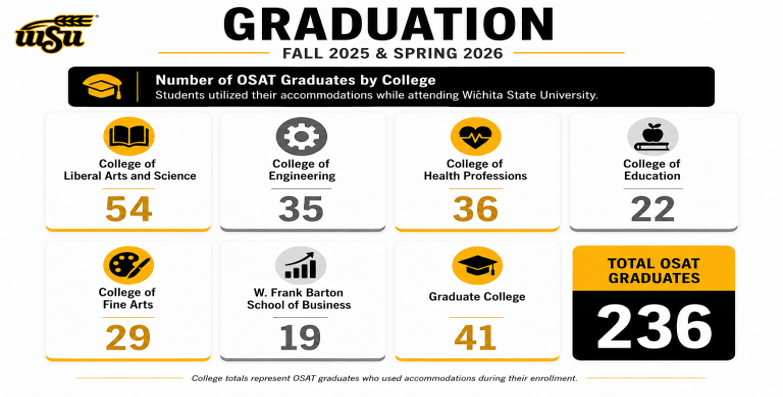
The 2025–2026 academic year reflects OSAT’s continued commitment to removing barriers and creating equitable opportunities for students with disabilities. Student persistence, graduation, service utilization, and satisfaction data demonstrate the meaningful role OSAT plays in supporting student access and success.
This work is made possible by a dedicated team that remains focused on a shared commitment: Student First. Through collaboration, adaptability, and a commitment to best practices, OSAT continues to respond to increasing and evolving student needs.
Looking Ahead
In 2026–2027, OSAT will focus on:
- Strengthening student belonging and connection to the WSU community.
- Supporting student learning, development, well-being, and persistence.
- Expanding campus partnerships and identifying resources to reduce accessibility barriers.
- Investing in staff development, training, and support to maintain high-quality services.
- Preparing for expanded accommodation and testing services at the Wichita Biomedical Campus (WBC).
The expansion to WBC represents both an opportunity and a significant operational challenge. OSAT will continue working with university partners to develop the staffing, resources, and infrastructure necessary to provide equitable access and testing services for students at the new campus.
As OSAT looks to the year ahead, our commitment remains clear: reduce barriers, strengthen access, and put students first.