Battin-Lester Corporate Responsibility Outstanding Essay Award
The Battin-Lester Essay Award competition is intended to promote campus and community
discussion about civic engagement, corporate responsibility, and nurturing an inclusive
Wichita community. Winners are selected by a committee of reviewers and announced
in May/June. For more information and a link to apply, see “How to Apply” below.
Award: Up to $2,500 for the top essay. Up to $1,000 for a second place essay.
Submission Deadline: April 1st.
Eligibility: Undergraduate students enrolled full or part-time at Wichita State University
Contact: Andrew Myers, Director of Scholarships and Student Services, Cohen Honors College
at andrew.myers@wichita.edu.
The Legacy of E.T. Battin and H.D. Lester
The Battin-Lester Corporate Responsibility Outstanding Essay Competition provides
funding for students who submit an essay on a pre-determined topic each year. Topics
are related to the areas of corporate responsibility, civic engagement, and nurturing
an inclusive Wichita community.
This award was created to stimulate the interest of the creative rainbow of Wichita
residents in becoming active citizens, and particularly to help the business community
and its leaders to remember that with increased privilege, wealth, and power come
greater responsibilities for community interests beyond self-interests or business
profits, which both E.T. Battin and H.D. Lester personified in their lives.
John Young, a 1965 Wichita State University history and political science major, established
this fund in 2020, with his wife Kathleen Moran. The fund is in memory of his maternal
great-grandfather, E.T. Battin and his maternal grandfather, H.D. Lester.
How to Apply
Select one essay prompt from the following options and upload your essay as a PDF
through the application form link below:
A) How should we be cultivating active civic engagement behaviors in Wichita’s educational
system? or B) From a historical and a present-day perspective, how has the Wichita business leadership community engaged
in corporate responsibility? And what action steps are needed for further engagement
in corporate responsibility?
Essay Requirements:
Essays should be a substantial piece of writing that articulates a clear position
with evidence, including qualitative or quantitative data when needed.
Essays should be prepared and edited ahead of submission.
Demonstrates understanding of standard grammar and style.
Demonstrates substantive and/or original thinking.
Essays will be submitted in PDF format and attached within the application.
APPLY HERE. If you link to the application from within the WSU system, your application information
will be saved as you work. The application will open up where you left off.
Submission Deadline: April 1st.
Eligibility: Undergraduate students enrolled full or part-time at Wichita State University
Award: Up to $2,500 for the top essay. Up to $1,000 for a second place essay.
Contact: Andrew Myers, Director of Scholarships and Student Services, Cohen Honors College
at andrew.myers@wichita.edu.
Additional Fund Guidelines:
No recipient will be excluded from consideration on the basis of age, ancestry, color,
disability, gender, gender expression, gender identity, genetic information, marital
status, national origin, political affiliation, pregnancy, race, religion, sex, sexual
orientation, or status as a veteran.
Recipients will be expected to present to individual classes or community events that
reflect diversity and are representative of the Wichita population. Additionally,
students will present their papers at one or more public meetings involving the Wichita
business and civic leadership community.
These funds are one-time awards.
Compensation: Up to $2,500 for top essay. Up to $1,000 for second place essay. Contact: Andrew Myers, Director of Scholarships and Student Services, Cohen Honors
College at andrew.myers@wichita.edu.
2022 - 2023 Recipient
Rija Zaheer Nazir
Major: Political Science
Classification: Senior
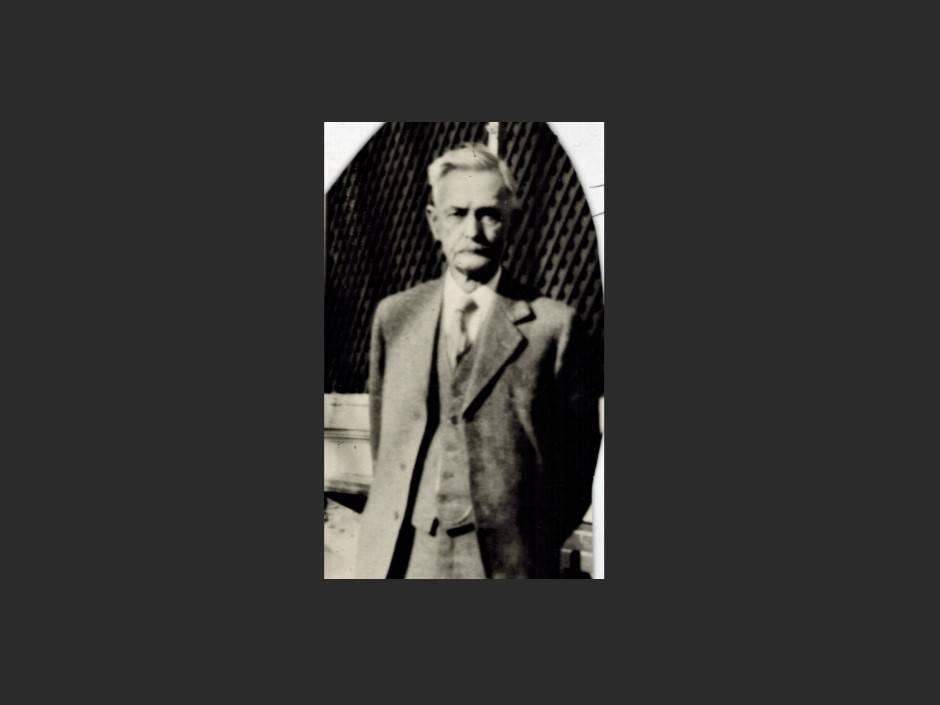
E.T. Battin
E.T. Battin was born in 1852 and died in Wichita in 1931. From ages 14 to 26 he was
his birth family’s breadwinner because his father was captured as a Union soldier
who became ill in a rebel prison, and came home to die. E.T. Battin moved west to
Kansas, Oklahoma Indian territory and Texas as a cowboy driving cattle north. When
Oklahoma opened to white settlers, E.T. started hardware stores to provide them with
the tools they needed for farming and ranching, and also continued his involvement
in the cattle industry. He got involved in a grain storage business, built hardware
stores in Wichita and elsewhere, a paint business, the Martin Metal business, and
real estate investments. He helped organize the National Bank of Wichita, which became
Kansas’ largest bank as the 4thNational and is now part of Bank of America.
E.T. Battin had great faith in Wichita. He was elected to the City Commission in 1911
and served for four years as its commissioner of finance. He was largely responsible
for the city’s excellent system of paying off bond issues yearly. In 1917, the Commission
adopted the Commission-City Manager form of government, and E.T. was prevailed upon
to become Wichita’s first City Manager until a professional could be hired, but did
so as a volunteer. He was also instrumental in the establishment of Wesley Hospital
and a leader in the First Methodist Episcopal Church.
E.T. Battin's daughter, Edna, met H.D. Lester on a pleasure boat trip up the Hudson
River from NYC to West Point. Edna and H.D. married soon after.
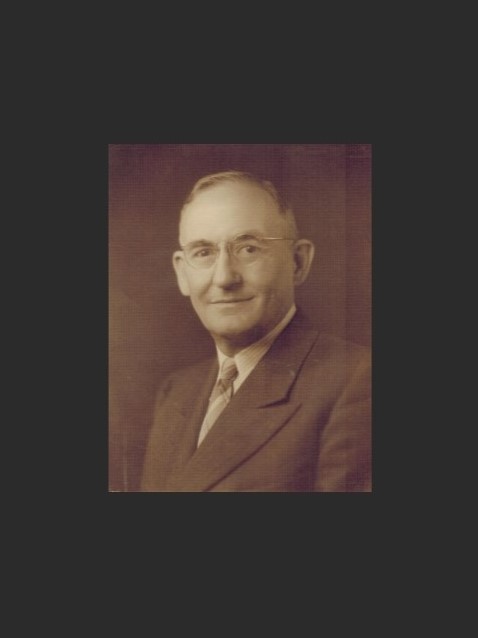
H.D. Lester
Lester grew up on his family’s farm in Haddock, Georgia, which they had owned since
1790. He was working for a Florida railroad when he met Edna Battin. He moved to Wichita
and worked in a coal company, organized and ran an insurance company, and then worked
his way up within the 4th National Bank, eventually serving as its Vice President and was also involved in
several Federal Savings and Loan businesses. He owned several Wichita-area farms and
kept up the Georgia estate with great affection and regular visits.
H.D. Lester was active in Wichita civic leadership for 43 years. He served as City
Clerk from 1915 to 1922, as an enthusiastic expander of Wichita’s park system, was
a member of its Park Board for 17 years, was hired as its City Manager, and served
as a City Commissioner from 1953 to 1957, including a term as Wichita’s Mayor.