


Wichita State University
Matson Takes Long View of Career, Fairmount College
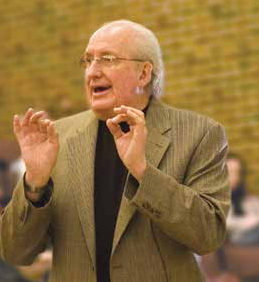
Ron Matson has spent two-thirds of his life at Wichita State. On July 1, he starts a new chapter: retirement.
He views his WSU journey fondly, beginning with his arrival on campus in 1970 as an assistant professor of sociology. He also gave lengthy service as the department chair for sociology, a position he held for 17 years. Most recently, he has served as dean of Fairmount College since 2012.
He recently participated in a retrospective interview. His responses appear below, edited for length and clarity.
The early years
All of my observations have to be couched in the understanding that I was a brand-new assistant professor who was earning his chops as a teacher, a researcher—somebody who was engaged with the community and the university.
There was a lot of unrest on the campus in the ‘70s, which excited me because I was afraid I was going to drop into some kind of bastion of conservatism, not only in the community and the state, but also in the university. There was tremendous energy and activism on the part of students in that period, a lot of it having to do with race. As I viewed the institution, I felt at home.
John Bardo came to the sociology department in 1973 and I benefited greatly from his leadership as chair. We got a small grant from the city to look at Wichita’s Skidrow. We spent about six weeks and tremendous amounts of time on East Douglas looking at and interviewing a lot of the people who lived there, the transients and the more permanent residents. The city was planning some kind of urban renewal project in the area and wanted to know what the impact would be. The goal on the part of the city was to have us as researchers tell them how to move “those people” out. There was no way to move them because they relied heavily on the services and businesses there. I never enjoyed doing research as much as I enjoyed doing that project.
Freedom to explore and support to succeed
Under the guidance and leadership of Dean Paul Magelli, and the department chair, John Hartman, I was given tremendous opportunity and freedom to express my particular interests. I was encouraged to develop into a faculty member with broad interests and I was given permission to explore those interests in a lot of different directions. I grew into my professional role under what I would see as a lot of freedom and support from Wichita State University.
My feeling about the college in the early years really stemmed from a good relationship with Paul Magelli. I felt affirmed by him and I felt as though the college office with Martin Reif (associate dean) was in really good shape. It was a progressive, enlightened environment with a lot of freedom to push through my interests. For example, they gave me money to take roughly 80 students a year to visit the Fort Worth federal correctional institution. We never raised the question about liability; we just went in private cars. I can look back on that and, boy was I lucky, because we had no accidents, no arrests. None of the things that could have gone wrong ever went wrong in that four-year period. We didn’t even have a car break down. We formed relationships with the prisoners who got weeklong furloughs to come here, teach in my classes, and give talks publicly. This was something really creative and it had a powerful impact on the students who were studying criminology. There was a tremendous sense of freedom and openness in the institution.
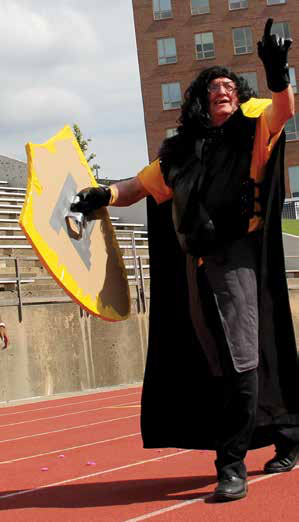
Matson at WSU’s 2017 Clash of the Colleges Welcomefest event.
Struggles Over the Years
Our college’s growing pains have been the same pains the university has experienced. It was difficult from the beginning to find the resources necessary to run the university and adequate state dollars for raises and starting salaries. We struggled with faculty recruitment then as we struggle with recruitment now because the market tends to outpace our ability to pay incoming faculty.
As a college, we had wonderful faculty, but we struggled to find a place for ethnic studies and to find a place for women’s studies. There was a tremendous amount of conservatism around that. As a liberal sociologist, I wanted to support those causes. I wanted them to be successful and we often had the door slammed in our faces.
We were pretty much bound in tradition. It was an energetic time, but almost all of that energy came out of the clash between some extreme sorts of liberalism that were happening at the national level, which weren’t necessarily received well here at the university.
We’re a lot more interdisciplinary now. We’re a lot more liberal in our perspectives and points of view. We’ve made the adaptations and the changes necessary to include diversity. Through the ‘70s and ‘80s and ‘90s we went through difficult economic times. I saw us integrate the School of Community Affairs to include gerontology, ethnic studies and criminal justice. Public administration moved out of political science and into the Hugo Wall School. These things happened with some difficulty and some angst. These are not easy things to decide. Collegiality among faculty has always been high and we work together effectively to resolve the issues we face.
We’ve always been looking for greater enrollments, and here we are in 2018, three years into a strategic enrollment management discussion. If you look back through those 48 years, we were always trying to grow university numbers, realizing that was critical to our revenue stream, to the institution, and to our future.

Ron Matson, mid-1980s
Highlights
A highlight is the thousands of relationships I’ve made, many of which I’ve carried on for long periods of time and the satisfaction that comes with that. I never really thought of myself as a mentor but other people do. From my point of view, I wasn’t really mentoring them at the time. I was simply forming a relationship with them I hoped would be of mutual benefit.
I would have to put my Professor of the Year award from the Carnegie Foundation as another. I was tremendously honored by that. It is a jewel in my personal history in this institution. I love going into the classroom and doing what I do. I never really expected to be rewarded for it in any way. There were also a lot of highlights with me being a chair of the department, and the reason is because of all the struggles chairs go through trying to be a colleague and a boss at the same time.
I have become so much more as a human being than I thought I would
be and I thank all my relationships and the institution for that. This is my crucible,
this is the entity out of which I was born. As a sociologist, as a faculty member,
as an administrator, it has been a gratifying process and I’m certainly grateful.
Lessons learned
As chair, I learned a lot about myself and about developing skills that would be of value to me in lots of different contexts and settings. In many respects it was a good training ground to be a dean. Being the dean afforded me the opportunity to see the institution from a new vantage point. I understand the institution in ways I never saw or came close to understanding prior to 2012. The problems we encounter at the departmental or college level are problems that require getting input from a lot of people and taking the time to manage the many decisions that have to be made in order to resolve those more complex issues.
An early lesson that my students taught me that I’ve carried through the 48 years, and has been reinforced tremendously as a dean, is that you can’t please all the people all the time. There is simply no way to do that. We all understand that, but learning and integrating it into your consciousness frees you up to make decisions that are almost impossible to make. So for all the people out there whom I’ve offended over these many years and many associations, I can apologize for that. I act out of my clear values as best I can and I know not everyone is going to agree. There will be offense taken, but at the same time operating in that format preserves some of my integrity.
The future of the college
We have to remember what we’re all doing here, what all this energy and all this work is for. We need to find ways to empower and integrate students into an impactful decision-making role coupled with faculty commitment and leadership. I am confident we will land on our feet and continue to be the foundation of education at Wichita State University.
I have a kind of Charlie Brown optimism. I am genuinely optimistic about the future of Fairmount College. That optimism stems more from knowing who we have as faculty and staff to lead the college and the institution, and implicit faith that whatever struggles are around the corner, the people we have in place today will effectively deal with them and move the college in a positive direction. The college will change necessarily as the world and Wichita State are changing. This change will not be easy, but it will be incredibly valuable and the value of the change will be for the students. Our students at Wichita State University, and particularly the Fairmount College of Liberal Arts and Sciences, need the opportunity to be a guiding force in our collective future. I believe the college is in a position to facilitate the unfolding of students’ dreams and their aspirations for the future.
Dean's Message
Dear Fairmount College Alumni,
This will be my 12th and last column for the Fairmount College of Liberal Arts and Sciences Newsletter. Please indulge me as I write a bit of a retrospective about 1) the transition in the Fairmount College office this the past year, and 2) a chance to look toward the future.
Transitions
The fiscal year of 2017-2018 has been a time of immense change for our college office. Some people have departed the college and left their personal, positive marks.
First, Marche´ Fleming-Randle, who had served as senior assistant dean for students, has transitioned to vice president for diversity and community engagement. In her time as a member of the college staff, she handled student academic issues, and faculty, with great skill and insight. She was, and is, a results-oriented person who has genuine appeal across diverse constituencies. Thanks, Marché, for teaching us to be more inclusive and how to laugh in the process.
Candice Weathers, former assistant to the dean, transitioned to a new position in the provost’s office as executive administrative specialist. While with Fairmount College, Candice was a force for calmness, compassion and quality work, and now she is spreading all that skill set to a broader audience. Thanks, Candice, for raising the humanity of work life for all of us.
Four new people have joined the college in the past two years. Kelley Smetak, assistant to the dean for finance, has taken responsibility for immense amounts of paperwork relating to hiring adjuncts and graduate teaching assistants, as well as keeping all of us apprised about the college budget and WSU Foundation accounts. She has brought us a quick wit and laughter.
Kaye Monk-Morgan is the new assistant dean for students and comes to us with 25 years of experience working with students in Upward Bound/TRIO programs. Kaye epitomizes professionalism and has already made immense contributions to the office and student culture through her work on recruitment, retention and the LAS Student Advisory Council.
Debbie Neill, assistant to the dean, came to us with years of experience in WSU Admissions. Hard working, quietly determined, bright, and holding an understated elegance are some of her fine qualities. She has already improved the college office’s ability to see the big picture and stay focused on the important work we do. Importantly, she has done all this for me and kept my schedule and me sane.
Joyce DalPorto-Ward, administrative specialist, is handling calls, traffic at the front desk, and demonstrating her prowess as an organized event planner in working with the Fairmount College Advisory Council. Joyce is our most recent addition and completes our staffing pattern for the first time in nearly three years. Yay!
Just as I am exiting at the end of June to make way for the new dean, Chuck Koeber, senior associate dean, will be transitioning back to sociology as a faculty member. He will have some LAS consulting responsibilities until the end of October so that the new dean can benefit from the knowledge gained through his 11 years of overseeing the LAS budget, working with departments to create the schedule of courses, and allocating funds for graduate students and adjunct professors. Often unseen, but essential to the flow of work throughout the college, Chuck has been our tutor and friend in the rapidly changing landscape at WSU.
Finally, there is one person who is neither brand new nor leaving. Cheryl Miller, senior assistant dean for college outreach, has been in Fairmount College nearly 25 years and will continue to be the master organizer of communication, marketing, college governance committees, college events and tenure and promotion, among many other things. I couldn’t have asked for a better confidant and friend during my six years in the dean’s office. Cheryl’s role under a new administration will be critical in the transition; having Cheryl in this role is perfect.
Looking toward the horizon
Change at WSU is unending these days, and Fairmount College responds to this dynamic with leadership and enthusiasm. Facing the future and looking at the horizon, some elements have become clear.
First, the faculty and staff of the college will continue to adapt as WSU moves toward a sustainable model of innovation and community impact by bringing our students opportunities for success in tomorrow’s world.
Second, growth in research funding continues as a priority, and recent success in the college indicates that the research future of LAS is bright indeed.
Third, Etzanoa, a recent archeological find near Arkansas City guided by Don Blakeslee, professor of anthropology, will unfold over the next 20 or more years as a jewel in our collective crown. This site was about 15 miles long when inhabited by the Wichita Tribe for several hundred years and grew to as many as 20,000 community members. The work has just begun and so many of us are left in breathless awe of this find that will rewrite Native American history on the Plains.
Fourth (as I wax philosophical for a moment as my swan song begins to play in the background), my life has been so intimately entwined with Fairmount College for 48 years that I know, unequivocally, this vibrant academy will embrace and grow generations more of faculty and students for the benefit of a better world.
Sincerely,

Ron Matson, Dean
Law Enforcement Training Center Brings WSU, City, and County Together
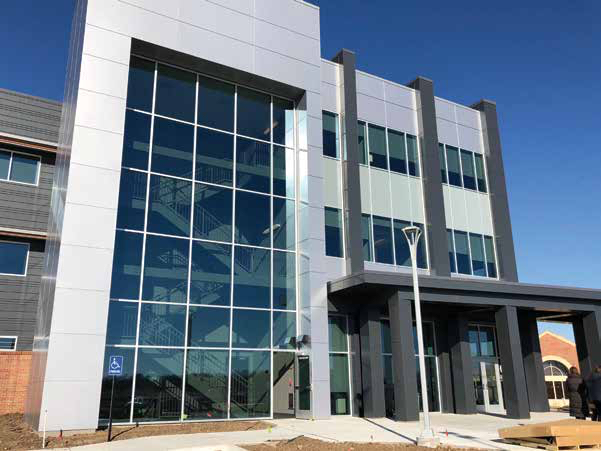
Although WSU owns the land, the city and county jointly own the building.
Police activity is a daily scene at the Law Enforcement Training Center on WSU’s Innovation Campus.
Officers walk around the first floor of the LETC, talking with police academy recruits and WSU students. Outside, several vehicles sporting Wichita Police Department or Sedgwick County Sheriff’s Office logos are parked near the building. A search and rescue bloodhound, Blue, sleeps in his crate in the rear of one of the SUVs, the rear hatch lifted for ventilation.
The building smells new. Bright yellow and gray lounge chairs and couches occupy corners of the building. Classrooms are spacious and are posi-tioned to let rays of sunlight beam through the windows. It’s a great improvement over the facility that previ-ously housed the police academy for more than 30 years, a former elementary school that was built in 1958.
It’s also an important step in combining the resources of Wichita State’s criminal justice program, WPD and the Sheriff’s Office.
“We have a long standing partnership with the two law enforcement agencies as well as many other law enforcement agencies in the state,” said Andi Bannister, interim director of the School of Criminal Justice and former WPD reserve officer. “It’s a long-standing relationship and we continue to grow and develop and work together. The fact that we’re now in the same building makes it that much easier.”
The main benefit to WSU is that it brings the academic department and criminal justice students into close working contact with law enforcement personnel.
“It’s exciting for students,” Bannister said. “It’s interesting because they can see police officers right here on campus and the officers see the students. The academy can potentially get more students from the School of Criminal Justice as officer recruits. It’s very much a win-win situation for both sides.”
Searching for space
Several years ago, academy personnel began looking for new, modern training space.
Michael Birzer, professor of criminal justice and former lieutenant for the Sheriff’s Office, initiated the idea with local law enforcement of building a center on Innovation Campus.
“A few years ago, I attended a college faculty as-sembly where at the time (former provost) Tony Vizzini made a presentation on the evolving Innovation Campus,” said Birzer. “I listened with great interest and began to reflect on how an applied social science field like criminal justice could become part of Innovation Campus.”
A few days later, Birzer attended a meeting at City Hall with some of the WPD command staff. WPD was looking at several options for a new training facility, he said, including the old Southeast High School.
“I asked if they had considered exploring moving training to WSU as part of the Innovation Campus,” Birzer said. “The idea really seemed to resonate with them and they wanted to hear more.”
Birzer put together information detailing the advantages to having a law enforcement training center on campus and how that might benefit law enforcement, WSU criminal justice students, and the campus as a whole. He also gained support from John Tomblin, vice president for research and technology transfer, and criminal justice faculty.
“To my surprise, the idea seemed to gather much momentum over about a six-month period up to the point where City Manager Bob Layton wanted to know more about the cost structure,” said Birzer. “Over several months, Dr. Tomblin and I attended several additional meetings with a wide variety of city and county leaders, and the rest is history.”
“After long negotiations between the city council, the county commissioners, the city manager, the sheriff and the police chief, Dr. Tomblin was able to put into motion the reality of building the center,” said Bannister. “Then there was some discussion about why wouldn’t our criminal justice department move there as well.”
The $9.5 million, 60,000-square-foot center houses crime scene rooms, a mock jail cell, tactical training and fitness rooms, a 911 training room and some office space. Classrooms for WPD and Sheriff’s Office training are located on the second floor. The third floor includes the classrooms and office space for the School of Criminal Justice.
“The first and second floors are secure, and only law enforcement and the academy have access past the front area,” said Bannister.
Campus safety
At a time when school shootings and other serious crimes appear regularly in the news, Bannister believes the unique arrangement of having the WSU Police and the police academy on campus makes WSU a safer place.
“The fact that you have the visual presence of law enforcement here makes us a safer campus,” said Bannister. “Even though this is the training academy, these are armed officers so if something were to happen, you have the WSU Police, the Wichita Police Department and Sedgwick County Sheriff’s Office right here on the campus. They can respond immediately, which is fantastic.”
In the event of an emergency, WSU Police will have primary jurisdiction. WPD and the Sheriff’s Office will respond if they are needed.
The future
Bannister believes the partnership will continue to grow and she characterizes it as the ideal situation. The school will be able to hire some law enforcement officers as adjuncts. Academy employees are developing an internship and co-op program for students, which will create more ap-plied learning experiences.
“That’s the beauty of Innovation Campus, that you are bringing these entities together. We are very pleased with how everything has turned out,” Bannister said.
ADVANTAGES OF THE LETC PARTNERSHIP
Michael Birzer, professor of criminal justice, played a primary role in bringing the Law Enforcement Training Center to campus. Below are some of the advantages he presented to WPD and Sheriff’s Office staff to bring the idea to fruition. The LETC arrangement would:
- Foster increased student internships.
- Create applied learning opportunities for criminal justice students.
- Present a host of opportunities for faculty and students to apply theory to real situations.
- Recruit promising WSU criminal justice students into local law enforcement agencies.
- Attract additional students to WSU who seek degrees in criminal justice and careers in law enforcement, thus broadening the recruiting pool for the police department.
- Offer additional credibility to law enforcement in the public’s eye by collaborating on research on controversial issues such as racial profiling or police use of body cameras or police relations with the minority citizenry. The possibilities are endless.
- Conduct research by the faculty as needed by the police department in order to establish and maintain evidence-based practices including but not limited to: police operations, police–community relations issues, victims services issues, criminal law and procedure, report writing, crime prevention strategies, program assessment/evaluation, biased-based policing, community-oriented policing and problem solving, computer forensics, digital evidence, diversity issues, organizational issues, statistical analysis techniques, survey construction and probability sampling, police officer promotional test review and validation, geographical information systems, and the like.
PROGRAMS IN CRIMINAL JUSTICE
The School of Criminal Justice offers three online programs. The newest degree, homeland security, was approved by the Kansas Board of Regents in December and is expected to generate interest across the nation. The other two online degrees include the bachelor and master of science, both in criminal justice.
Traditional, on-campus programs include the bachelor of science in forensic science, and the bachelor and master of science in criminal justice. Whereas the criminal justice and homeland security programs are based on behavioral science, the forensic science program is a hard science program, including technical and science-based labs.
In Memoriam
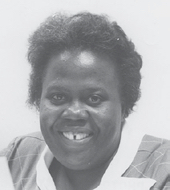
Bobbye Humphrey, 90, died Feb. 9. An assistant professor of social work and assistant dean of faculty for personnel, she was active in Wichita’s civil rights movement. She was known for devoting her life to advocating for others.
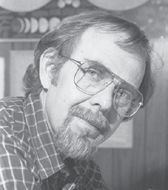
Phillip Schneider, 77, died March 20. A professor of English, he taught for 39 years. He served several years as the director of the master of fine arts in creative writing program and retired in 2006. Memorials may be made to Eagle Valley Raptor Center, 927 N. 343rd St. W., Cheney, KS 67025.

Tom Wallis, 54, died Feb. 14. He was the systems manager for the department of mathematics, statistics and physics as well as for the computer science department when it was part of Fairmount College. TOM WALLIS Memorials may be made to the department of mathematics, statistics and physics in care of the Wichita State University Foundation, 1845 Fairmount St., Wichita, KS 67260-0002.