


Wichita State University
Public Affairs is for Everyone
By Cheryl Miller
Your cousin in New Mexico starts a nonprofit microloan program for impoverished rural women wanting to open small businesses. That’s public affairs. Your daughter wants to create a lending library for kids in your neighborhood and share her love of reading. That’s also public affairs. Your state representative commissions a study from the Kansas Public Finance Center to find out the financial impact of proposed legislation. That’s public affairs, too.
What is public affairs not? That’s difficult to state because of its intentionally broad definition, according to Sam Brown, the new director of WSU’s Hugo Wall School of Public Affairs.
“From the literature’s perspective, what’s not public affairs is the pursuit of profit for profit’s sake,” Brown said. “Public affairs has the public good at its center.”
For example, social entrepreneurship, a relatively new field within public affairs, seeks foremost to create change for the public good, but also allows financial profit.
“If you are seeking a profit while pursuing a social mission, that can still be public affairs,” Brown said, “but if it’s clearly profit which is wealth maximization and profit maximization, then that’s not public affairs.”
Challenges to the Field
Brown views the public discontent with government as one of the most pressing issues for public affairs professionals today.
In the 1920s, the term “bureaucracy” had a good connotation. The system was viewed as one of the most efficient and effective ways to solve public problems.
“Now maybe 100 years later people use the term “bureaucratic” to describe things we are displeased with,” Brown said.
Ken Kriz, Kansas Regents Distinguished Professor of Public Finance, agrees.
"I think thatt it's fair to say that the public by and large fails to see how government activities add value to theeir lives," Kriz said. "Governments have to find innovative ways to effectively communicate how we make the lives of citizens better."
Meanwhile, disparagement toward government has encouraged the private market to cross into public activities.
Over the past 60 or 70 years, Brown said, the private sector has taken on an increasing
role in delivering public services, such as collecting child-support payments. If
a city government doesn’t have
the capacity to provide a service, such as snow removal from streets, it may hire
contractors to do it.
This contracting out has some wondering about the relevance of public affairs.
As a response, many young people are pursuing careers in the nonprofit sector, which is also folded under the banner of public affairs.
“They want to do public service, but they don’t necessarily want to do it in government because they see it as being too rigid and devalued,” said Brown. “They want to do public good and that’s where the nonprofit sector and social entrepreneurship hold so much promise.”
Although the private sector is also an option, it may be less attractive because of its focus on profit.
Privatization and the Potential for Perverse Incentives
In theory, the private sector is believed to provide services more cheaply and efficiently, but Brown says the evidence doesn’t bear it out. For example, the privatization of prisons should result in decreased expenditures. However, that doesn’t necessarily happen because of the occurrence of perverse incentives, which cause people to work against a goal someone is trying to achieve. The private prisons must make a profit in order to survive in the market.
“One would expect that as we privatize the delivery of prison services, expenditures on prisons would go down,” Brown said. “Then there are also competing arguments for what drives the expenditures and one would be the private sector has profit motive. They want to engage in behaviors to generate more revenue to generate more profit.”
What are some of the perverse incentives in this situation?
“Unfortunately, we’ve seen cases across the country where the private sector has colluded with public officials and certain judges to increase the number of individuals that are incarcerated,” Brown said. “There are some who suggest that there are predictive models around the characteristics of children that are motivating the investment decisions in prisons, that you can take reading and math scores of the second grade level and predict how many people are going to be criminals five, 10, 20 years out. Having the private sector involved in that profit motive, driving it, creates all these kinds of perverse incentives.”
Cuts to budgets and allocation of funds away from public services have complicated public affairs activities.
Kriz, the Regents professor, said that public and elected representatives have consistently voted to provide fewer resources to agencies to provide services.
“It has become imperative for public officials to come up with ways to provide similar levels of services, especially to vulnerable populations, with fewer resources,” said Kriz.
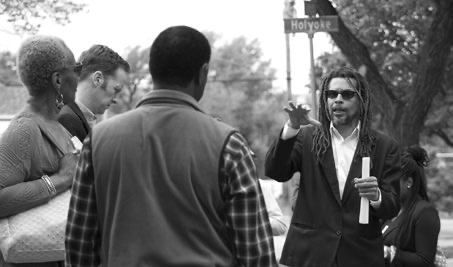
Darryl Carrington, community liason for the Shocker Neighborhood Coalition,
works to improve safety and community engagement in neighborhoods
bordering Wichita State. His work is made possible by a $250,000 three-year
grant from the Kansas Health Foundation.
Public affairs professionals can help by developing alternatives to incarceration and other ways of dealing with antisocial behavior. Social entrepreneurs may develop new programs that result in better outcomes and a reduction of U.S. incarceration rates, which Brown says are the highest per capita in the world.
Through their ideas and programs, your cousin, your daughter and your state representative may hold the keys to reducing incarceration rates and decreasing antisocial behavior.
That’s public affairs in action.
Centers of the Hugo Wall School for Public Affairs
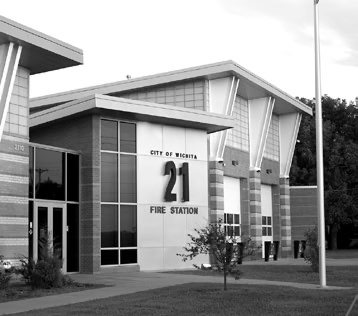
In addition to providing the Master of Public Administration degree, and offering the mini-MPA and several academic certificates, the Hugo Wall School serves as home to three centers that provide assistance to public affairs and elected professionals.
- The Environmental Finance Center promotes the development of financially and environmentally sustainable communities through facilitating the sharing of tools, technology and resources offered by a network of collaborators. It is one of 10 university-based centers across the country that provides communities with professional training, technical assistance and applied research to equip officials in making sound financial and environmental decisions.
- The Kansas Public Finance Center focuses on developing and implementing public strategies that promote economic vitality in Kansas, and advancing the study and practice of public finance. This is achieved by conducting and applying scholarly research, advising public and private policymakers, providing assistance on financial policies and practices, and organizing conferences and professional development workshops.
- The Public Policy and Management Center supports government and nonprofit managers, elected officials and communities by providing policy analysis, applied research, professional development, technical assistance, special projects, facilitation and consultationto further the public good. The center continues a long-standing mission of applied research and community service responsible for advancing excellence in public service by developing people and organizations.
For more information, visit wichita.edu/hws.
Faculty Spotlight: Sam Brown
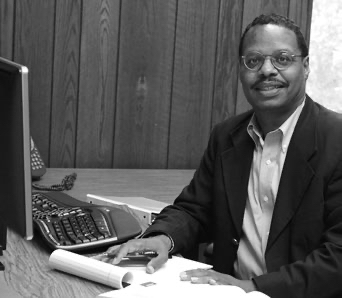
Although Sam Brown is committed to the advancement and support of public affairs, he began his professional career in the private sector, first working in investment management.
When the market experienced a significant downturn in the late 1980s, he entered the government arena as an assistant bank examiner with the Federal Deposit Insurance Corporation. This led to other positions in the public sector and eventually a move into higher education.
Brown arrived at Wichita State in July 2016 as the new director of the Hugo Wall School of Public Affairs. He has since spent some of his time considering ways to increase enrollment in the school. One avenue might include promoting enrollment in the graduate certificates related to economic development, public finance, nonprofit management, and city and county management, and developing additional career-directed degree programs. These certificates and the mini-MPA are popular credentials for professionals to demonstrate some of the skills and competencies they have developed for working in the public sector.
As a researcher, Brown studies health care disparities, the different experiences
of group level outcomes in health and access to health care. In doing so, he examines
the social determinants of health, the ways that neighborhood characteristics can
impact health and other social and economic outcomes. One of his current projects
is focusing on residents of the 67214 ZIP code.
One of the strengths Brown brings to his teaching is helping students understand how to analyze arguments.
“Public administration has a lot to do with argumentation,” Brown said. “I try to teach students how to evaluate arguments to determine how valid they are. It allows them to go beyond any particular ideological persuasion and to evaluate the evidence and to draw their own conclusions.”
A native of Baltimore, Brown is favorably impressed with Wichita. “Most people are not aware of the quality of life here,” he said. “There are hidden gems and amenities in the city most people are not aware of. There’s opportunity for students to pipeline from education to career-ready opportunities with a competitive edge in the marketplace. Education is relatively inexpensive.”
Brown has a son, Selwyn, who is a freshman Wichita State. His older son, Omar, is in Baltimore teaching high school history and social studies. Brown serves on the Wichita Jazz Festival Board of Directors and in his free time takes in Wichita’s cultural opportunities.
Brown holds a doctorate in public policy from the University of Maryland, Baltimore County, a Master of Business Administration from the University of Baltimore, and a bachelor’s degree in economics from Towson State University.
Graduate Research Explores Glioblastoma Tumor Cells Invasion in 3D Environments
By Emily Mullins

Since she was 7, graduate student Pranita Kaphle has wanted to make a difference in the field of cancer research. Attending graduate school at Wichita State University has allowed her to do just that.
She was inspired to find a treatment after losing an aunt to cancer, and the high death rate of glioblastoma cancer continues to motivate her.
“Many scientists and researchers are doing research on these tumor cells because they’re very aggressive and invasive,” said Kaphle. “What distinguishes my research from others’ is I’m using a 3D culture that mimics our body, and my process is entirely different.”
Glioblastoma multiforme (GBM), also known as grade IV astrocytoma, is an extremely rapid-spreading and aggressive tumor commonly found in the central nervous system. It typically arises from supportive cells found in the brain. Glioblastoma is the most common type of brain tumor and is often associated with a poor prognosis and high mortality rate. The likelihood of developing this tumor increases with age and is most commonly found in adults 45-65 years old. According to the American Brain Tumor Association, the average survival time following diagnosis is only 14 months.
Although there are many treatments available for GBM, including surgical removal, chemotherapy and radiation, the prognosis remains poor and quality of life diminishes.
“If I will be able to use an inhibitor to block the cancer cell invasion, it could be a therapeutic target of glioblastoma multiforme,” said Kaphle.
Kaphle is creating an innovative lab test that will allow her to test highly invasive cancer cells in a 3D environment, showing an accurate model of how these cells invade in the brain.
Studying with Li Yao, assistant professor of biological sciences, Kaphle is using a hydrogel to study the process of tumor invasion. She’s looking for a way to inhibit the rapid spread of the cancer cells.
“There are many different molecules that play a role in the migration of the cancer cells," she said. "I'm targeting different molecules, using different types of inhibitors to stop their pathways.
Kaphle began her studies in Nepal, but was in search of a university doing more in the area of cancer cell research. She heard about Wichita State from friends and began looking into the research going on here. She was thrilled to find there were WSU professors researching glioblastoma cells and applied to transfer.
Kaphle has found support outside of the classroom as well, which she said is extremely helpful in her success as an international student.
She will graduate in December 2017 with a master’s degree in biological sciences and plans to continue her research with glioblastoma cells.
In Memoriam
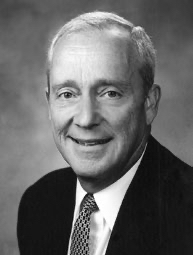
Paul Magelli, 85, died Dec. 4. The dean of the Fairmount College of Liberal Arts and Sciences from 1970-1983, Magelli went on to become president, Parkland College, Champaign, Illinois; president, Metropolitan State College, Denver; vice president for Academic Administration, Drake University, Des Moines, Iowa; and the founder and executive director of OSBI Business Consulting at the University of Illinois at Urbana-Champaign. Over the past few years he participated in a Mayo Clinic study for clinical and aging populations related to hypoxia, the response to altitude.
John McBride, a former faculty member in anthropology and later in finance, real estate and decision sciences, died Dec. 30. He was 85. Memorials may be made to the Flavia and John McBride Wichita State University Heskett Center Education Fund, WSU Foundation, 1845 Fairmount St., Wichita, KS 67260-0002.
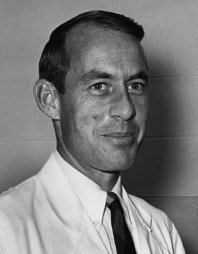
George Sweet, 83, died March 15. He served as a professor for nearly 30 years in the department
of biological sciences and retired in 1991. A memorial has been established with The
Sweet Emergency Fund (for the care of AIDS patients), 1010 N. Kansas St., Wichita,
KS 67214.
Dean's Message
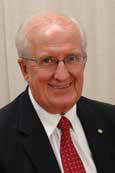
Dear alumni, faculty, staff and friends,
As we approach the end of the spring semester, it is difficult to imagine that most of this academic year has passed. Time rushes headlong into the future and just as things change, some things stay the same. Over the past six months and since the last newsletter, I have been busy with the following: 1) budget, 2) Strategic Enrollment Management, and 3) developing a Fairmount College Student Advisory Council. The remarkable staff of the Fairmount College dean’s office is my anchor in the winds of some tumultuous times. I thank them!
The budget at WSU and for Fairmount College is dramatically influenced by political happenings in Topeka that relate to taxation and a balanced state budget. These tight financial times have brought many, myself included, to the awareness that we are likely looking at two more years of such restriction and uncertainty. The silver lining in this scenario is the positive response I have received from almost all of the faculty and staff in Fairmount College who are working harder and harder to manage a growing list of demands on their time. When needed, faculty are teaching course overloads, sponsoring independent study and meeting the educational goals of our students. I am grateful for them!
The Strategic Enrollment Plan for WSU and Fairmount College is moving at full steam, focusing on improving recruitment and retention in ways that will affect the number of students attending WSU in fall 2017. In LAS, workshops with staff and faculty have generated ideas to help us reach our common goal of growing enrollments. With the support of Stan Henderson, consultant, this year has been focused on changing the culture in Fairmount College and better serving our students in ways that will maintain their commitment to entering our LAS majors and graduating. New courses, degrees and delivery modes are being developed in order to attract more students, and we are all being reminded of the value of a student-centered enrollment culture. Eleven undergraduate and graduate students have recently been selected to serve on the Fairmount College Student Advisory Council. Our first meeting was in March and began a dialogue between students and the dean’s office. Goal 5 in the WSU strategic plan speaks to “empowering students” and this added dimension of our work in the college is targeted to that end. Sixty-two people were nominated to serve on the FCSAC, and harnessing the energy and interest of this larger group will be our first order of business. Thank you, all of you, who continue to support our daily work in Fairmount College. Through time, energy, and financial commitment, you have become integral to the work we do and the college we are.
Sincerely,
Ron Matson, Dean