


Wichita State University
COVID-19 Course Content Gives Students Opportunities for Real-Life Applications
Amidst the chaos, confusion and grief of the coronavirus pandemic, Fairmount College of Liberal Arts and Sciences faculty stretch their teaching skills and use the experience for teachable moments.
Shaunna Millar, clinical professor of social work, teaches the Social Welfare Policy and Analysis class SCWK 717. Including materials about the pandemic allows her students to examine the disproportional impact of COVID-19 on people who are older, health-challenged and part of communities of color. Students see how systems meant to support vulnerable populations are affected.
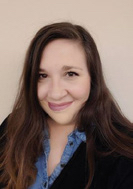
Shaunna Millar
“Students have the opportunity to understand that systems that are under stress during routine times will be more stressed in times of crisis, such as with COVID,” Millar said.
Ellen Terhan, a student in Millar’s class, said the most important thing she’s learned is that although everyone is experiencing personal sacrifices and losses because of the virus, its’ impact is not equal across populations.
"As a disease, COVID-19 has taken a disproportional toll on those most vulnerable in our society, specifically minorities and children living in poverty,” said Teran, a graduate student in social work. “These (impacts) are highlighted by the educational, health and economic effects these populations are experiencing.”
For Alexander Smith, who’s in the same class, it was learning that some of the progress that has been made across the globe is being reversed for the first time in more than 20 years.
“For example, it is estimated that nearly 71 million people are expected to be pushed back into extreme poverty in 2020,” Smith said. “This is the first time we’ve seen a rise in global poverty since 1998.”
Several Fairmount College faculty have incorporated content on COVID-19 into their courses. By being introduced to emerging research, current publications and historic events, students have the opportunity to look at the health crisis with the viewpoint of the academic discipline, and use their critical thinking and analytical skills to imagine solutions or improvements. Students spend time thinking about changes to recommend for systems or processes.
Teran is especially concerned about students and educators in the Wichita school district.
“It is imperative that our community start now in working to help the education system work efficiently and effectively to meet the needs of the students in our city. The Wichita Public School district is the largest district in the state and reports that 76.5% of its students come from homes of poverty,” Teran said. “Our community must work to find creative ways to ensure that students have access to resources, nutrition and support necessary to help them be successful, even in these unprecedented times. This includes staff and teacher trauma-informed training, recognizing that many students have or will experience significant trauma as a direct result of COVID-19. Educational policy moving forward must allow our local and state educators to have flexibility and resources necessary to help all students succeed.”
Her classmate Smith is concerned about the increase in poverty and wants to enhance services at his practicum placement where youth range in age from 6 to 18.
“Some of them come from lower-income homes and may not have access to multiple square meals a day, especially with school being remote now for many of them,” said Smith. “I would love to be able to set up some sort of weekly time where we could either cook a meal for the kids at the office, or send them home with food items, as needed.”
As more becomes known about the pandemic, faculty and students will have many opportunities to learn through real-life applications how to improve systems with lasting effects.
A Sampling of COVID-19 Class Content
In addition to Shaunna Millar and her SCWK 717 course, many faculty have incorporated aspects of the COVID-19 pandemic into their course materials. What follows is a sampling of their work.
- BIOL 220 Introduction to Microbiology: Joe Shellhammer regularly covers coronaviruses in general but has spent a significant amount of time teaching about COVID-19, its many strains and their impact on humans and animals. “I used the novel coronavirus and its impact on human health — not just when discussing respiratory diseases, but also when talking about epidemiology, viral properties, viral replication, how viruses trigger acute inflammation in the body, and what happens when that inflammation gets out of control.”
- CHEM 666 Special Topics in Biochemistry: Moriah Beck’s students learned about protein folding in human disease and read current scientific
literature to understand how the structure and function of viral envelope proteins
in SARS-CoV-2, the virus that causes COVID-19, differ from other flu viruses. “This
has allowed them to discover how coronavirus uses different receptors and differs
in tissue tropism, which helps explain how this increases the difficulty
in treatment.” - GEOL 640 Field Geology: Will Parcell turned to the computer game Minecraft to give students the field camp experience they would normally have in the Bighorn Basin of Wyoming and Montana during the summer. He used visuals and graphics to recreate the mountainous terrain students normally hike, test and map in person. Weekly introductions to the different areas of the basin included mapping assignments that became more complex and difficult as they went along. To watch a short video featuring Parcell’s reconfigured course, visit https://bit.ly/359M3Y0.
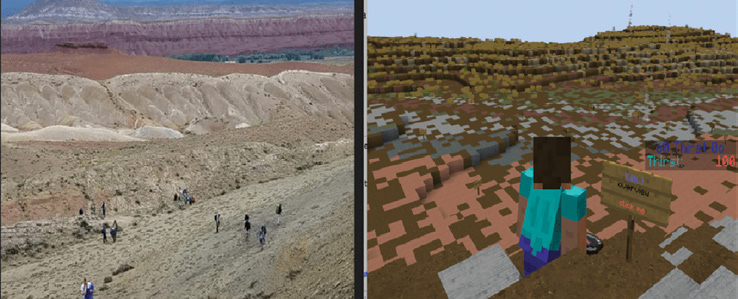
The Bighorn Basin, left, is redesigned into a virtual field site, right, in Minecraft for Will Parcell’s field geology course.
- HIST 132 U.S. History Since 1865: Robin Henry used two books that look at how people find community in challenging times: Willa Cather’s 1922 novel “One of Ours” follows the coming-of-age of Claude Wheeler, a Nebraska farm boy who eventually participates in WWI, and Robert Shilts’s “As the Band Played On”, which deals with health crises in the social and political context of the early years of the HIV/AIDS epidemic. “Through papers and book discussions, I want students to understand how humans, Americans have confronted challenges in the past and found ways to form community, even as they maintain different attitudes, ideas, and perspectives on the events of the day.”
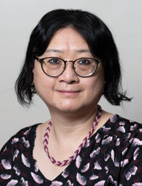
Doris Chang
- POLS 360 Human Rights: Doris Chang’s students spent a week discussing potential best practices and policies for balancing the right to privacy of COVID-19 positive individuals and the need to safeguard the health and safety of the general population from getting infected. Students compared and contrasted the pros and cons of various approaches implemented in China, Japan, South Korea and Taiwan with those in the U.S. They also devised potential best practices and policies that would take into account the protection of COVID-19 individuals’ right to privacy while safeguarding the health and safety of others in society.
- SOC 111 Introduction to Sociology: Jodie Simon used readings to provide current examples of sociological perspectives on the pandemic. This allowed her to demonstrate how the field of sociology can be used to study the current issues facing society and how norms and changing definitions of deviance have impacted students’ lives. Students also looked at areas of inequality (primarily gender, race and socioeconomic class), as well as responses at the institutional level.
- SPAN 221 Spanish for Heritage Speakers: Rachel Showstack’s students read how COVID-19 has changed the way that access to technology is affecting the dissemination of information about health care and education (particularly to Spanish-speaking Latinos) and why the digital divide is even more significant for the wellbeing of communities during a pandemic. They also considered how COVID-19 affected the Latinx population in Kansas and the role of health care communication in Latinos’ experiences with the pandemic. For their final projects, students completed a Spanish-language video that addressed an issue of equity in Latino communities in Kansas and shared it with their target audience.
“Perspectives on the Pandemic" Features Faculty Views on COVID-19
Bill Groutas studies possible treatments for COVID-19. Chase Billingham imagines Wichita after the pandemic has ended. Breanna Boppre researches COVID-19’s effects on prison populations and their families.
Each of these three Fairmount College faculty, in addition to several others, gave presentations about the virus and COVID-19 during the college’s recent “Perspectives on the Pandemic” series.
The two-part series, meant to provide deeper understanding of the scope of the virus’s power to disrupt all dimensions of life, features faculty, community health experts, and performing arts professionals giving their viewpoints through the lens of their academic discipline.
Dinorah Azpuru, professor of political science, presented on COVID-19’s threats to democracy and also attended several sessions in the series.
“‘Perspectives on the Pandemic’ was a fantastic contribution to a better understanding of the impact and implications of this global threat, and the importance of multidisciplinary work,” she said. “Bringing together professors from different fields showed the breadth of issues that are covered within the college.”
Andrew Hippisley, dean of Fairmount College, conceived the series idea in March as the virus started its spread across the U.S. Hippisley invited faculty with research interests applicable to the pandemic to present their perspectives to a Zoom audience.
Nine sessions were offered: four in the spring semester and five this fall.
“Part I aimed at a better understanding of the nature of the virus: its spread, its chemistry, its similarity to plagues and pandemics through history,” Hippisley said.
“Part II focused more on the social and human disruption and pain: the disrupted life of the city, the threat to vulnerable populations, the loss of live interactions between people, such as music and theatre.”
Each session in the series is archived on the Fairmount College YouTube channel, https://BIT.LY/31mgrNH. Read more about each presentation below.
Part I, Spring 2020
April 15 “Modeling the spread of the Coronavirus,” by Adam Jaeger, assistant professor of mathematics and statistics
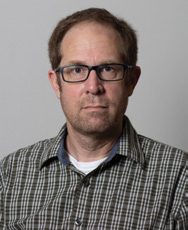
Adam Jaeger
While multiple models exist for predicting the infection rates and plateaus of pandemics, they are generally limited by assumptions of all individuals having an equal probability of transmission. As a result, the projections for infection rates tend to focus on larger geographic scales, such as states, resulting in an incomplete picture at a local level. This talk introduces statistical modeling concepts relating to prediction of COVID-19 rates at a county level and specifically introduces the notion of spatial correlation, which recognizes that there is a connection between county proximity and amount of social movement between areas.
April 22 “Influenza pandemics since Russian Flu: Do they provide insight to COVID-19?” by George Dehner, associate professor of history
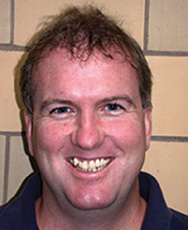
George Dehner
The surprising appearance and rapid spread of COVID-19 has prompted comparisons with pandemic influenza. This presentation examines influenza pandemics from 1889 Russian flu through the novel 2009 H1N1 pandemic with an eye to making comparisons to what is known about COVID-19’s rapid global transmission.
April 29 “COVID-19 and the impact on local public health practice and policy,” moderated by Melissa Walker, associate professor and interim director of Hugo Wall School of Public Affairs
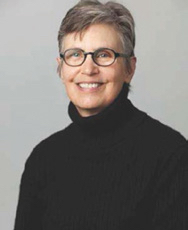
Melissa Walker
Cities, counties, states and nations are making difficult choices to protect citizens and support local health care systems. From stay-at-home orders to physical distancing, we are changing our daily routines. What happens if these steps are taken too late? Or rolled back too soon? What is happening to the most vulnerable among us: elders, individuals who experience disabilities, those who do not have health insurance and access to regular medical care? A panel of local experts will explore these questions for us in Sedgwick County.
May 6 “In search of a COVID-19 vaccine and therapeutics,” by Bill Groutas, Erach Talaty Endowed Research Professor of Chemistry
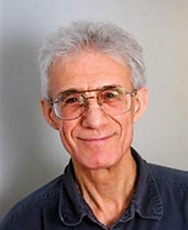
Bill Groutas
As of May 6, there were currently no FDA-approved vaccines or small molecule therapeutics
for the treatment and prophylaxis of COVID-19, underscoring the need for effective
countermeasures to halt the growing pandemic. This presentation briefly reviews coronaviruses,
their life cycle, and state-of-the-art progress in the development of vaccines and
immunotherapeutics, as well as the use of repurposed drugs. Lastly, progress by our
research group related to the discovery of inhibitors of SARS-CoV-2 3CL protease,
an enzyme essential for viral replication,
is discussed briefly.
Part II, Fall 2020
Aug. 26 “Democracy in the world in times of COVID-19,” by Dinorah Azpuru, professor of political science
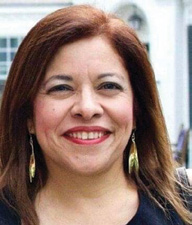
Dinorah Azpuru
Beyond the effects on health, the COVID-19 pandemic has had huge effects on the economy, but also on politics in countries around the world. More specifically, in certain countries, it has impacted democracy in a negative way. This presentation examines the overall impact of the pandemic on countries with democratic regimes, with emphasis on the democratic backsliding that has occurred in some of them. It also looks at the tightening of authoritarianism and human rights violations in countries that were already authoritarian when the pandemic began. Quantitative indicators that show the impact of the pandemic are also discussed.
Sept. 2 “Rethinking the city and the community for a post-pandemic world,” by Chase Billingham, associate professor of sociology
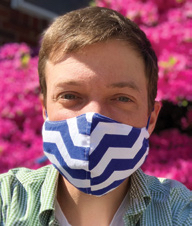
Chase Billingham
Cities are places characterized by constant activity, dense social interaction, and innovation fostered in collaborative working environments. With the widespread adoption of social distancing, bans on large gatherings, and remote work as public health responses to the COVID-19 pandemic, those quintessential urban characteristics have been fundamentally transformed. Will those changes be temporary or permanent? And what will they mean for the future of urban economies, neighborhood life, and inequality in the coming years? This presentation addresses these questions, drawing out many of their implications for important urban processes like social dislocation, economic development, and gentrification. While offering a broad perspective on issues affecting cities in general, the discussion draws special attention to potential impacts of the pandemic on urban growth, decline, and inequality in the Wichita region.
Sept. 9 “The impacts of COVID-19 on incarcerated people and their families,” by Breanna Boppre, assistant professor of criminal justice
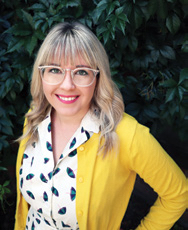
Breanna Boppre
This presentation discusses the implications of COVID-19 for correctional agencies nationwide and in Kansas. Boppre provides preliminary results from her ongoing mixed-methods study that examines families’ experiences of having a loved one incarcerated during the pandemic.
Sept. 16 “COVID-19 health disparities: Minority health and health equity,” moderated by Melissa Walker, associate professor and interim director of Hugo Wall School of Public Affairs
The disproportionate effect of COVID-19 on the health of racial and ethnic minorities is becoming clear. Essential workers, many in low wage jobs, and racial and ethnic minorities are at greater risk of contracting the virus. In addition to the economic impact due to job loss, COVID-19 has exposed disparate access to up-to-date information about the virus, to PPE and to health care. Hospitalization and mortality rates among African Americans are the highest of any group. Why is this happening? What can we do? A panel of local experts explore these issues including how access to testing and treatment could reduce the toll of COVID-19 for racial and ethnic minorities.
Sept. 23, “COVID-19: Its impact on the performing arts and its audiences,” moderated by Rodney Miller, dean of the College of Fine Arts
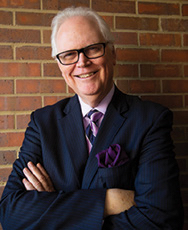
Rodney Miller
The disproportionate effect of COVID-19 on the events industry, of which the performing arts is a significant portion, is devastating. It was the first industry to close down and will be the last to fully open back up. When shutdowns occurred in March, this vital aspect of the American economy essentially ceased to exist. It ceased to exist on college campuses as well. But we need what the arts bring us now more than ever.
Fairmount College Faculty Named Awardees in Convergence Sciences Initiative

The Convergence Sciences Initiative graphic illustrates the idea of research
clusters of faculty from multiple disciplines working together
to address difficult societal problems.
Fairmount College faculty have positioned themselves as innovative researchers in four exciting new projects awarded in the recent Convergence Sciences Initiative competition.
Faculty, staff and students from across the university, representing multiple disciplines, submitted 18 proposals for projects that address some of society’s most pressing issues. Centers and institutes that arise from the four awarded projects will collaborate with businesses and government entities, with an eye to improving the growth and diversity of Kansas’ economy.
“All four projects have the potential to be game changers in the direction and intensity of research at Wichita State, and in social and economic impact in the region,” said Andrew Hippisley, dean, Fairmount College of Liberal Arts and Sciences. “The projects showcase the power of partnerships, the value of combining expertise, and the courage to take risks in pursuing ambitious problems that can only be solved by converging disciplines.”
Each awarded proposal is initially funded by a $300,000 grant from the university, distributed over three years.
Faculty involved with each center or institute will also work to develop new academic programs. The projects pay close attention to Wichita State’s educational mission in carefully assigning roles for undergraduate and graduate students as collaborators and beneficiaries of educational opportunities. Applied research and applied learning experiences are built into the plans and the deliverables.
Fairmount College faculty are involved with each of the four projects; two are led by Fairmount College faculty. The awarded convergence sciences proposals are:
- The Smart Fusion Material Research Institute will be developing novel computational, material and digital manufacturing approaches to unlock the complex interactions among material, microstructure, processing and mechanical properties involved in additive manufacturing. Fairmount College faculty: Ruowen Shen and Xiaoheng Wang, public affairs; Tianshi Lu, mathematics; Kapildeb Ambal, physics.
- The Disaster Resilience Analytics Center will leverage the university’s expertise in artificial intelligence, deep learning and multiple modes of big data to better predict natural and human- made disasters and improve preparedness by creating a new generation of digital platforms and support services. Fairmount College faculty: Zelalem Demissie and Glyn Rimmington, geology; Chase Billingham, sociology; Terrance Figy, physics.
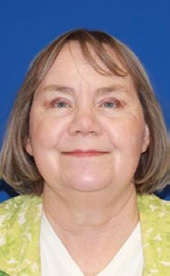
Twyla Hill
- The Institute for Health Disparities will generate new methods to reduce obesity among vulnerable populations and improve health literacy as a mechanism among health care providers for behavior change. Lead researcher: Twyla Hill, sociology; Fairmount College faculty: Rhonda Lewis, psychology.
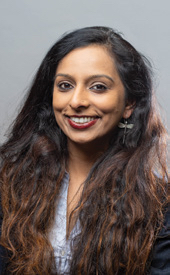
Mythili Menon
- The Center for Educational Technologies to Assist Refugee Learners will focus on designing innovative solutions to meet the educational needs to the children of the more than 70 million forcibly displaced refugees worldwide. As a result, it will also create innovative pathways and software for educational access to those in our state and nation. Lead researcher: Mythili Menon, English; Fairmount College faculty: Andrew Bowman, Intensive English Language Center.
Each group from the winning proposals made 10-minute presentations featuring their projects on Oct. 23. The presentations may be viewed on the Fairmount College YouTube channel at: https://youtu. be/_b-gJxt0Vgk.
“Somos de Wichita: We are Wichitans"
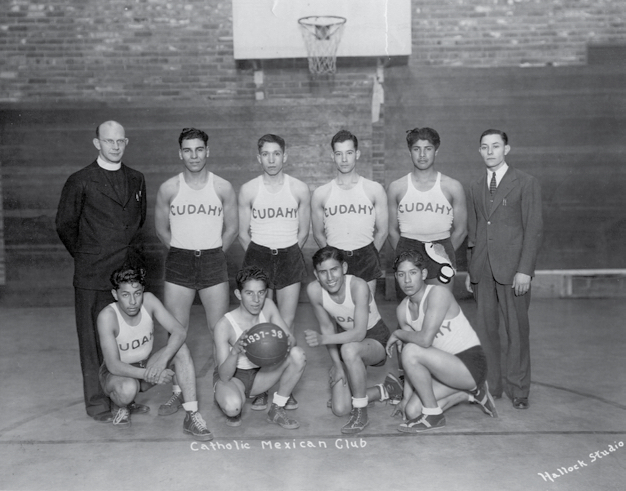
Catholic Mexican Club, 1937-38
Seeking to preserve the history of Wichita’s Latino families, Jay Price, professor and chair of history, and Enrique Navarro, associate professor of Spanish, have collaborated on a virtual exhibit hosted by Wichita State University Libraries.
The virtual exhibit, “Somos de Wichita (We are Wichitans),” documents the story of Latino families who arrived in Wichita from the American southwest and Latin America in the early 20th century, and negotiated the complex process of maintaining cultural ties to Latin America while also becoming part of a largely Anglo American community. In a time when immigration is a major national topic and where Latino migration is reshaping the Great Plains, these stories can help guide a conversation in which both Anglos and Latinos learn from the experiences of prior generations.
Families may contribute their own photographs and histories to the project. The portable version of the exhibit will appear in venues as the COVID-19 pandemic permits. The project has received support in part through a Humanities Kansas grant. For more information visit somos.wichita.edu or see the video at https://bit.ly/3jcifil.
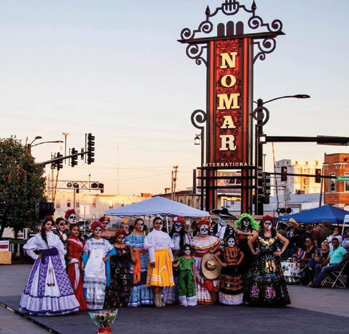
Day of the Dead at NoMar
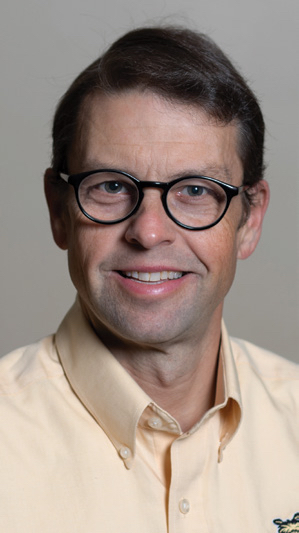
Jay Price
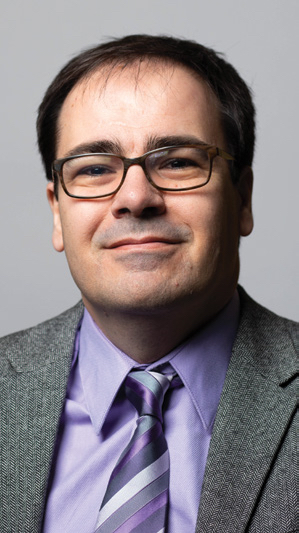
Enrique Navarro
Faculty Accolades
- Carryl Baldwin, Carl and Rozina Cassat Distinguished Professor of Aging, received the 2020 Woman of the Year Award, presented by the Human Factors and Ergonomics Society, Human Factors and Ergonomics Women’s Organization for Mentorship and Networking. The award recognizes the outstanding contribution made by an individual woman (or team of women) to the human factors and ergonomics community through research, academia and/or service. The award honors women who have demonstrated excellence in their career and elsewhere, who make significant contributions in their community, and whose achievements make them leaders in changing the social and business landscape.

- Samantha Gregus (pictured), assistant professor of psychology, and Rachel Showstack, associate professor of Spanish, were selected as Service-Learning Faculty Scholars. In this role, they will cultivate and support interest in service-learning in their fellow faculty members and through their classes and college.

- Robin Henry, associate professor of history, and Dasha Shamrova (pictured), assistant professor of social work, were selected as Tilford Faculty Fellows. In this role, they will promote diversity in the Wichita State curriculum by developing a new diversity-related course or modifying an existing course to enhance its diversity content.
- Twyla Hill, professor of sociology, was elected as the regional representative to the National Council of Alpha Kappa Delta, the International Sociology Honor Society, for a three-year term. The region covers Iowa, Kansas, Missouri and Nebraska.

- Amy Kalb, assistant professor of social work, was selected as a Growing Leader by the Association of Baccalaureate Social Work Program Directors. The Growing Leaders program provides leadership opportunities “for mid-career social work educators who are interested in developing themselves and supporting others in their growth as leaders.”
- Shaunna Millar, clinical professor of social work, and Eric Wilson, associate educator of communication, were selected as Recruitment Faculty Fellows. They will serve in an advisory capacity for the Office of Admissions and provide direct outreach to prospective students.
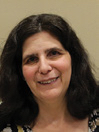
- Two Fairmount College staff were honored with newly created awards recognizing their contributions to the college. Patricia Phillips (top), director, Liberal Arts and Sciences Advising Center, received the Fairmount College Ripple Effect Award, which acknowledges a staff member who makes a difference either in other college departments or their own; Lisa Wood (bottom), senior administrative assistant, political science, received the Fairmount College Excellent Service Award, which acknowledges a staff member’s unique level of service to students, departments, or Fairmount College. Both awards came with $1500 in professional development funds.
- Enrique Navarro, associate professor of Spanish, has been appointed as a member of the Texas Delegation of the North American Academy of the Spanish Language. This institution is a corresponding member of the Association of Academies of the Spanish Language, whose goal is to work for the stability and growth of this language.
- Chinyere Okafor’s poem “Sunflower Exclusive” was installed as the creative centerpiece at Naftzger Park, newly redesigned by SWA Beasley, in downtown Wichita. Okafor’s piece uses the sunflower as an image to evoke Wichita and the Kansas environment, which dominates the 60-line poem. Okafor is professor and chair of women’s studies.
- Yumi Suzuki, associate professor of criminal justice, has been invited to be on the peer support advisory committee at the Sedgwick County Sheriff’s Office. This newly created committee will provide support for strengthening the existing wellness program for SCSO employees and families.
- The School of Social Work graduate program was selected to participate in the Council for Social Work Education’s Substance Use Disorders Expansion of Practitioner Education in Social Work program. The project is funded by the Substance Abuse and Mental Health Services Administration. The enterprise strengthens the preparation of future social work practitioners to deliver effective, evidence-based substance use disorder prevention, treatment and recovery services through the implementation of a high-quality standardized SUD curriculum.
For more information about faculty in the news, visit www.wichita.edu/whatshappeningfc
In Memoriam
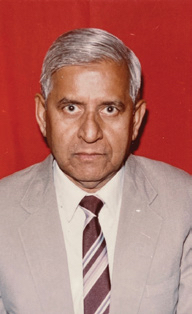
Dharam Vir Chopra, 89, died Sept. 14. He joined the mathematics faculty in 1967, eventually serving as department chair for mathematics and statistics, and later as interim department chair for computer science. While chair of the mathematics and statistics department, he led the faculty during the beginning of its doctoral program. He began phased retirement in January 2020.
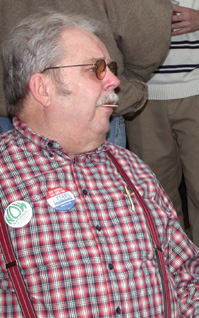
Jim Erickson, 88, died June 10. He joined the English faculty in 1964 and retired in 1996. When not teaching, he held acting roles in locally produced commercials and theater productions. Locally known as Ol’ Flick, he hosted movies on KAKE-TV, but more recently reviewed movies for KMUW, signing off with “Over and out.” Memorial contributions may be made to the Jim Erickson Memorial, WSU Foundation, 1845 Fairmount, Wichita, KS 67260-0002.
Dean’s Message
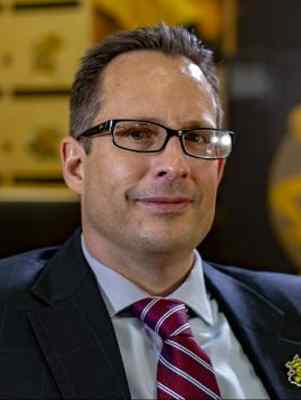
Dear Fairmount College alumni, faculty, staff and friends,
Faculty in the Fairmount College of Liberal Arts and Sciences are teacher-scholars. Our students benefit from instruction that is informed by cutting-edge scholarship. This is how students are exposed to the nuanced ways in which the field is evolving, and how they can find opportunities to collaborate with faculty in addressing the pressing questions. This kind of instruction is the hallmark of the student experience at a research-based Kansas Board of Regents institution.
Back in March, the value of a research-active faculty was brought into sharp focus in our “Perspectives on the Pandemic” series. The goal was to bring Fairmount College research expertise to bear on the evolving COVID-19 crisis. The Zoom format allowed us to invite in the community and alumni to engage in statistical modeling of the coronavirus’s spread in Kansas, the historical context of the pandemic, the chemistry of the virus and the implications for a vaccine, global responses to COVID-19 and their potential threat to democratic institutions, and so on.
The series demonstrated the continuous need for research-driven expertise. But it also made the case for strong community engagement with our research findings. Going forward, we aim to explore more avenues to showcase our research to the broader community in an accessible and stimulating fashion.
Scholarship in the college takes a variety of forms depending on discipline: large federal grants with a research team; community grants and contracts; scholarly publications including books; contributions to television, radio and newspapers, to name a few. Recently faculty in the college had the opportunity to participate in the $1.2 million new university-wide Convergence Sciences Initiative. The premise is that the most interesting problems whose solutions have the greatest societal impact require a convergence of disciplinary lines of inquiry. Proposals were solicited that contained large cross-disciplinary research teams to address issues in health disparities, digital transformations and sustainability. A fourth category was the wildcard option, designed to allow proposals the other categories did not capture.
Fairmount College, with the largest range of disciplines, unsurprisingly had faculty involved in all 18 submissions. Two of the four winning projects had lead researchers who belong to the college: Twyla Hill from sociology and Mythili Menon from English. A requirement of the initiative was that each project have robust student participation. In a college that prides itself in the way it involves students in research, the requirement was enthusiastically fulfilled.
As faculty develop and sustain their research programs, the students and community benefit. To support the faculty, the college awards internal grants for pilot studies, proof of concept testing and professional development. We are grateful to Lora and Don Barry for their generous donation to help make this possible. If you’d like to help support our faculty research enterprise, please send me an email at andrew.hippisley@wichita.edu.
Yours,

Andrew Hippisley,
Dean
HAPPY BIRTHDAY!
Fairmount College of Liberal Arts and Sciences
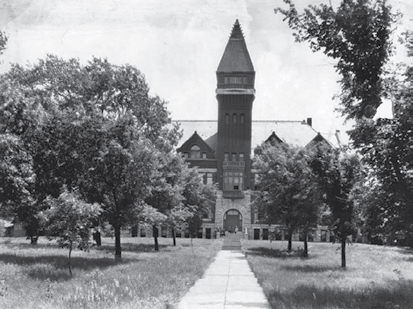
Fairmount College held its first day of classes on Sept. 11, 1895 for 13 students taught by four faculty members. In 2020, approximately 5,000 students are pursuing a Fairmount College of Liberal Arts and Sciences degree, taught by nearly 200 faculty.
Happy 125th, Fairmount College!