The Initiatives Supporting Positive Youth Relationships (INSPYRE) research lab is interested in preventing violence in youth, promoting healthy youth development, and understanding bullying that occurs in youth. Specifically, in developing interventions that focus on building healthy relationships in childhood and adolescence. We conduct our work in community and school-settings to increase access for underserved and vulnerable populations.
Lunch Buddies eat lunch and attend recess twice/week with an elementary school student with the goals of increasing their mentee's positive interactions with their peers and enhancing their social reputation. Mentors are required to submit an application, undergo background checks, have reliable transportation to and from the elementary school, and should have availability from 11 a.m. to 2 p.m. at least twice a week. After your application is complete, it will be reviewed and then you will be contacted for an interview.

2024
SNODGRASS, M. A., SMITH, S. L., & GREGUS, S. (2024). UNDERSTANDING CHILDREN AND ADOLESCENTS’
EXPERIENCES BEING BULLIED: A MIXED-METHODS STUDY. TRENDS IN PSYCHOLOGY.
Bullying is a common experience among youth around the world, but is not commonly
thought of as a traumatic event. However, previous research suggests the outcomes
and symptoms children and adolescents experience after bullying parallels those experienced
after a traumatic event. This mixed-methods study aimed to explore adolescents’ experiences
being bullied and the consequences experienced following being bullied. Contextual
factors were explored to understand under which circumstances participants endorsed
symptoms consistent with trauma. Ten adolescents (Mage=12.5 years, 50% boys, 90% White)
who reported being bullied at least “sometimes” over a period of “weeks” or more,
per a single parent report, in the past year agreed to complete surveys and a semi-structured
interview about their bullying experiences. Thematic analysis revealed six themes
related to consequences of bullying experiences: Emotional Distress, Avoidance of
School Settings, Somatic Complaints, Importance of Social Support, Disruptions within
Peer Groups, and Impaired School Performance. Nine participants endorsed at least
one posttraumatic stress symptom and three participants endorsed clinical levels of
PTSD qualitatively. Contextual factors associated with endorsing posttraumatic stress
symptoms in this study were gender, duration and frequency of bullying, age and number
of perpetrators, and seriousness of bullying. Results from this study suggest that
consequences of bullying vary between victims and that while some participants reported
consequences consistent with PTSD, other participants’ consequences seem to parallels
other depressive or anxiety disorders. These results have implications for future
research and interventions for working with youth who have experienced repeated bullying.
2023
GREGUS, S., SMITH, S. L., & CAVELL, T. A. (2023). SUPPORTING THE CHRONICALLY BULLIED
CHILD: A COMPETENCY-BASED FRAMEWORK FOR ELEMENTARY SCHOOL TEACHERS. JOURNAL OF SCHOOL
VIOLENCE, 1–15.
Described is an effort to develop and gather feedback on a competency-based framework
designed to assist elementary school teachers in their support of children who are
chronically bullied. Drawing from extant research, we identified 25 potential competencies
to construct a guiding framework organized by knowledge, attitudes, and skills. In
Study 1, we gathered feedback on the clarity, comprehensiveness, and usability of
the framework from focus groups of elementary school teachers (N = 26). In Study 2,
we gathered feedback from subject-matter experts who study school bullying (N = 14)
to assess the degree to which identified competencies reflected the current state
of the science. Both teachers and experts viewed the framework positively and agreed
it offers a potentially useful guide for practicing teachers. Feedback was also used
to refine the competency framework. Discussed are the potential implications this
framework has for school staff seeking to support persistently bullied children.
Phone Number: 316-978-3759
Email Address: samantha.slade@wichita.edu
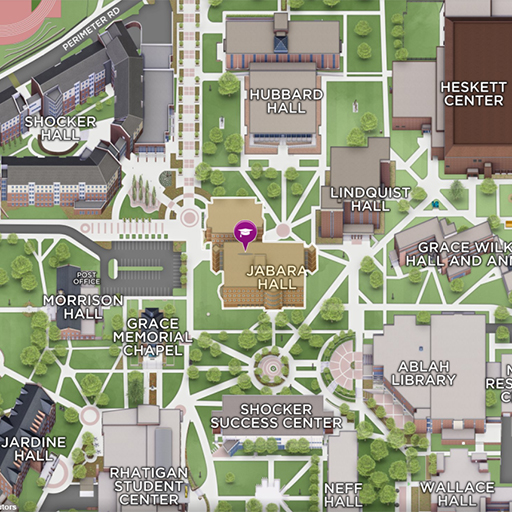
We're located in the fourth floor of Jabara Hall in Room 427.