


Wichita State University
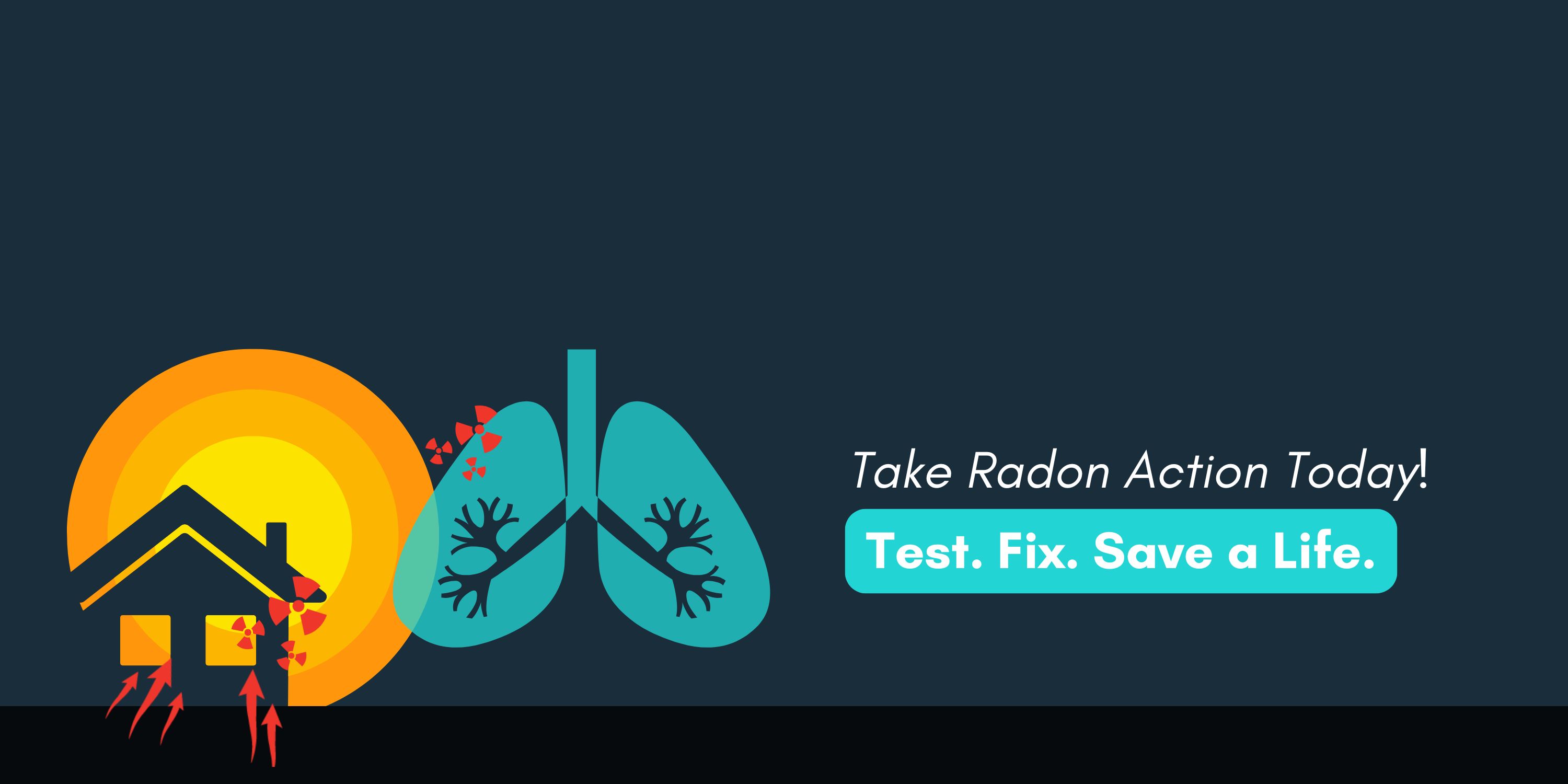
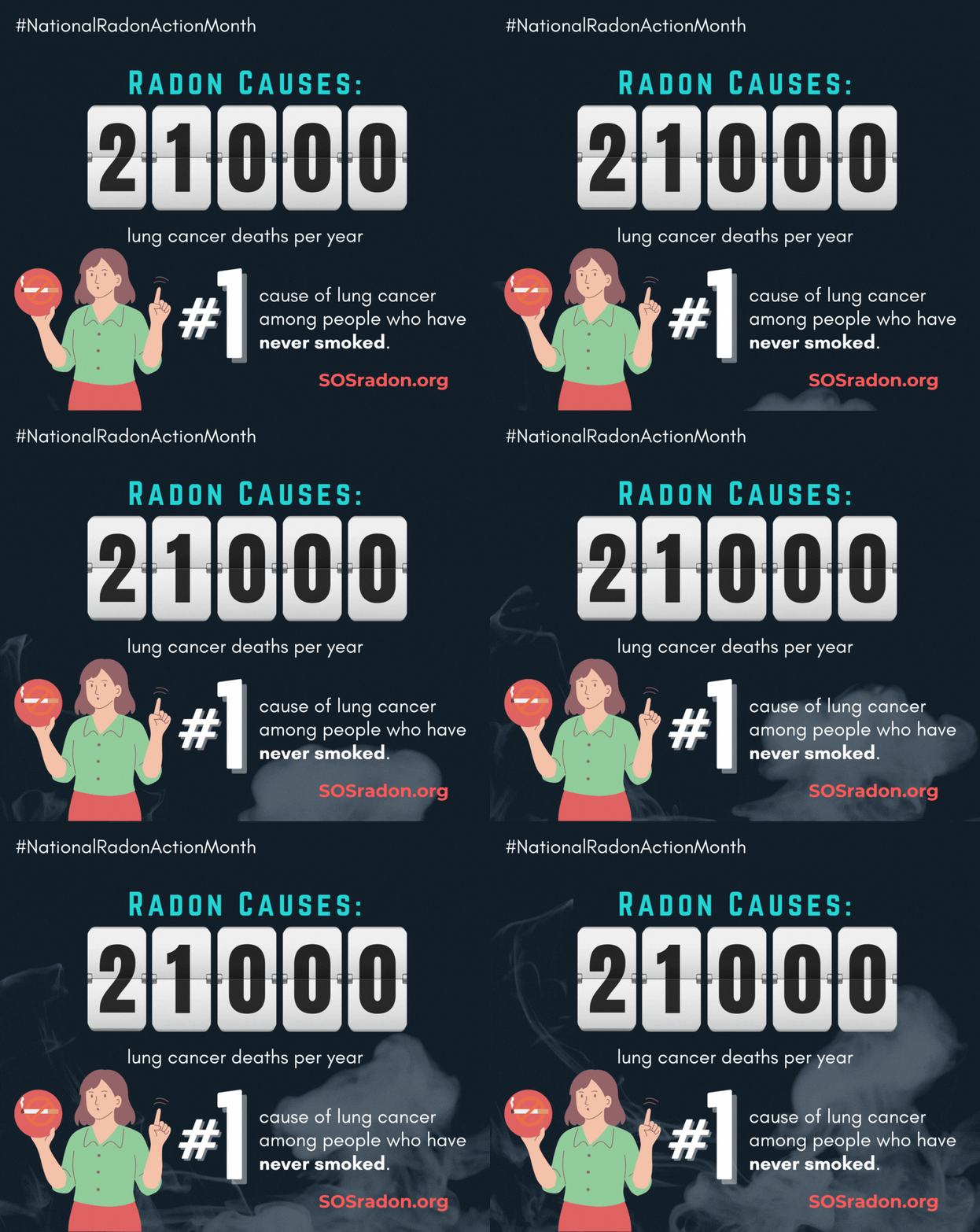
Radon causes 21,000 lung cancer deaths per year and is the #1 cause of lung cancer
among people who have never smoked.
Radon Resources
Help us increase awareness of the health impacts of radon, and the importance of home testing and mitigation, by downloading and sharing these radon resources.

View "Protect Your Home from Radon Risks" with audio descriptions
Radon Exposure in Homes
You can’t see, smell or taste radon, but it could be present at a dangerous level in your home. Radon is the leading cause of lung cancer deaths among nonsmokers in America and claims the lives of about 21,000 Americans each year. In fact, the EPA and the U.S. Surgeon General urge all Americans to protect their health by testing their homes, schools and other buildings for radon.
Test Your Home for Radon
Exposure to radon is a preventable health risk and testing radon levels in your home can help prevent unnecessary exposure. If a high radon level is detected in your home, you can take steps to fix the problem to protect yourself and your family. Radon is found in all parts of the country, including the Midwest. Radon can be present at high levels in all types of homes, including both new and old constructions, houses with or without basements, well-sealed homes, houses built on slabs, and apartments. Nearly 1 in 15 homes in the U.S. test high for radon.
More specifically across our region high radon levels are found in:
- 1 in 4 Kansas homes
- 1 in 4 Missouri homes
- 5 out of 7 Iowa homes
- More than 50% of Nebraska homes
Luckily, testing for radon at home is easy and can be done by a radon test kit found at a local hardware store or by a certified radon professional. The cost to mitigate elevated radon levels is around the cost of an average home repair. Radon mitigation systems are becoming more common in homes; however, you should have your system checked or retested at least every 2 years to ensure it is functioning correctly.
National Radon Action Month
January is recognized as National Radon Action Month, dedicated to increasing public awareness about radon—a colorless, odorless radioactive gas that's the second leading cause of lung cancer in the U.S. This month encourages everyone to take action by testing their homes for radon levels, implementing mitigation strategies if necessary, and understanding radon-resistant building practices. Additionally, the last week of January highlights Radon Awareness Week, serving as a crucial reminder to prioritize a safe indoor environment for all.
Three Ways to Participate in National Radon Action Month
- Social Media: Use our social media toolkit which includes a radon informational video, graphics and messaging to share posts and pictures with your social media followers.
- Posters and Brochures: Download and print our radon informational posters and brochures. These handouts are customized for the states of Kansas, Iowa, Missouri, and Nebraska. Spanish versions are also included!
- Test your home! Testing is inexpensive and easy to DIY. You can purchase a test kit at your local hardware store, your state radon program or at sosradon.org.