Wichita State University
Discover the Applied Engineering Program
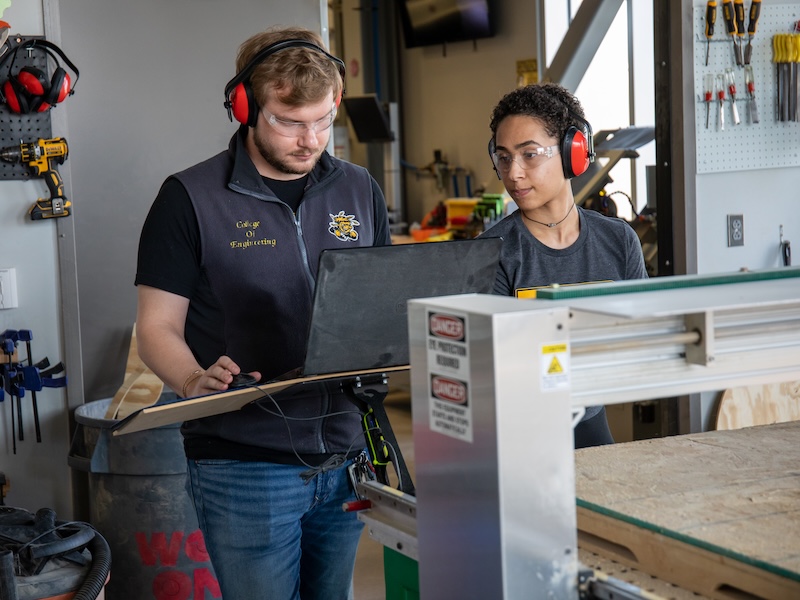
In contrast to traditional engineering programs that place a greater emphasis on mathematical
analysis of ideal systems, students in the Applied Engineering (formerly Engineering
Technology) program gain hands-on experience coupled with theory in fundamental engineering
concepts and select one or more of the below focus areas.
Academic Focus Areas
Civil and Environmental Engineering
Graduates have skills in energy management, water/wastewater management, environmental infrastructure design, environmental design and pollution/waste prevention. Common job titles would be: Environmental Engineer, Sustainability Engineer, Sustainability Officer, Energy Manager and Energy Engineer.
Process Automation
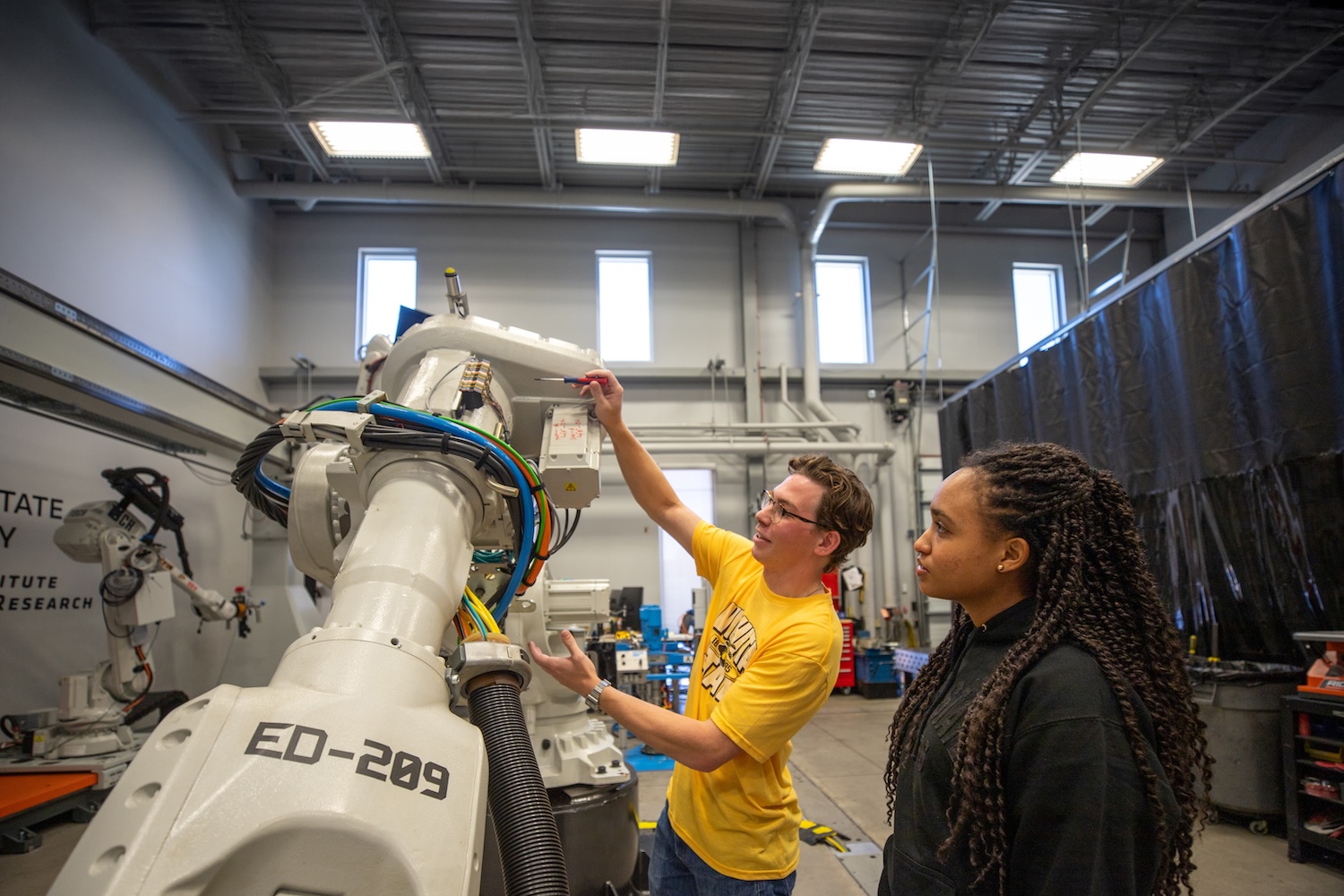
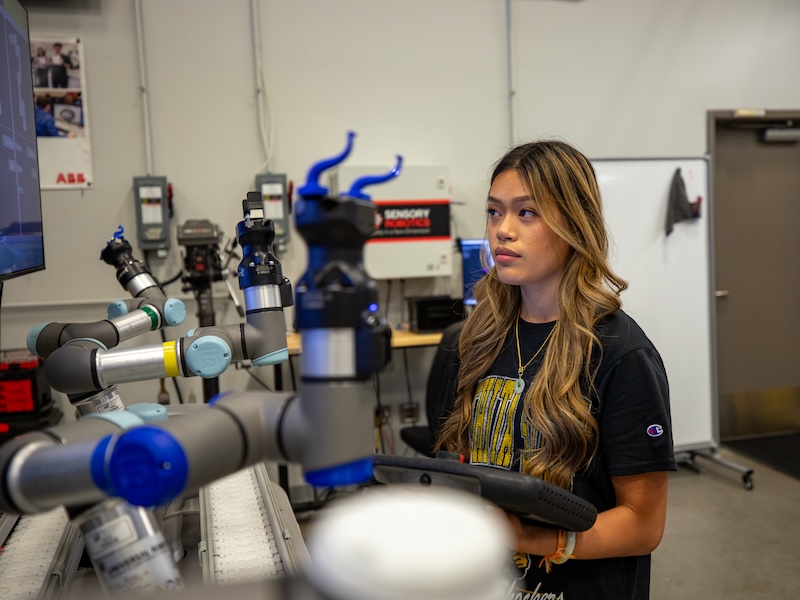
The Process Automation track has been accredited by the Advanced Robotics for Manufacturing (ARM) Institute. Graduates have training in automation, robotics, and process control. They may be called Applications Engineers, Control Engineers, Manufacturing Engineers, Field Engineers, Process Engineers, Robotics Engineers, Product Engineers, Safety Engineers and Sales Engineers.

Engineering Management
Graduates can lead process improvement projects and are frequently found in management positions due to their coursework, training, and experience in mathematics, economics, statistics, financial accounting, operations management, quality management, and process control. Common management-related titles may also include: Engineering Managers, Facility Managers, Construction Managers, Team Leaders, Plant Managers, Project Managers, Supervisors and Technical Managers.