


Wichita State University
Service-Learning Definition
Service-Learning at Wichita State University is an experiential learning method that integrates community service with instruction and reflection to improve student civic-mindedness and build community capacity.
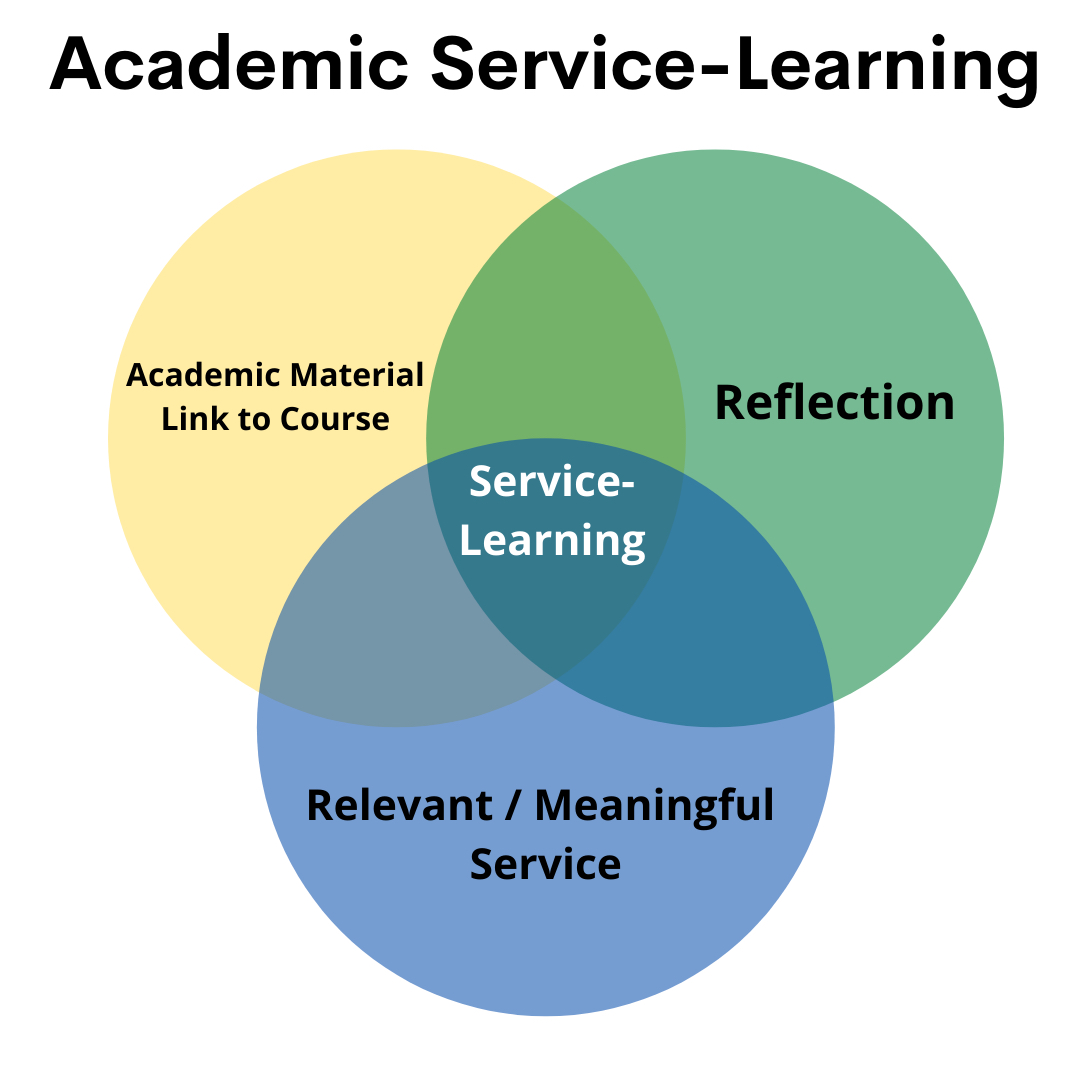
Visual adapted from Loyola University New Orleans, Community Engaged Learning, Teaching, and Scholarship
Direct Service-Learning
Direct Service-Learning: individual to individual/ face to face/ human to human projects in which students work directly with individuals and organizations to address a community need or issue. (Direct contact, usually visible)
Examples include:
- Tutoring others (youth, adults)
- Serving meals/ helping in homeless shelter
- Mentoring programs
- Creating presentations for community members/ partners
- Providing music/dance/art lessons
- Using language skills to support community health needs
Indirect Service-Learning
Indirect Service-Learning: Students address a community need with a specific community partner without engaging directly with a client/ individual population. (no direct contact/ not always visible/ behind the scenes)
Examples include:
- Building low-income housing
- Disaster relief clean up
- Creating a mural or community art installation
- Developing marketing materials such as brochures, flyers, social media campaigns for a non-profit organization
- Creating income, budget, or annual reports for a non-profit organization
- Building a ramp or other project to assist with client access
- Translating brochures, flyers, or videos into languages needed to assist community partner
- Mapping lands, monitoring environment, compiling history or creating plans for a non-profit organization
Research-Based Service-Learning
Research-Based Service-Learning: Conducting research to address community needs or issues such as implementing qualitative or quantitative studies aimed at collecting, analyzing and reporting information that is needed for a community partner to serve others.
Examples include:
- Designing a research study based on a community partner need
- Developing a survey/ data collection instrument
- Analyzing a community partner's survey results to evaluate effectiveness of their services
- Conducting longitudinal studies related to population served or community resources
- Conducting interviews or focus groups for a non-profit organization
- Developing a final report or summary of information based on research/ data collection
- Creating videos, brochures, or other forms of communication that share research or data
Advocacy- Based Service-Learning
Advocacy- Based Service-Learning: Creating awareness initiatives, programs or events aimed at educating individuals or clients on issues of public interest.
Examples include:
- Public information campaigns (print, web, video, social media) on topics or issues for a non-profit organization
- Policy work (drafting legislation or policy to improve community needs/ build community capacity)
- Hosting public forms, panels, or guest speakers on topics of community needs or issues
- Lobby on behalf of community partner or community issue/concern
- Election engagement activity/ voter registration drives
- Letter writing campaigns