Beginning in fall 2021, first-year freshmen will be required to take one first-year
seminar course for introduction to life at Wichita State. The courses will not be
required for returning or transfer students, but are encouraged for those new to WSU.
The hope is that students new to WSU will be able to enjoy the experience, make a
meaningful connection with a professor and get to know their peers better than they
would in a large, regular course.
Aaron Rife, assistant professor of curriculum and instruction in the College of Applied
Studies' School of Education, spearheads the pilot program underway in 14 unique courses
across campus.
Rife believes that a strong seminar program will help with student retention, one
of WSU’s strategic goals.
“The places where they’re more robust it’s been found over and over again that there
is better retention, students get a better start to their university career and enjoy
them more than a ‘how to study’ class,” Rife said.
Since the beginning of the program pilot in fall 2016, 1,045 students have participated
in first-year seminar courses. In the first year, freshmen taking seminars demonstrated
a 5% increase in retention over freshmen who did not take them.
In the second and third year, it was a 7% increase.
To see the benefits of a required freshman seminar, Rife will have to round up enough
faculty to instruct sessions for the entire projected freshman class.
“Last I checked,” said Rife, “we’re shooting to have 60 sections.”
While Rife doesn’t expect to have 60 unique seminars, WSU professors will have to
create more courses to fill the demand.
The places where they’re more robust it’s been found over and over again that there
is better retention, students get a better start to their university career and enjoy
them more than a ‘how to study’ class.
— Aaron Rife, assistant professor of curriculum and instruction, School of Education
Rife teaches a seminar of his own called “First-Year Seminar: Race and Ethnicity in
Modern America.”
“I designed 70 percent of it about what I wanted to teach – the topic – and then work
in about 25% student success, whether it’s financial resources, study skills or time
management,” said Rife.
“It’s really rewarding from the standpoint of interacting with students,” Rife said.
“I really like being able to play a role in their entrance into the university.”
These aren’t typical college success seminars. The courses are housed in different
colleges and departments across WSU, and course topics range from World War II technology
to Hispanic culture and food.
Professors create the courses based on their range of expertise and interests. For
student success elements, Rife encourages professors to bring in staff experts to
explain resources and policies to freshmen.
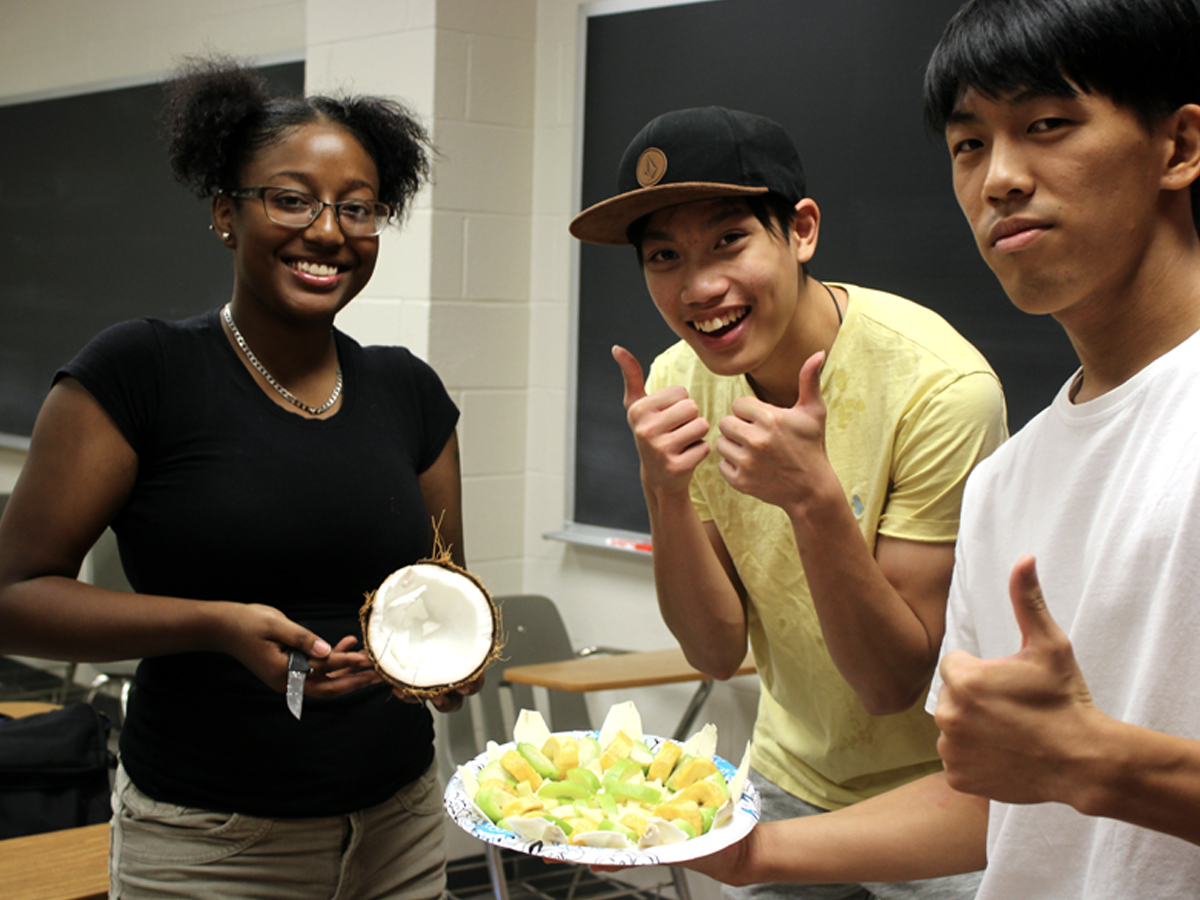
Rocío del Aguila, assistant professor of Spanish, currently instructs “First-Year
Seminar: Food and Culture in the Hispanic World.”
During one session, students cut tropical fruits to demonstrate food preparation techniques
used in Hispanic cultures. They connected their process back to the writings of Álvar
Núñez Cabeza de Vaca, an early American colonizer and explorer from Spain.
“The class is about food and culture,” said del Aguila. “We start with indigenous
cultures and the domestication of products and agricultural skills. When we discuss
the conquest and colonization process, we talk about contact, ingredients and how
all this is understood under the logic of colonialism.”
Del Aguila recognizes the first-year seminar course as a way to teach a variety of
topics she enjoys while helping students grow and enjoy class.
“It gives me a lot of curricular freedom and it covers topics that I love to teach,
such as coloniality of power, cultural conflict and diversity issues,” said del Aguila. “Plus,
it is a wonderful opportunity to open the minds of students to different ways of approaching
knowledge and the world in front of them.”
All first-year seminar courses are listed under subjects beginning with “WSU General,”
a course number beginning with “102” and will always contain “First-year seminar”
in the course title.
An academic advisor will also be able to help students search for a first-year seminar
which suits their interests.