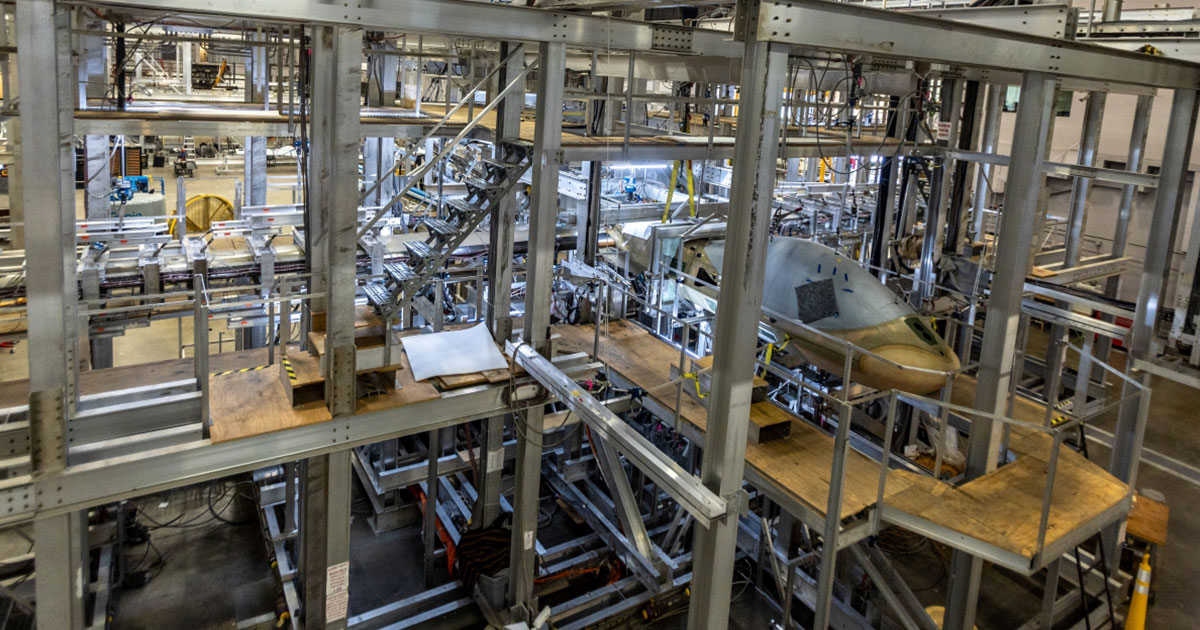
Wichita State University’s National Institute for Aviation Research (NIAR) recently
completed a long-term full-scale fatigue test program with General Atomics Aeronautical
Systems, Inc. (GA-ASI) for the MQ-9B Remotely Piloted Aircraft.
The program, which began Dec. 13, 2022, was for the third and final lifetime of the
MQ-9B, which includes a total of 120,000 operating hours (40,000+ flight hours per
aircraft life). This test verifies the structural integrity of the airframe and is
a key milestone in validating design.
The aim of the test program is to identify any potential structural deficiencies ahead
of fleet usage and assist in developing inspection and maintenance schedules for the
airframe. Test results will be used as documentation for certification and will form
the basis for in-service inspections of structural components.
“The completion of our full-scale fatigue test validates years of GA-ASI design and
analysis efforts,” said GA-ASI President David R. Alexander. “The first two lifetimes
simulated the operation of the aircraft under normal conditions, and the third intentionally
inflicted damage to the airframe’s critical components to demonstrate.”
Testing was conducted by NIAR’s Full-Scale Structural Test Lab located at NIAR’s Aircraft
Structural Test and Evaluation Center in Park City, Kan.
“We are thrilled to wrap up this three-year test program with General Atomics,” said
Brandon Baier, director of NIAR’s Full-Scale Structural Test Lab. “The partnership
between NIAR and GA-ASI test engineers was one of the most unique and impressive I
have experienced. Both parties worked together consistently and seamlessly to keep
the program on track.”
MQ-9B is GA-ASI’s most advanced RPA and includes the SkyGuardian® and SeaGuardian®
models as well as the new Protector RG Mk1 that is currently being delivered to the
United Kingdom’s Royal Air Force (RAF).
About NIAR
Wichita State University’s National Institute for Aviation Research (NIAR) provides research, design, testing, certification and training to the aviation, defense
and manufacturing industries. With 2,000 employees, two million square feet and six
locations across Wichita, NIAR is the largest university aerospace R&D institution
in the nation. Core competencies include Industrial Modernization of Materials and Manufacturing,
Digital Transformation, Sustainment Modernization, Test and Evaluation, System Automation,
Digital Manufacturing, Engineering, Certification, Modification and Prototyping. www.niar.wichita.edu