


Wichita State University
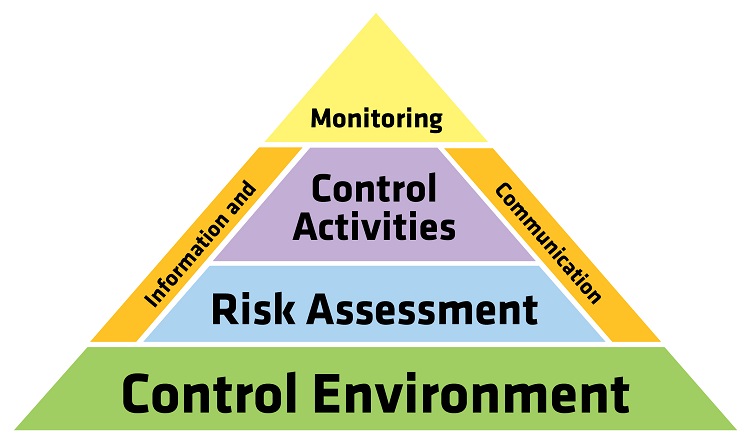
The final component of our internal control pyramid, monitoring, appropriately resides at the pyramid's apex. Our last video segment recaps how everyone in an organization has a role in internal control and the characteristics an organization "in control" demonstrates.
Monitoring
Ongoing monitoring should occur naturally through regular supervisory activities and other actions you initiate when performing your duties. Does your internal control system cause you to notice when something goes awry or looks amiss?
In the video, the new department head notices when something is off. She may have used variance analysis to alert her when the painter used more paint than expected, something the previous manager overlooked.
Then, she had someone review the work to confirm what the numbers told her. Variance analysis and review are among the control activities discussed in Episode 6.
Internal Control - Everyone's Responsibility
The head of each division or department and other supervisors shoulder the same ownership of the control system for their area as the president does for the whole institution. These people set the tone and act as the "president" for their area, and their influence has a trickle-down effect on others, as discussed in Episode 4.
Regardless of responsibility level, you have a role in internal control. And your part is essential to the institution's success!