


Wichita State University
Advancing literacy, empowering learners: How WSU's CLEAR initiative is transforming literacy education in Kansas
Oct. 29, 2025
At Wichita State University, the Collaborative Literacy Education, Advancement, and Research (CLEAR) initiative is leading a bold, statewide movement to ensure that every Kansas child becomes a proficient, confident reader. Established within the College of Applied Studies, CLEAR serves as a hub for innovation, collaboration, and professional learning in literacy education—bridging research, practice, and policy to create meaningful change in classrooms and communities.
“Our mission is simple,” says Dr. Kimberly Moody, Director of CLEAR. “We connect what we know from science with what we do in schools. When research, practice, and community come together, literacy outcomes improve—and so do lives.”
From Research to Practice
CLEAR’s work is grounded in the Science of Reading, but its approach extends beyond theory. Through research-informed initiatives, the center supports educators in translating evidence-based literacy practices into daily instruction.
CLEAR faculty lead professional development for educators across Kansas on topics such as structured literacy, language development, assessment, and intervention. These efforts include the creation of a Science of Reading 1EdTech Trusted Micro Credential. The micro credential equips in-service teachers with practical tools to implement explicit, systematic literacy instruction aligned to the Kansas Blueprint for Literacy.
CLEAR’s faculty not only teach evidence-based methods—they model them. A recent grant written by Dr. Moody and Dr. Reagan Murnan provides paid applied learning opportunities for preservice teachers to deliver structured literacy interventions in schools. Candidates are serving as literacy interventionists, gaining exposure to classroom settings and early opportunities for literacy-specific applied learning. Additionally, these literacy interventionists deepen their understanding through Collaborative Learning Teams (CLTs), small faculty-led groups that extend learning in the Science of Reading. These classroom innovations are strengthened by a network of statewide partners working toward a common goal. This work was recently presented at the International Council for Learning Disabilities conference and is being presented at the Teacher Education Division of the Council for Exceptional Children’s national conference as scholarly dissemination efforts.
Building Statewide Partnerships
CLEAR’s impact extends far beyond campus. The center plays a key leadership role in the Kansas Blueprint for Literacy, a statewide initiative uniting universities, policymakers, and education agencies around a shared vision for improving literacy instruction. Through this partnership, CLEAR helps shape professional standards, curriculum alignment, and educator training pathways that promote coherence from teacher preparation through classroom practice.
CLEAR also collaborates with the Public Policy and Management Center (PPMC) at Wichita State to analyze data and measure the effectiveness of literacy initiatives statewide. By pairing literacy expertise with policy and data analysis, the partnership ensures that decisions are grounded in both research and real-world evidence.
These collaborations reflect a growing recognition that literacy improvement is not the responsibility of schools alone. “We’re building a system that connects higher education, K–12 districts, and community organizations,” Moody notes. “Our collective impact model ensures that all stakeholders—teachers, families, policymakers, and universities—are rowing in the same direction. CLEAR’s influence doesn’t stop at the university or state level—it extends directly into Wichita neighborhoods.
Engaging the Community
CLEAR’s mission also reaches into the heart of Wichita through partnerships that blend literacy with community engagement and opportunity. Collaborations with Wichita Public Schools, the Wichita Collective Impact, Kansas Prevention Collaborative, League 42, and The Pando Initiative exemplify how literacy learning can be integrated into youth programs, mentoring, and enrichment experiences.
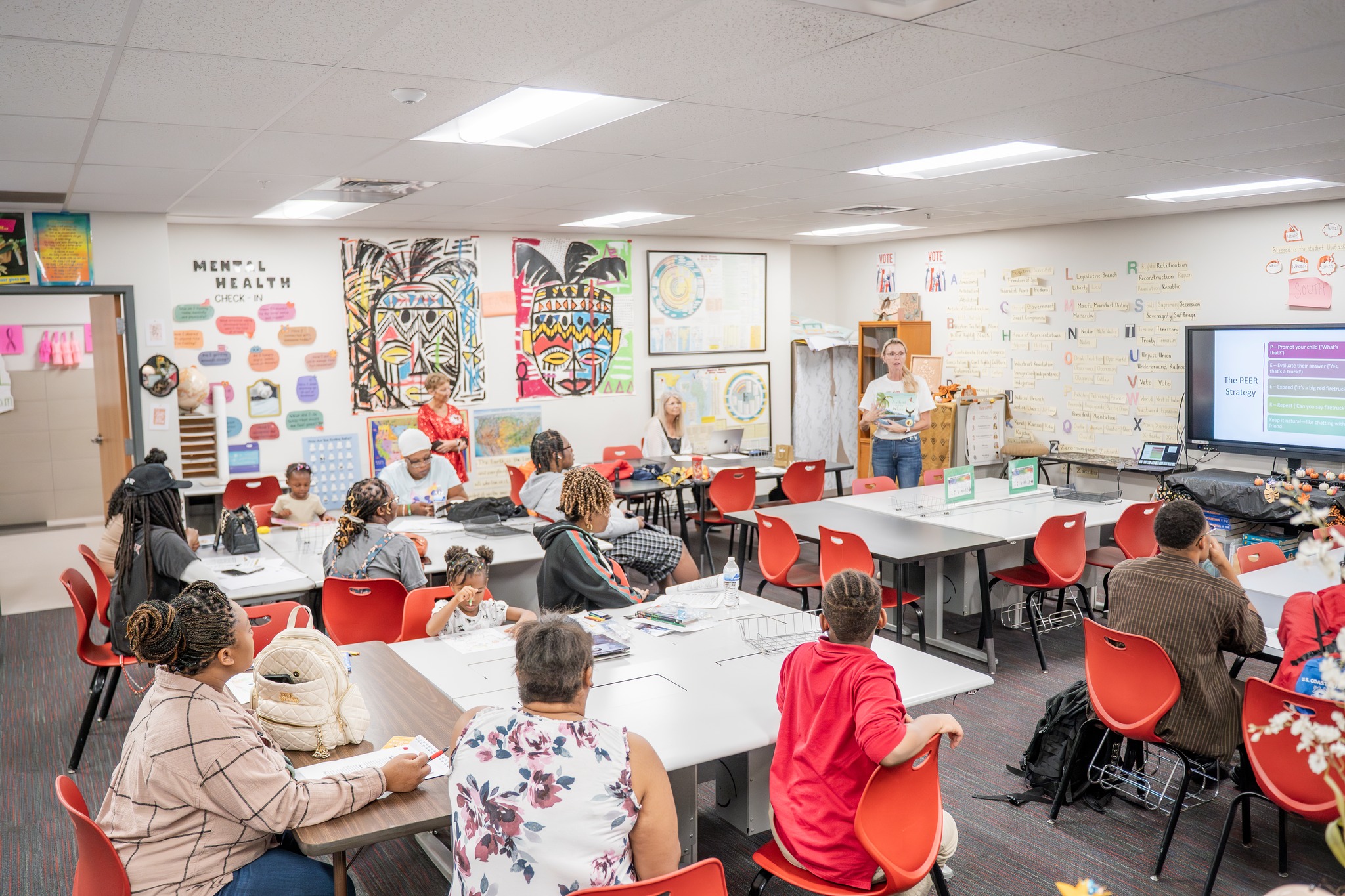
Through these partnerships, CLEAR supports initiatives that promote reading as a joyful, empowering activity—particularly for students who may not see themselves reflected in traditional literacy spaces. Whether that’s helping create literacy-infused summer camps, supporting after-school reading programs, or engaging families in literacy-rich events, CLEAR is demonstrating how connection and context can drive learning. “These community partnerships remind us that literacy lives beyond the classroom,” says Moody. “When students read in spaces where they feel seen, valued, and connected, their confidence grows—and so does their love for learning.” A recent family literacy night, hosted in collaboration with CLEAR, WSU’s PPMC, and Holy Savior Catholic Academy highlight these collective partnerships.
Looking Ahead
As CLEAR grows, it remains committed to advancing literacy as both a skill and a bridge—connecting knowledge, equity, and opportunity for all Kansans. Through collaboration, innovation, and compassion, Wichita State University continues to light the path toward a literate and empowered future.
For Moody, the vision is clear: “Every child deserves access to high-quality literacy instruction—and every teacher deserves the knowledge and support to provide it. At Wichita State, we are proud to continue the work we started over two decades ago focused on the Science of Reading, ensuring that literacy remains the foundation of opportunity for all.”