


Wichita State University
Towards a More Streamlined myWSU
Jan. 8, 2022
Articles by MID Students
The Master of Innovation Design (MID) degree program merges arts, science and technology courses, creating opportunities for interdisciplinary student/faculty collaboration. The program is tailored for each student, helping them develop their innovator mindset including their ability to:
- Communicate ideas effectively
- Facilitate design thinking and design sprints
- Utilize an agile product development workflow
- Develop transformative physical, digital and service products
- Validate ideas for market fit
- Build sustainable teams
- Launch a startup enterprise
The Master’s of Innovation Design (MID) program at Wichita State University offers
a variety of
courses focusing on entrepreneurship, design, and innovation. One of the main things
that drew
me to the program is not only the freedom it gives students to choose from a variety
of courses
within the college, but the ability to take courses from other departments to further
students’
education in their desired field. In my case, the majority of my non-MID courses and
projects
were UX (User Experience) and UI (User Interface) design focused. Some non-MID courses
included Human Computer Interaction and Software Psychology. The material I learned
from
MID’s Design Thinking class was heavily related and applicable to these two courses
and the
UX/UI field.
The main project goal for my Software Psychology team (which consisted of me, Jade
Driggs,
and George Altman, who are both Human Factors PhD candidate students) was to create
a
prototype for a more streamlined myWSU platform. After meeting with WSU’s Information
Technology Services and interviewing students, we identified the main goals of our
hypothetical
system. Throughout this design process, we used several techniques and methods that
were
covered in Design Thinking. Several tools that I have been introduced to through MID
were
often used as well, such as Mural.
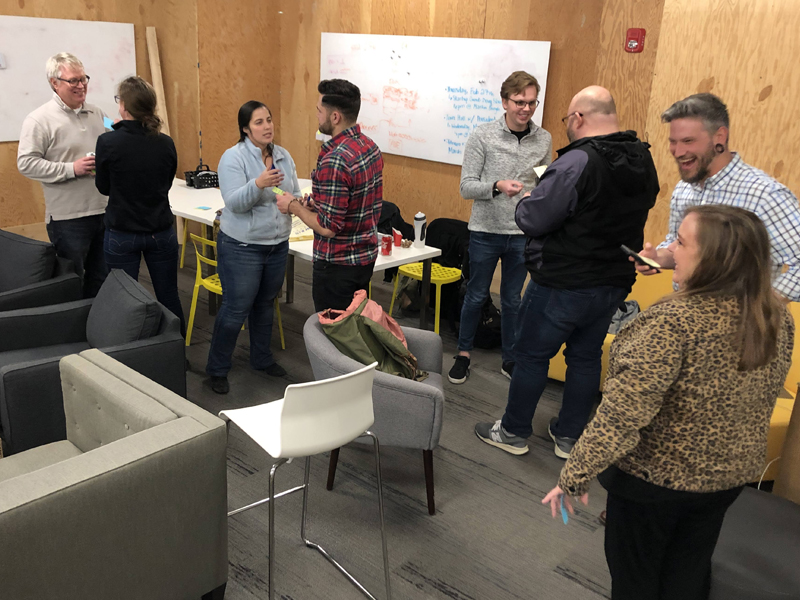
 (Jade Driggs, Valerie Hubener, George Altman)
The Design Thinking course was especially helpful in my HCI class. Having never taken
a
computer science class in my entire undergraduate career, I was expecting to be at
quite a
disadvantage compared to the other students who were mostly CS majors. However, design
thinking was discussed in every class and chapter. This gave me a perspective to the
class that
others may not have had. The best thing about design thinking is that it can be applied
to
essentially any field. UX/UI designers that I have spoken to have emphasised the importance
of
design thinking techniques and their value. It teaches you to consider other perspectives
and
aspects of design and businesses that you otherwise would not have.
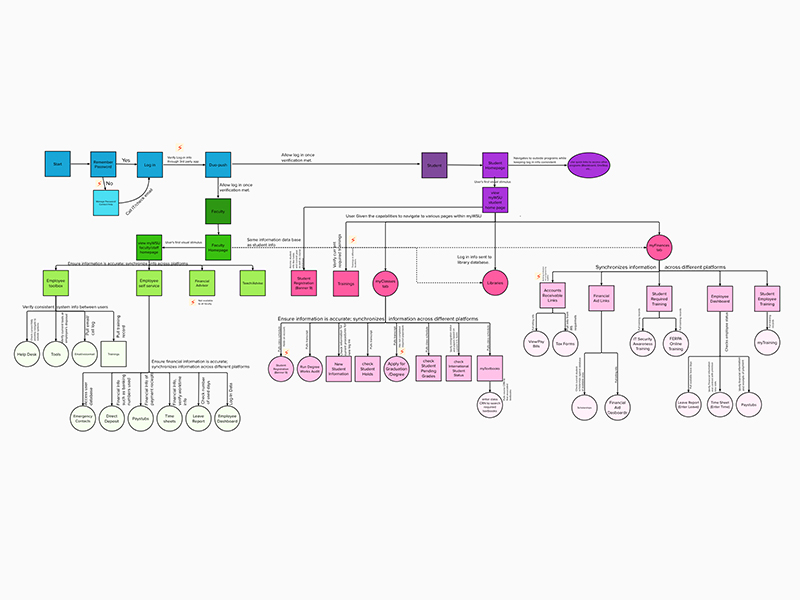 (Work Flow Diagram created with Mural for Software Psychology)
I am looking forward to further applying what I have learned with our NASA
SUITS Design Challenge team.
We are still recovering from information overload at CES 2022 but cannot wait to see what next year's conference brings. Will you be there? Stay in touch with all things College of Innovation Design by subscribing to our newsletter here.