


Wichita State University
Articles by MID Students
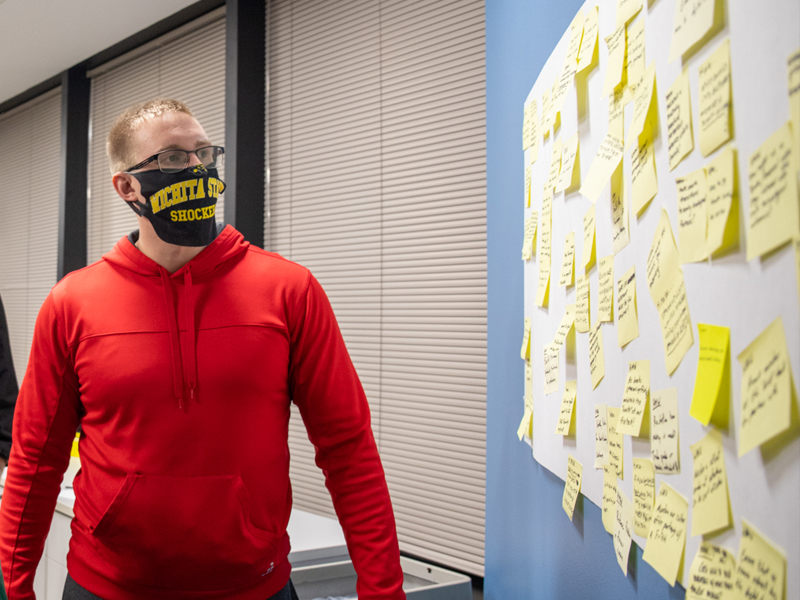
The Master of Innovation Design (MID) degree program merges arts, science and technology courses, creating opportunities for interdisciplinary student/faculty collaboration. The program is tailored for each student, helping them develop their innovator mindset including their ability to:
- Communicate ideas effectively
- Facilitate design thinking and design sprints
- Utilize an agile product development workflow
- Develop transformative physical, digital and service products
- Validate ideas for market fit
- Build sustainable teams
- Launch a startup enterprise
Back in the year 2000, a company called ActiveBuddy Inc. created SmarterChild, which was an intelligent agent, or in a very loose definition, an AI (Artificial Intelligence). SmarterChild’s had many small abilities, such as looking up certain information like movie times, sports data, and weather. Advanced for its time, SmaterChild was just one predecessor to the more advanced AI to come such as Apple’s Siri. Nowadays, Apple’s Siri and other AI like it are commonplace and more advanced in the sense of the functions they can carry out and the witty banter that can come from them. However, phone companies are not the only companies with their eyes on artificial intelligence. Now even Google has begun taking steps to researching and utilizing AI.
Google has research on AI in categories ranging from software engineering to language processing, to data modeling, to health and bioscience. On the health and bioscience side, Google has done research on chest radiography in the attempt to help ease the process of determining if a chest radiography is normal or abnormal, which can help determine what kind of disease is afflicting a patient. On the more day to day side of things, Google has also conducted research on what is called “Edge Sharing.” The aim of this edge sharing is to shar the location in real time between objects (e.g. smart phones and smart cars). Though a difficult problem to tackle, this would allow for a possible increase in safety in urban areas.

With large companies like Apple and Google becoming largely invested into AI, it’s more than likely that we will see more and more use of AI in our daily lives in the near future. With an increase in contact with AI, it’s also probable that social stigmas about AI will begin to be seen in a better light, which could lead to even more possibilities for the use of AI. All these possibilities just make me wonder, where will AI go?