


Wichita State University
From Prototype to Princess
Oct. 4, 2021
Articles by MID Students
The Master of Innovation Design (MID) degree program merges arts, science and technology courses, creating opportunities for interdisciplinary student/faculty collaboration. The program is tailored for each student, helping them develop their innovator mindset including their ability to:
- Communicate ideas effectively
- Facilitate design thinking and design sprints
- Utilize an agile product development workflow
- Develop transformative physical, digital and service products
- Validate ideas for market fit
- Build sustainable teams
- Launch a startup enterprise
One of the perks of being a student at Wichita State University is the number of clubs and projects you could be a part of and help. One of these groups is the 3D Printed Prosthetics Group from the College of Engineering. The goal of this Group/Club is to offer low-cost prosthetics solutions through 3D printing to people and animals that are missing some limbs. The Group specializes in the upper limb, lower limb prosthetics, and making covers as well as other cosmetic parts for protecting the costly prosthetics and helping the user express themselves through different colors and designs.
Our group partnered with a non-profit organization from Olathe, Kansas called Walkin & Rollin Costumes. This partnership came to be from Jackson Truit, a WSU student who already worked with the non-profit during his high school years and GobabyGo. This organization is dedicated to the building of costumes for children in walkers and wheelchairs for Halloween and/or other special events. They are giving the group their full support and resources available to bring joy and happiness for children bound to these types of devices in the Wichita area.
For the first semester of the partnership, two little kids had the opportunity of having their costumes built for Halloween. Tori, who is 3 years old, wanted her wheelchair to be a helicopter from the kid’s tv show Paw Patrol, and Alysa, who is 4 years old wanted to be Elsa (from the movie Frozen) in her ice castle, which is the one I worked on. We only had 7 weeks and a budget of $250 to make the costumes so the pressure was on.
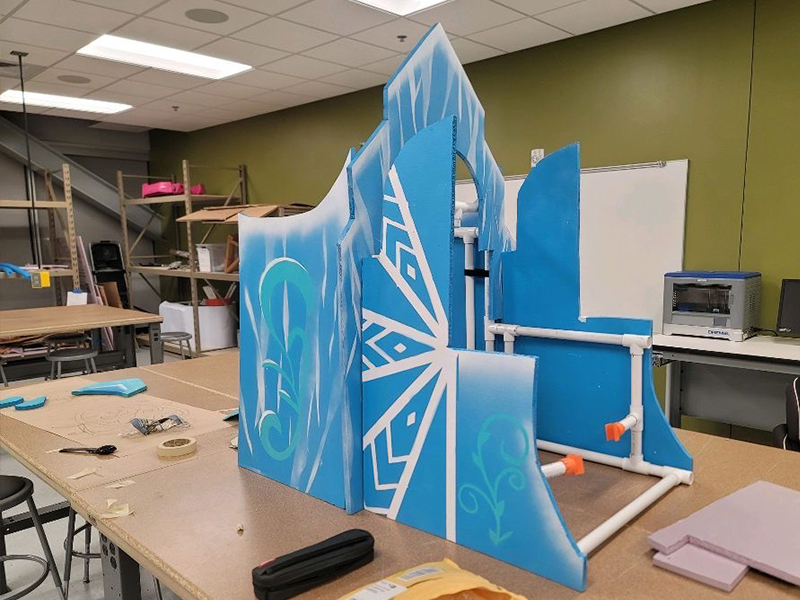
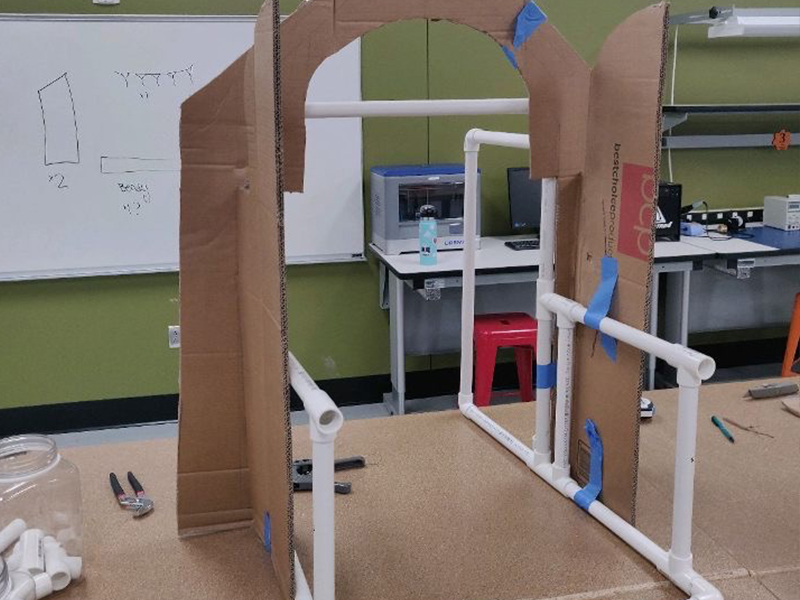
The process for building these costumes started with a meeting with the child and their parents or guardians. In this meeting we gather all the information necessary like the child’s preferences, what problems will we need to address, as well as to measure and take pictures of their mobility devices to create the costumes around them. After that, we started designing and building prototypes of the frame and panels for the costume with PVC pipes and cardboard. Once we had a rough prototype we then met again with the child for a fit test. In that meeting we tested if the wheelchair could move freely and if the dimensions and positioning of the frame were correct. After that, we started working on the final costume. The costume needed to be lightweight and easy to assemble/disassemble for mobility and storage, so we decided to make it with foam insulation panels and paint it with spray paints. We also added some decorations like fake snow and lights. The family came to campus one last time for the unveiling and delivery of the costume. They were so happy and delighted.
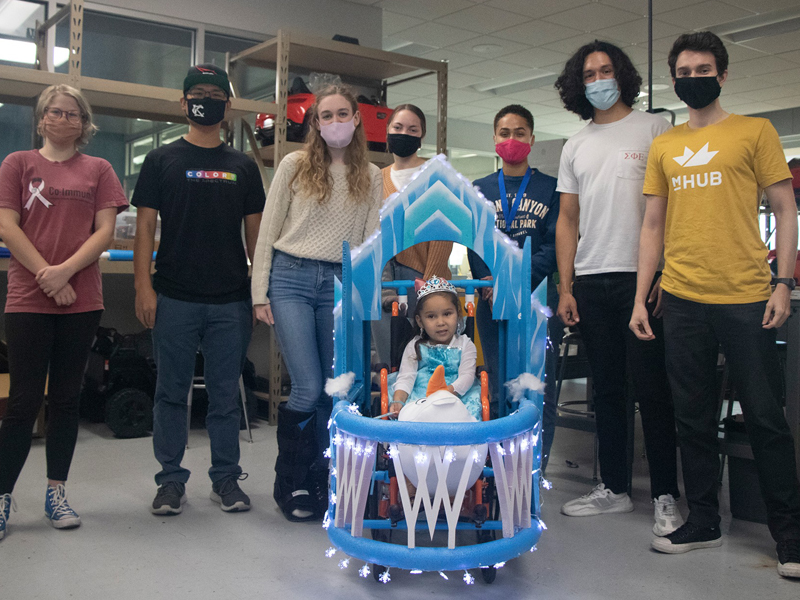
Our goal was to bring joy to local children in need and their families this past halloween and I think we succeeded as both kids were so happy and excited to wear their costumes.