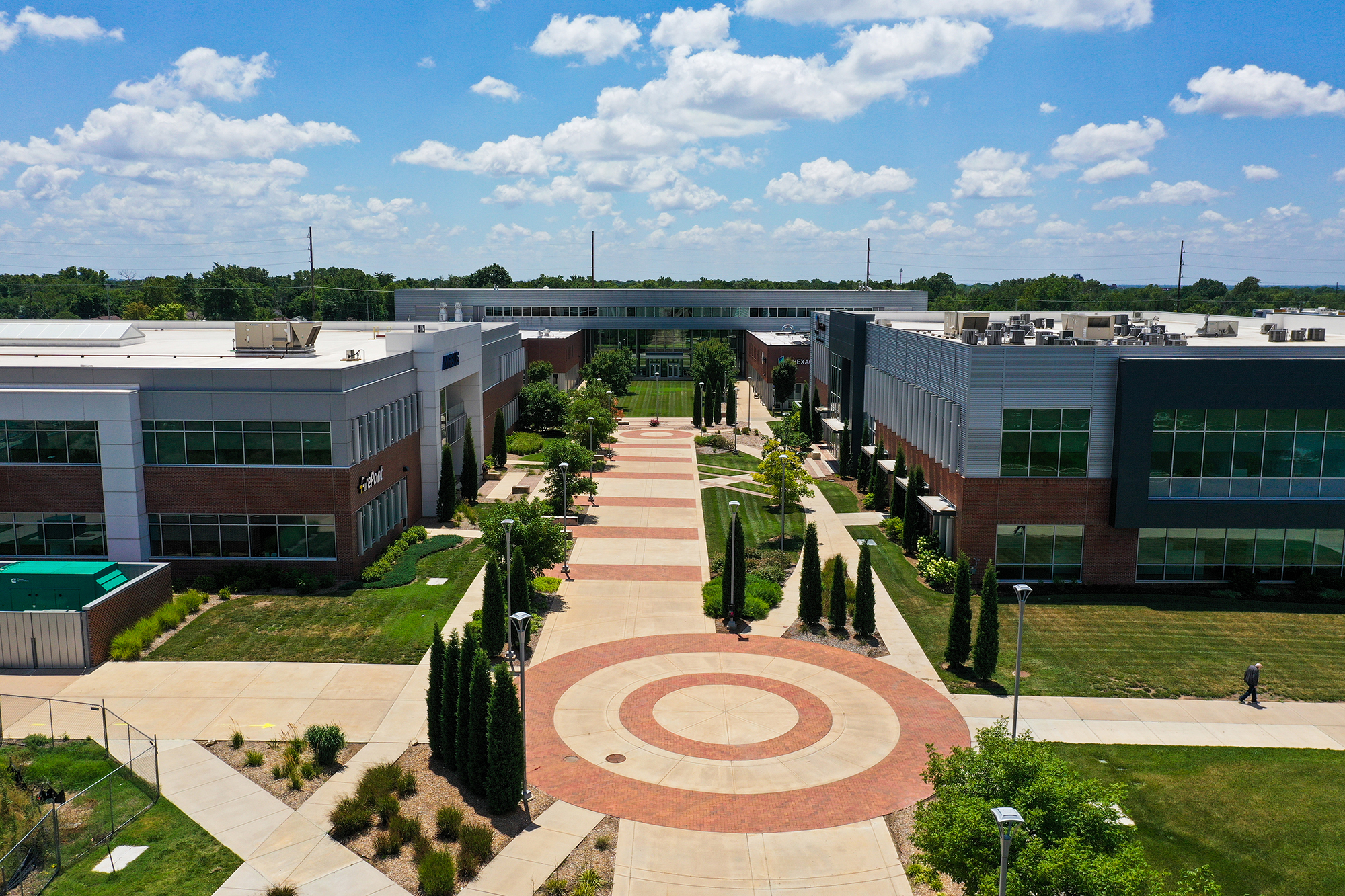
Wichita State University’s Innovation Campus brings together industry, researchers
and students to collaborate on applied research and workforce development. Featuring
labs, corporate partnerships and mixed-use spaces, it’s designed to accelerate innovation
and provide real-world learning opportunities.
JetZero will open an engineering office in the John Bardo Center on Wichita State
University’s Innovation Campus near the National Institute for Aviation Research (NIAR).
The new satellite engineering office will focus on advanced materials expertise, digital
engineering and certification testing capabilities in direct support of JetZero’s
Z4 program.
The Wichita office deepens JetZero's presence in the U.S. aerospace industrial base,
complementing the company's headquarters and advanced manufacturing and final assembly
campus under construction in Greensboro, North Carolina and its Design Center in Long
Beach, California.
“Opening a satellite engineering office in Wichita expands our ability to attract
the world’s best talent,” said Dan da Silva, JetZero president and chief operating
officer. “JetZero and NIAR have been collaborating for years on composite materials
qualification and structural testing for the Z4 demonstrator. The selection of Wichita
for this office, where some of our structures engineers are already located, will
help propel in-person collaboration as we continue to meet our milestones for the
demonstrator’s first flight by the end of 2027.”
NIAR is the largest university-based aerospace research institution in the country,
home to the Advanced Technologies Lab for Aerospace Systems (ATLAS), the Aircraft
Structural Test and Evaluation Center (ASTEC) and the National Center for Advanced
Materials Performance (NCAMP), which maintains the shared composite materials database
used across the commercial and defense aerospace industry.
“JetZero’s forward-thinking approach reflects the spirit of innovation that drives
Wichita State,” said WSU President Rick Muma. “With access to premier advanced manufacturing
research and prototyping facilities, deep engineering expertise and a pipeline of
students engaged in real-world applied learning, Jet Zero’s presence on the Innovation
Campus further strengthens Wichita’s position at the forefront of the future of flight.”
John Tomblin, WSU executive vice president for Industry and Defense Programs and executive
director of NIAR, said the expanded partnership builds on years of collaboration.
“JetZero and NIAR are working side by side to help realize the next major leap in
aircraft efficiency. Their decision to join the Innovation Campus ecosystem creates
even greater opportunities for integrated research, rapid prototyping, testing and
workforce development,” Tomblin said.
Kansas has also emerged as a hub for next-generation composite manufacturing investment,
with global materials suppliers expanding automated fiber placement and advanced composite
manufacturing.
JetZero plans to begin operations at WSU’s Innovation Campus later this year.
About Wichita State University
Wichita State University is Kansas' only urban public research university, enrolling
more than 25,000 students between its main campus and the WSU Campus of Applied Sciences
and Technology (WSU Tech), including students from every state in the U.S. and more
than 100 countries. Wichita State and WSU Tech are recognized for being student-centered
and innovation-driven.
Located in the largest city in the state with one of the highest concentrations in
the United States of jobs involving science, technology, engineering and math (STEM),
Wichita State University provides uniquely distinctive and innovative pathways of
applied learning, applied research and career opportunities for all of our students.
The National Science Foundation ranked WSU No. 1 in the nation for aerospace engineering
R&D, No. 2 for industry- and defense-funded engineering R&D and No. 9 overall for
engineering R&D.
The Innovation Campus, which is a physical extension of the Wichita State University main campus, is one
of the nation’s largest and fastest-growing research/innovation parks, encompassing
over 120 acres and is home to a number of global companies and organizations.