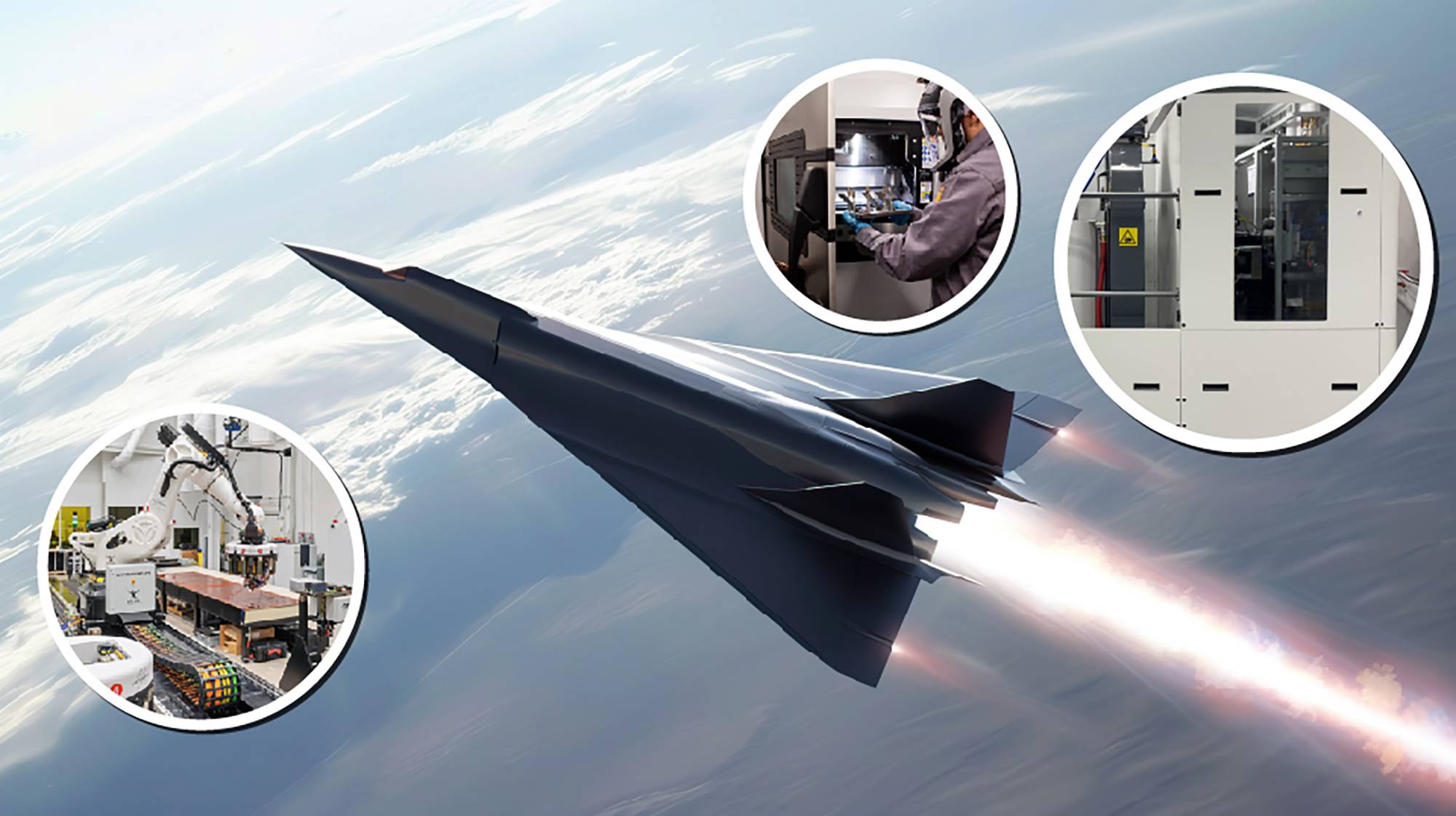
Wichita State's National Institute for Aviation Research has been awarded $10 million
from NASA to study advanced materials for hypersonic applications.
NIAR receives $10 million NASA funding for high-temp advanced materials
NIAR's mission is to strengthen university research capabilities, provide applied
learning opportunities for students, and support the aviation and manufacturing industries
– while driving innovation and prosperity for the community, region and state.
Wichita State University’s National Institute for Aviation Research (NIAR) will receive
more than $10 million from NASA for research related to the development and implementation
of advanced materials for hypersonic applications.
The funding will enable continued research aimed at developing and maturing high temperature
advanced materials for use in hot structures and thermal protection systems for hypersonic
vehicles.
Development of advanced materials and structures that meet these requirements is a
key driver in advancing the hypersonic systems industry. There are currently several
technological gaps for novel high-speed materials and structures, including the selection
of materials that are capable of withstanding extreme temperatures and extended flight
times, as well as the development of reliable design databases.
The ability to generate high fidelity data for these materials is a crucial step in
the process of successfully inserting emerging materials into critical space applications.
These materials must be proven to perform in extremely challenging environments, while
demonstrating manufacturability, consistent production, and long-term sustainment.
This highly specialized research program will require procurement of equipment focused
on automated fabrication, processing and densification, characterization, design and
analysis, and testing refractory materials and structures. It will complement existing
resources available through Wichita’s National Defense Prototype Center (NDPC), a
collaboration between NIAR and Spirit AeroSystems.
The NDPC provides a secure space for high-temperature materials testing, development,
prototyping and industrialization.
“Our collaboration with NASA Aeronautics will continue to advance through the Hypersonics
Technology Project, focusing on sustaining hypersonic competency for national needs
while advancing applied hypersonic research,” said John Tomblin, WSU senior vice president
for Industry and Defense Programs and NIAR executive director. “We are fortunate to
have the unwavering support of Senator Moran to expand this collaboration with NASA
and key representatives in the industry.”
Senator Jerry Moran, a member of the Appropriations Committee, requested the program
funding from NASA on behalf of Wichita State.
“The National Institute for Aviation Research plays an important role in the advancement
of hypersonic capabilities,” said Moran, vice chair of the Senate Appropriations Subcommittee
on Commerce, Justice and Science. “Over the past several years, I have been working
to grow NASA’s footprint in Kansas, including hosting the NASA Administrator and several
NASA leaders in Wichita. I worked to secure these resources from NASA to continue
to build on this work and bring more exciting space and aerospace jobs and opportunities
to our state.”
About Wichita State University
Wichita State University is Kansas' only urban public research university, enrolling
more than 23,000 students between its main campus and WSU Tech, including students
from every state in the U.S. and more than 100 countries. Wichita State and WSU Tech
are recognized for being student centered and innovation driven.
Located in the largest city in the state with one of the highest concentrations in
the United States of jobs involving science, technology, engineering and math (STEM),
Wichita State University provides uniquely distinctive and innovative pathways of
applied learning, applied research and career opportunities for all of our students.
The Innovation Campus, which is a physical extension of the Wichita State University main campus, is one
of the nation’s largest and fastest-growing research/innovation parks, encompassing
over 120 acres and is home to a number of global companies and organizations.