


Wichita State University
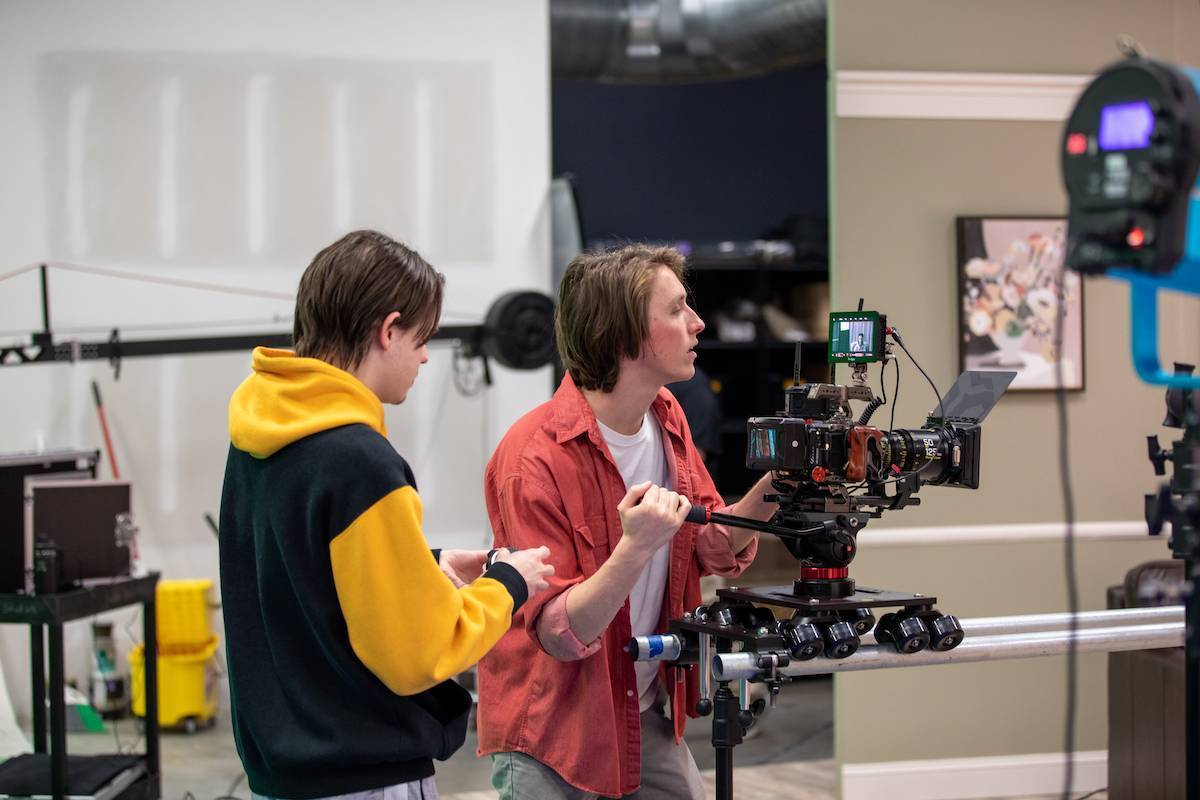
The sit-com set at Shocker Studios gives students experience working with cameras,
lighting, scene design and actors in a real-world setting.Annelise Muret
The classic sit-com set – think anything from “FRIENDS” to “The Big Bang Theory” – is now a teaching tool at Wichita State University’s Shocker Studios.
The set, part of a 6,500-square-foot film studio, opened this semester and is used by students studying film, cameras, editing, lighting, scene design, writing, acting and sound. Similar to what one might see on a variety of familiar TV shows, the set features a living room, kitchen, dining area, doors and windows with which to create any number of atmospheres.
“This brings an element of Hollywood to Wichita,” said Justin Rorabaugh, director of Shocker Studios. “This is the type of set they build. This isn’t limited to the coasts.”
Actors learn how to perform on the set, technicians learn how to adjust the lighting for time of day and story — all skills that will translate to careers in television work.
“You can get actual practice with lighting,” said Mason Vietti, a senior film major. “We are learning a lot about how to light a scene naturally, killing the overheads and then rebuilding natural lighting from there.”
The set also saves students the hassle of scouting locations suitable for a project.
“You’re able to be creative and come up with cool stories and not have to go find a location,” said senior film major Lainey Caldwell.
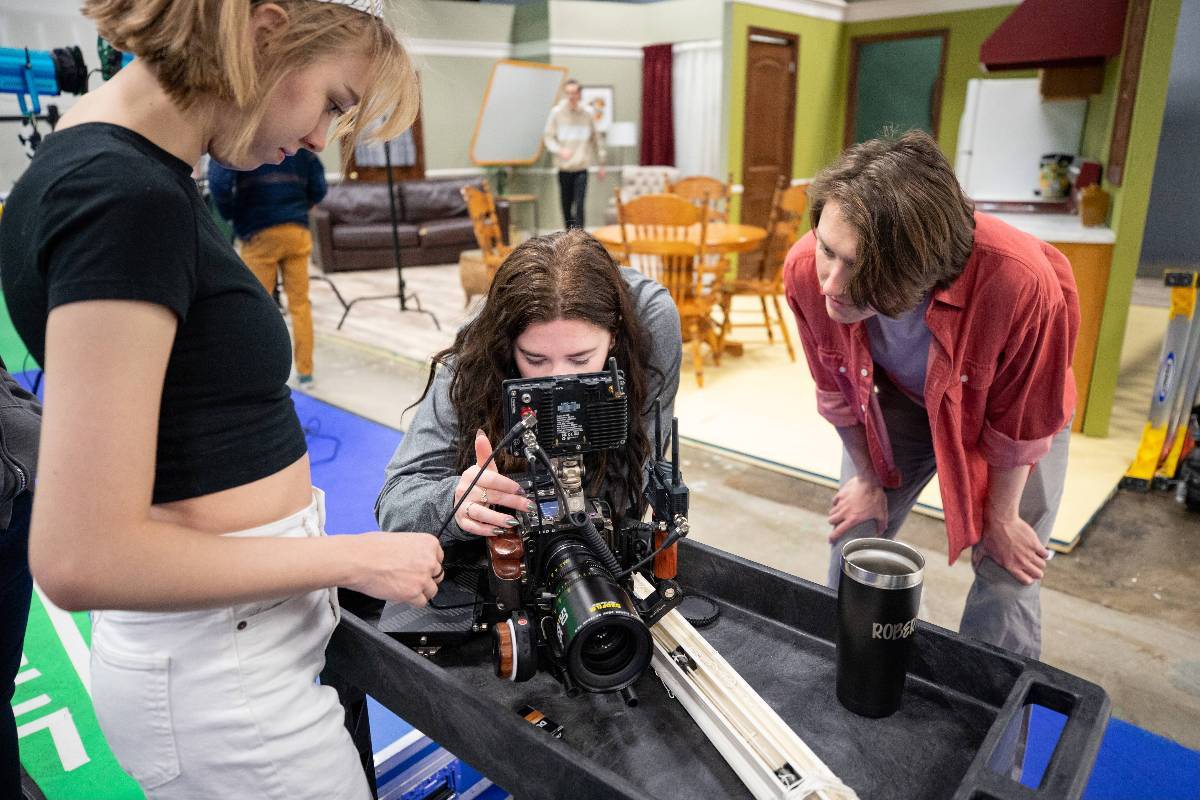
Wichita State students, starting this semester, work on a variety of projects on a
sit-com set at Shocker Studios. Annelise Muret
Film students can learn how shoot with multiple cameras, providing experience with a range of perspectives. The editing process shows students how to take the different shots and produce a finished product that includes a variety of perspectives, such as closeups and reactions.
“It’s applied learning,” Rorabaugh said. “It’s one thing to sit in a classroom and say, ‘Oh, on a set you would do it like this.’ To come and actually do it, it’s a game-changer.”
Rorabaugh consulted industry advisors on the design.
The doors open to allow actors to enter and exit. The door on the refrigerator opens to allow the use of props, while concealing the interior of the appliance from the camera. The ability to change props such as furniture, pictures and window treatments allows students to set the look for different time periods and themes, and Rorabaugh scours discount shops for art, furniture, dishes, quilts and other accessories.
“This gives us the opportunity to be hands-on and practical in an environment that is more similar to what they’re going to be running into in a professional, day-to-day, situation,” said Robert Thomas, director of the film program.