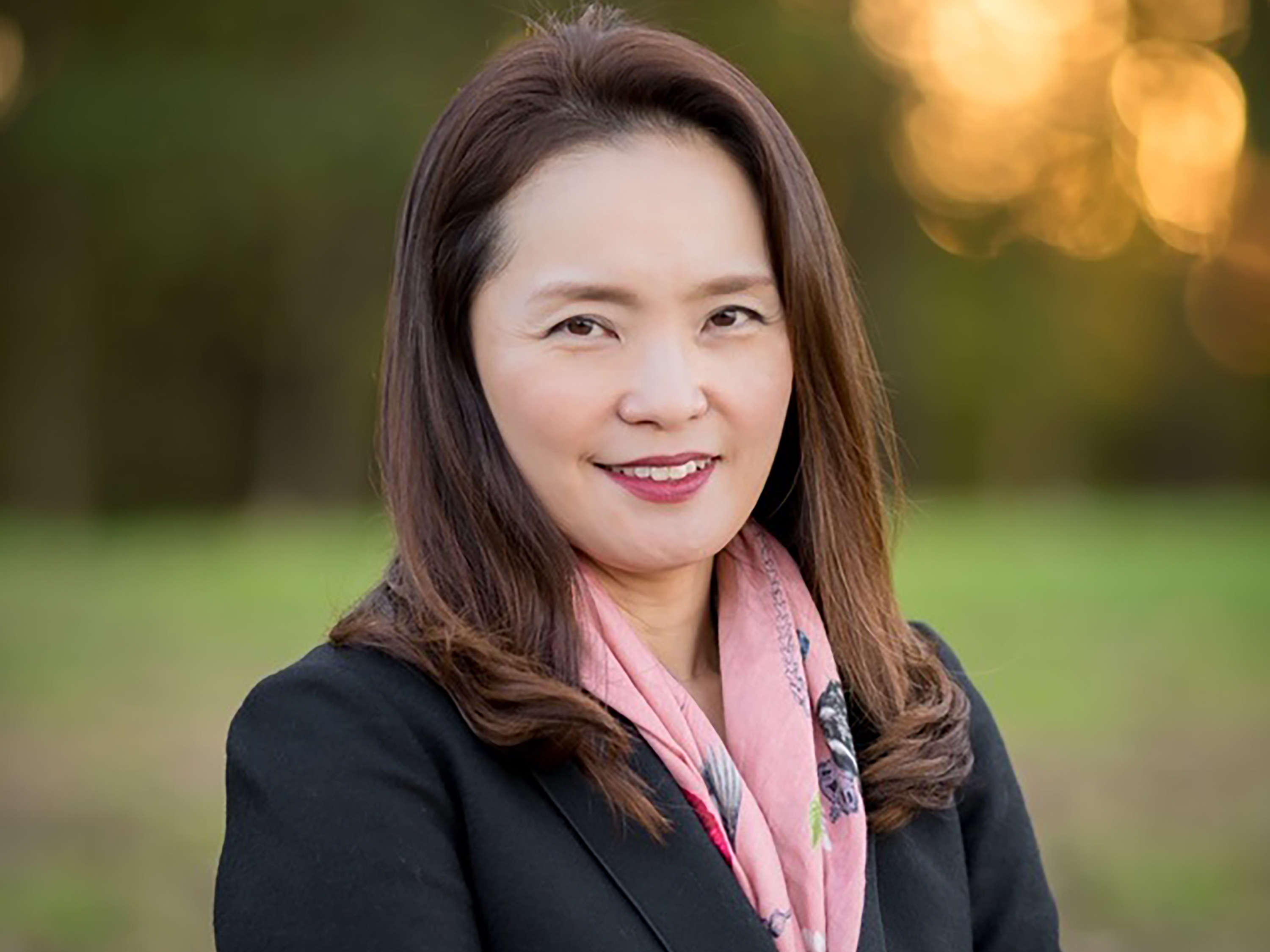
Wichita State's Dr. Jeoung Min Lee, assistant professor in the School of Social Work,
hopes that her research will help shape anti-bullying programs in K-12 schools.Courtesy
WSU researcher advocates for a community approach to stop bullying
Aug. 9, 2021
By Sara Ornelas, Marketing Content Strategist
School of Social Work
The School of Social Work at Wichita State University prepares its students to enter
one of the most rewarding and challenging professions in the human services. WSU offers
fully accredited bachelor's and master's programs that take advantage of the university's
location in the state's largest city.
Multidimensional support systems are the key to preventing bullying and cyberbullying
and can help lessen the psychosocial side effects of being a victim of bullying, according
to a study done by one Wichita State researcher.
“To prevent school bullying and cyberbullying, teachers, parents, siblings, peers,
neighbors, community, job status, religion and school policy must be involved in the
prevention program,” said Dr. Jeoung Min Lee, assistant professor in Wichita State
University’s School of Social Work.
For her research, Lee collected data from 261 Wichita State students and learned that
213 of the subjects had bullying experiences during their K-12 schooling, and 160
of those had recent cyberbullying experiences. About 75% of bullied students are currently
experiencing cyberbullying, according to Lee’s research.
“I found that bullying is associated with cyberbullying,” she said. “If students had
previous bullying experiences during K-12 school years, they are more likely to become
victims of cyberbullying in college.”
Additionally, victims of cyberbullying have psychosocial problems.
“They have higher levels of depression and hopelessness, suicidal thoughts and attempted
suicide,” Lee said. “However, I found that supportive teachers and parents are protective
factors against becoming cyberbullying victims.”
To prevent bullying in middle and high school, teachers and school social workers
need to be involved in bullying intervention programs, care for students’ needs, and
sensitively understand students’ problems, Lee said.
“Also, parental support is another protective factor, so parents’ supportive caring,
monitoring of their child’s behaviors, and good communication with their child are
very important to prevent cyberbullying victimization,” she said.
Lee is hoping that her research will help inform anti-bullying programs in the United
States.
“The most well-known famous bullying programs conducted are from Europe, but they
are not effective for U.S. students we have more diversity in our schools,” she said.
“To provide an adequate program for U.S. students, we need more research to find risk
and protective factors to reflect the array of diversity in our schools.”
Lee hopes the findings of her research will help modify the current bullying programs
in the United States.
To mitigate the psychosocial effects of bullying and cyberbullying, Lee says, it’s
important to use a community approach to reach children in middle school and high
school.
“School teachers and social workers will be instrumental in bullying prevention, and
they may need to receive additional education and training in how to handle bullying
incidents,” she said.
When a student begins college, parents are instrumental in helping to minimize the
impact of bullying.