


Wichita State University
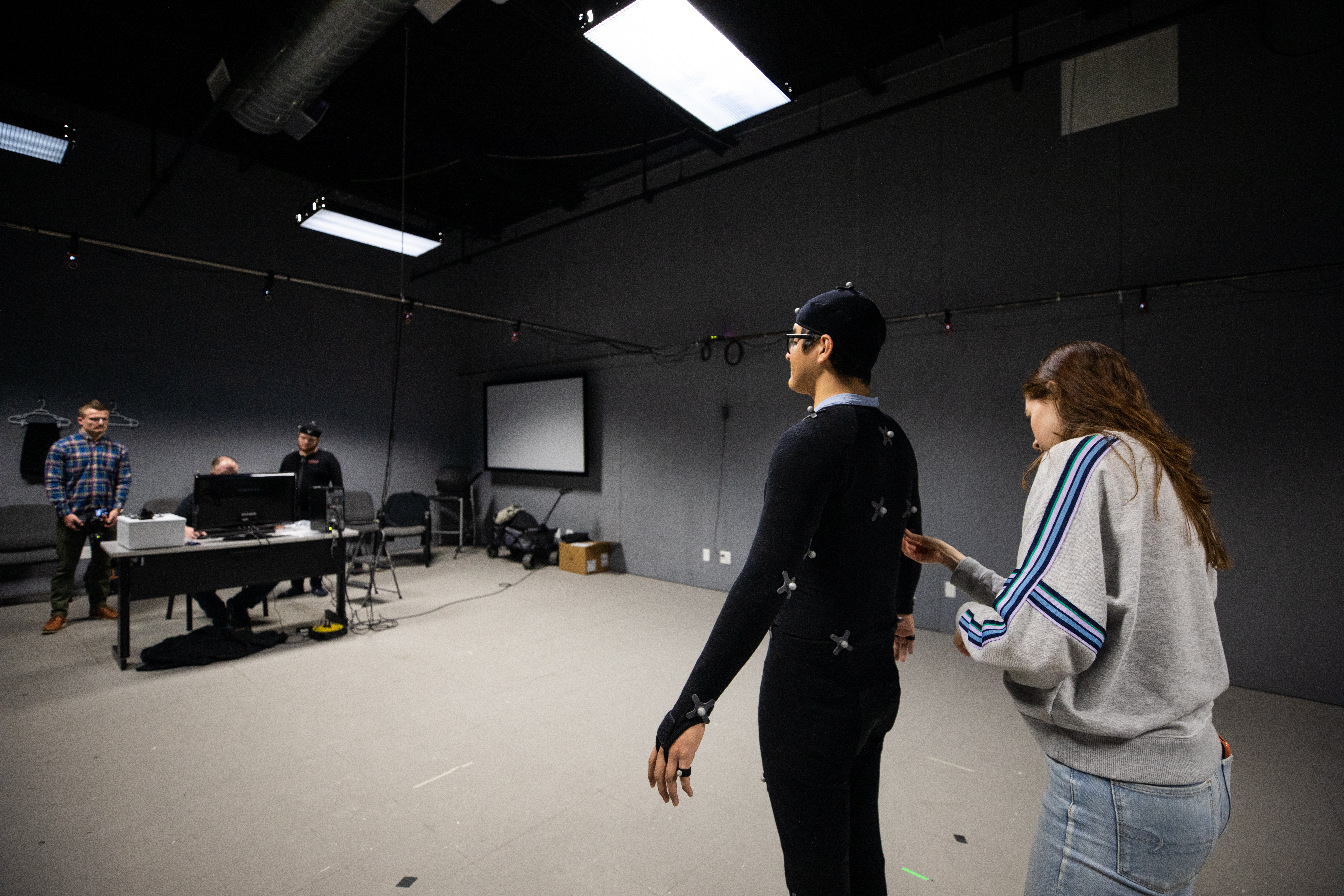
Students at the The School of Digital Arts (SODA) use motion capture. Wichita State
University students now have the option to specialize in motion-capture acting through
a new concentration within the School of Digital Arts.Courtesy photo

Whether their goal is to be Gollum in “Lord of the Rings” or a character in the next version of “Call of Duty,” Wichita State University students now have the option to specialize in motion-capture acting through a new concentration within the School of Digital Arts.
The School of Digital Arts (SODA) was founded in 2019 and is the fourth school within Wichita State’s College of Fine Arts program, which encompasses the Bachelor of Applied Arts (BAA) in Media Arts program. The BAA program already includes concentrations in animation, audio production, filmmaking, game design and collaborative design.
Dr. Bret Jones, SODA professor and filmmaking program coordinator, said while there are other universities that offer similar programs, Wichita State is one of the first universities nationwide to designate a concentration in acting for digital arts. He said the rapid growth of the SODA the past couple of years enabled to the school to add it.
“With the explosion of digital arts, we decided a couple of years ago that it might be a good idea for us to offer a degree that focused on acting performance, specifically for these technologies that are so prevalent in the world of performance right now,” he said. “Motion-capture performance has grown in the past several years and it has an impact on filmmaking, as well as video games, that require performers for voice acting and motion capture performance.”
Changing and emerging technologies factored into bringing the new concentration to Wichita State.
“It’s to connect to those students whose lives have been spent in front of a device and who want to be a part of that world,” Jones said. “That’s what it really comes down to.”
According to Justin Rorabaugh, director of SODA and Shocker Studios (the state-of-the-art location where SODA holds its classes), the additional performance options will also be a benefit of the Acting for Digital Arts concentration.
“This program opens the door for additional opportunities for the students to perform,” he said. “It also rounds out the [SODA] program, as we’re heavy on the tech side.”
Rorabaugh also said the addition of the Acting for Digital Arts concentration is self-fulfilling, as the program, in addition to other programs at the SODA, will help to provide internally what the students need to study. The students would have had to outsource where they learn digital acting. Current students are reliant on external talent for their project work and this new concentration certainly helps fill a need.
Jones said he sees the concentration attracting more students in the future, particularly high school theater students who love theater but don’t want to necessarily perform on the stage.
More than 300 students are enrolled in the School of Digital Arts. Students are provided with many hands-on applied learning opportunities, taking on projects for real clients including Spirit AeroSystems, Airbus Americas, Deloitte and the Wichita Police Department.