


Wichita State University
Wichita State 125 Years: Shocker Pride Points, the people, stories and accomplishments
that define our Shocker family
Celebrating the early days of Fairmount College
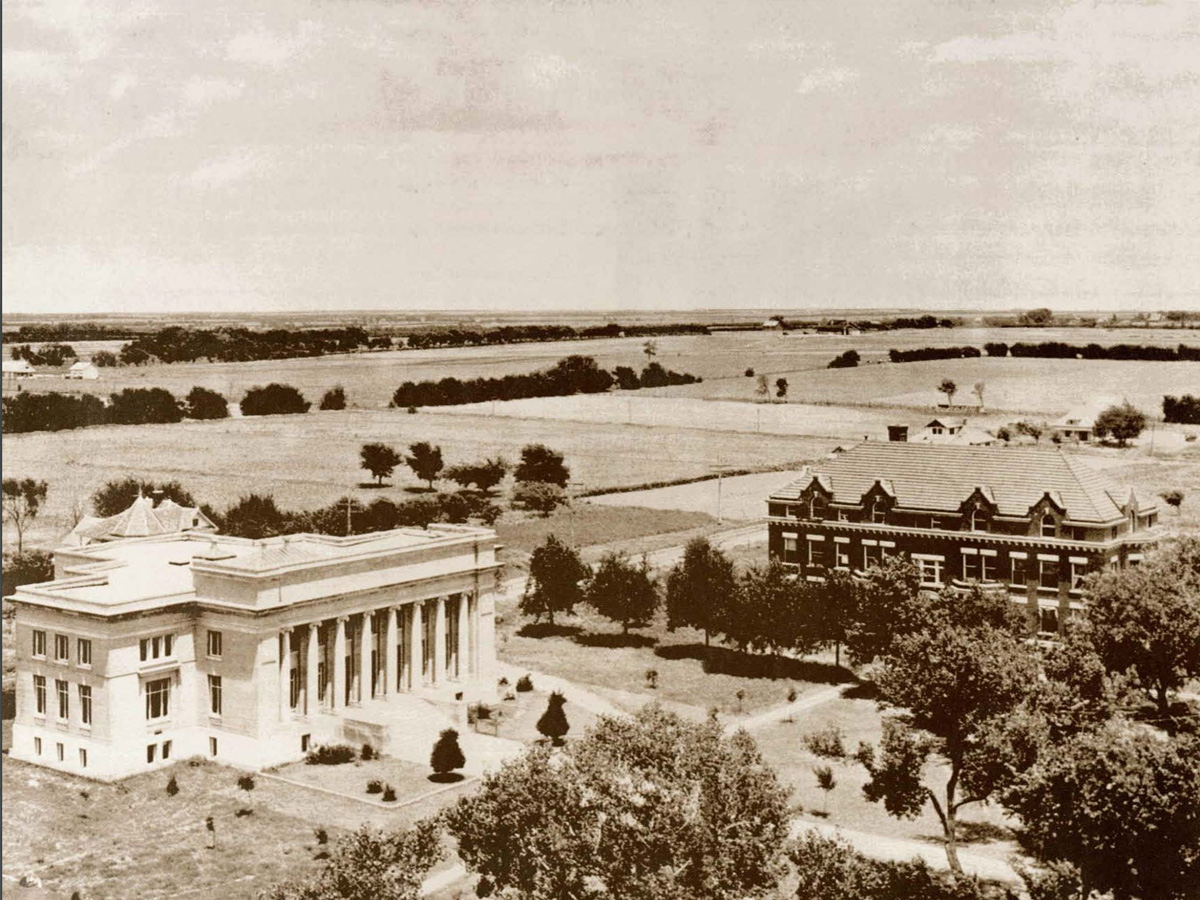
This month we remember the many heroes and trials of Fairmount College in the late 1800s and early 1900s. Students and presidents banded together to build a superior higher learning institution from the bare prairie. They knew that something great could come from the young city of Wichita, and they pursued it. They couldn't have known how successful they would be in the end.
(Image from WSU Libraries, Special Collections and University Archives)
What are you proud of at Wichita State University?
The list goes on...
13. Long wave the Yellow and the Black,
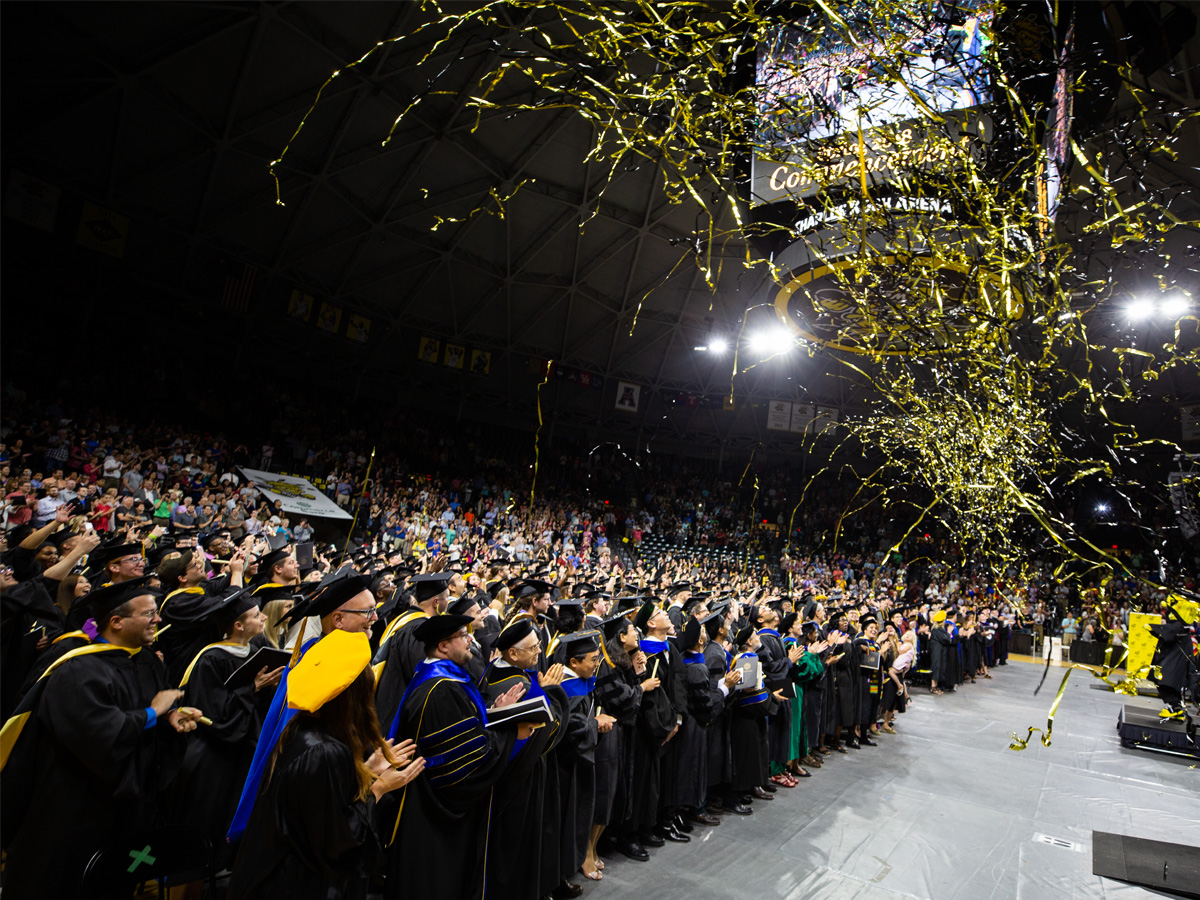
It's easy to pick out Shockers from a crowd. Yellow and black are sharp colors, especially in the stark environment of Koch Arena. They light up commencement and Shocker Athletics. You'll find them all across campus, on t-shirts, hats, scarfs and socks, and around Wichita.
14. Oh Wichita, Here's to you!

Wichita has been a solid foundation for WSU since its formation, and continues to be one of WSU's greatest selling points - a "metropolitan advantage," as coined by former WSU President Eugene Hughes.
On May 4, 1963, Wichita voters overwhelmingly approved a referendum to deed the municipal university, debt-free, to the state of Kansas. Wichita University became Wichita State University on July 1, 1964. With more federal and state funding flowing into the university, tuition lowered from $12.50 per credit hour to $6, and enrollment greatly increased as local students poured into classes that fall.
We may not be a college town, but you might call our city an extended campus...
Know where the last two titles have come from? If you don't know the alma mater, now's the time to learn. It's actually pretty good.
15. Research funding
With yearly funding topping $136 million, research at WSU ranges from bioscience, chemistry and engineering to mathematics, physics and ancient civilization.
16. Shocker baseball

Did you know that WSU has the fourth highest winning percentage in NCAA Division I baseball history? Head over to beautiful Eck Stadium to see them play.
17. Shocker Support Locker

Colin Munson, Shocker Support Locker graduate assistant, arranges canned items in
the locker.
Founded by the Student Government Association in 2015, the Shocker Support Locker offers food, hygiene, clothing, baby products, textbooks and more to meet the WSU community's personal needs. Visit them any week day in Grace Wilkie Hall room 103.
18. College of Health Professions clinics
The College of Health Professions offers three patient-serving clinics that provide students with hands-on experience while offering affordable health care services to the community; the Evelyn Hendren Cassat Speech-Language-Hearing Clinic, the Delta Dental of Kansas Foundation Dental Hygiene Clinic and the Delta Dental of Kansas Dental Clinic.
19. Nathan Morrison, our first president
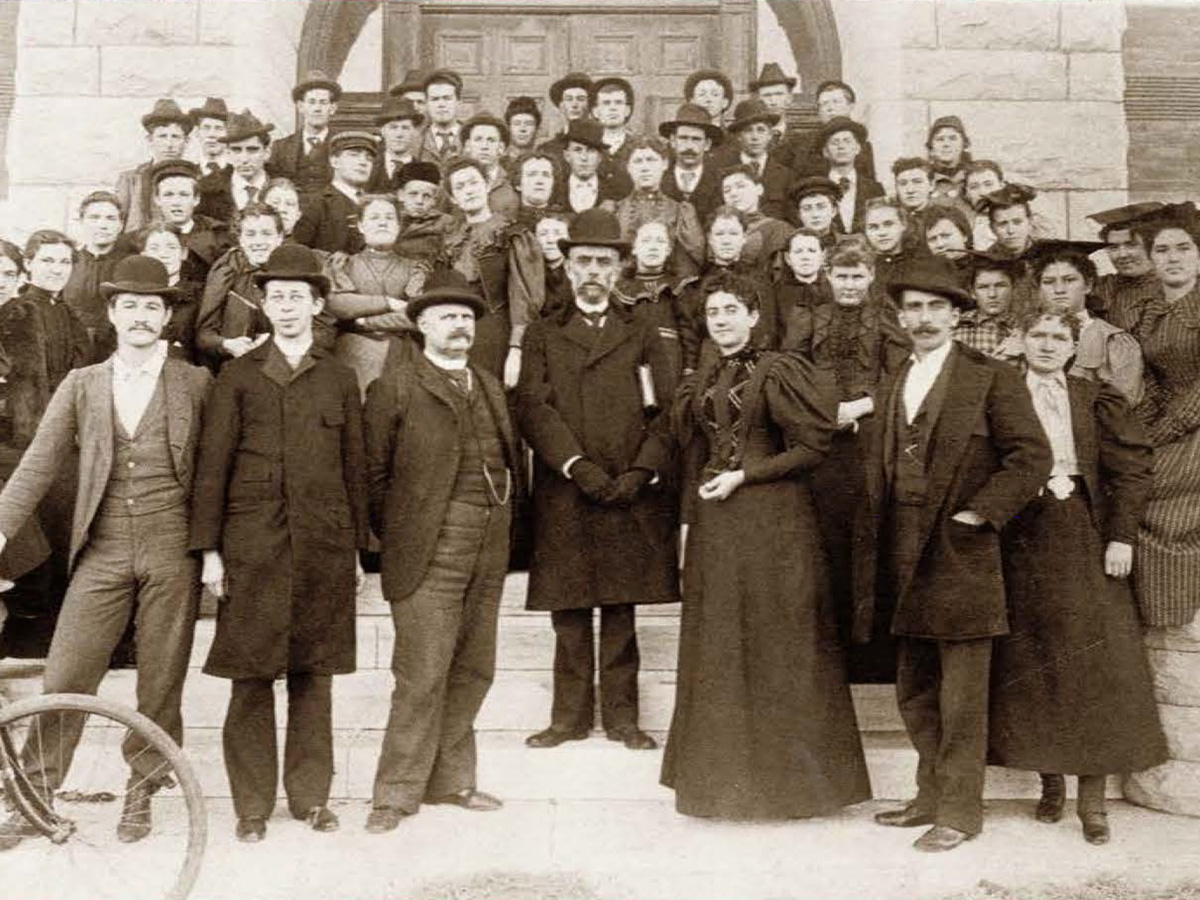
Nathan Morrison, first Fairmount College president, stands at center, surrounded by
his students and faculty on the steps of Fairmount Hall. Both Morrison and Dean William
Isely passed away in 1907, leaving the struggling college leaderless.WSU Libraries, Special Collections and University Archives
Charles G. Cohn, Fairmount College trustee, found Nathan Morrison, college president, on the streets of New York during one of the president's many trips to the east to raise money and purchase books for the fledgling Wichita college.
The trips often brought little money back to the college, but Morrison, then over 70 years old, was relentless.
With little money of his own, he lived in tenements and ate at 15-cent lunch counters. When Cohn offered Morrison $100 for better living conditions, Morrison refused.
"No sir," Morrison said, "If I can't get enough money to pay for my personal expenses, I'll starve."
Many of those who knew Nathan Morrison bore witness to his "tireless energy, dauntless courage, ready self-sacrifice and measureless devotion to the cause of Christian education."
He preserved Fairmount College, but the stress of the task claimed his life. He passed away in 1907 at the age of 79.
(From "The reminisces of Fairmount College," by Walter Graves. WSU Libraries, Special Collections and University Archives)