


Wichita State University
Billy Martin, senior research scientist for WSU’s National Institute for Aviation
Research, has spent several years with his team in NIAR's Environmental Test Lab researching
ways to protect wind turbine blades from lightning damage.McKenzey Bell
Wichita State licenses wind turbine protection technology to Lightning Diversion Systems
Feb. 26, 2020
Wichita State University and WSU Ventures have entered into a new strategic partnership with California-based Lightning Diversion Systems (LDS), a Ducommun Company.
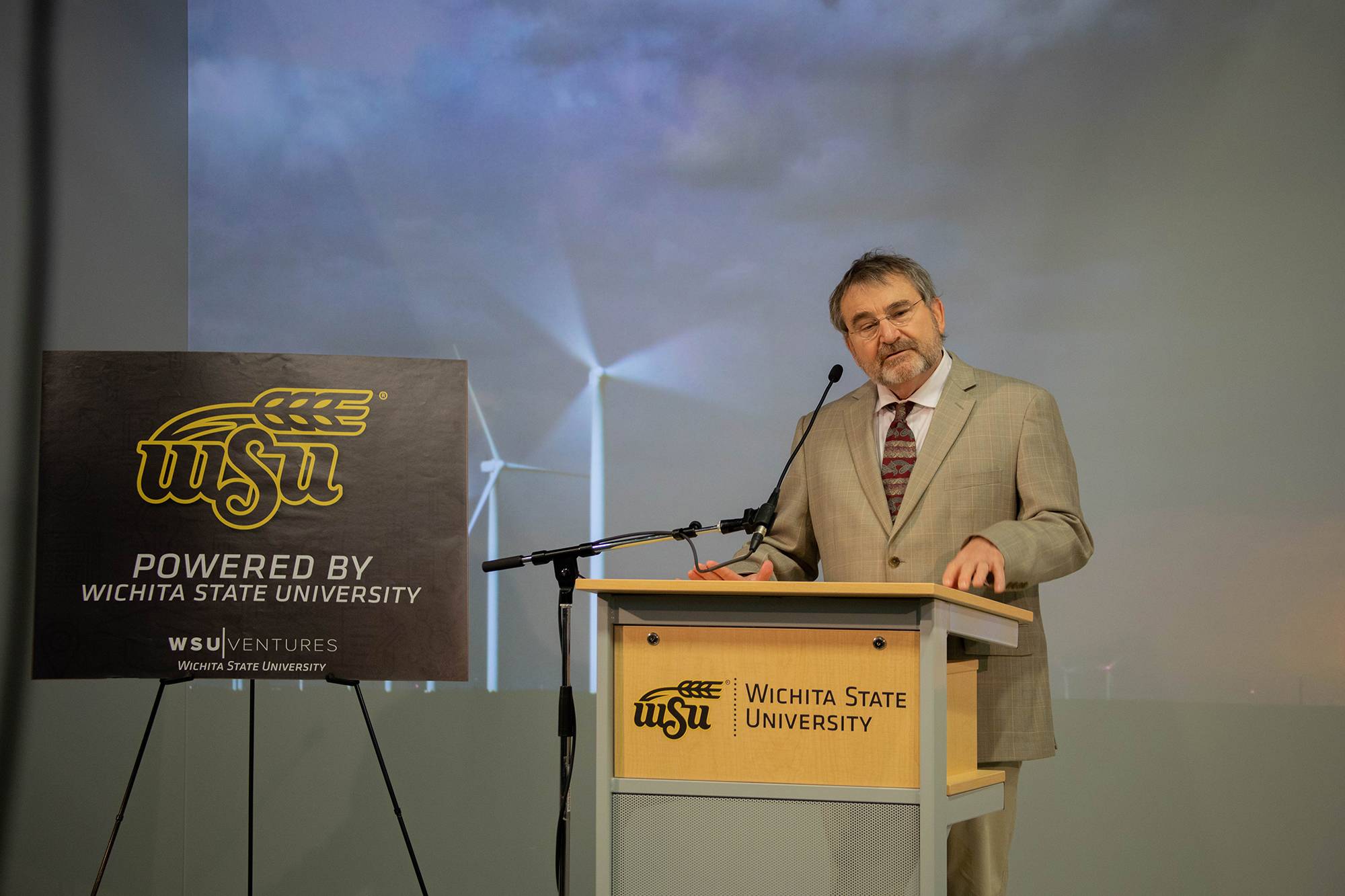
Wichita State President Jay Golden and Dave Wilmot, vice president and general manager of the Engineered Products Group for Ducommun, signed an agreement that will enable a new technology in the rapidly growing wind energy sector, to be further refined, with the intent of commercialization.
The partnership involves the exclusive licensing of a lightning strike protection system for rotor blades in the wind turbine industry, the product of several years of research and development by LDS and Billy Martin, senior research scientist for WSU’s National Institute for Aviation Research, and his team in NIAR’s Environmental Test Lab.
Lightning strikes are a destructive force in the wind energy industry.
“There are 56,000 turbines in North America alone, and they are all prone to lightning strike,” said Wilmot.

Results of a lightning voltage simulation test on a wind turbine blade.McKenzey Bell
Lightning strike is the root cause of damage to blade structures, control systems and electrical components. Average costs to repair or replace a damaged turbine blade or a gearbox component can be as high as $240,000 or $380,000, respectively. Although wind turbines have existing lightning protection systems, these systems are often unable to safely and effectively transfer lightning current to the ground.
“What we hope to do with this technology is protect them, which means they stay in the field longer, they stay on the turbines longer and there is less material going into landfills or recycling,” said Wilmot.
“At Wichita State University, we are focused on launching convergence sciences, and today is a great demonstration of that,” said Golden. “The type of technology we’re developing today, in partnership with NIAR and LDS, shows WSU’s dedication to leveraging our expertise and research strengths to diversify the economy.”
WSU Ventures, an organization committed to transfer technology developed by Wichita State students and researchers to the marketplace, facilitates the relationship between LDS and Martin’s research and development team.
“WSU’s new division of Innovation and New Ventures will be the state and national leader in the development of innovative technology powered by Wichita State University,” Golden says. “We are committed to the development of novel technology and intellectual property, and the recruitment of national and global organizations drawn to the intellectual strength, innovation and entrepreneurial resources of Wichita and the Kansas innovation university.”